
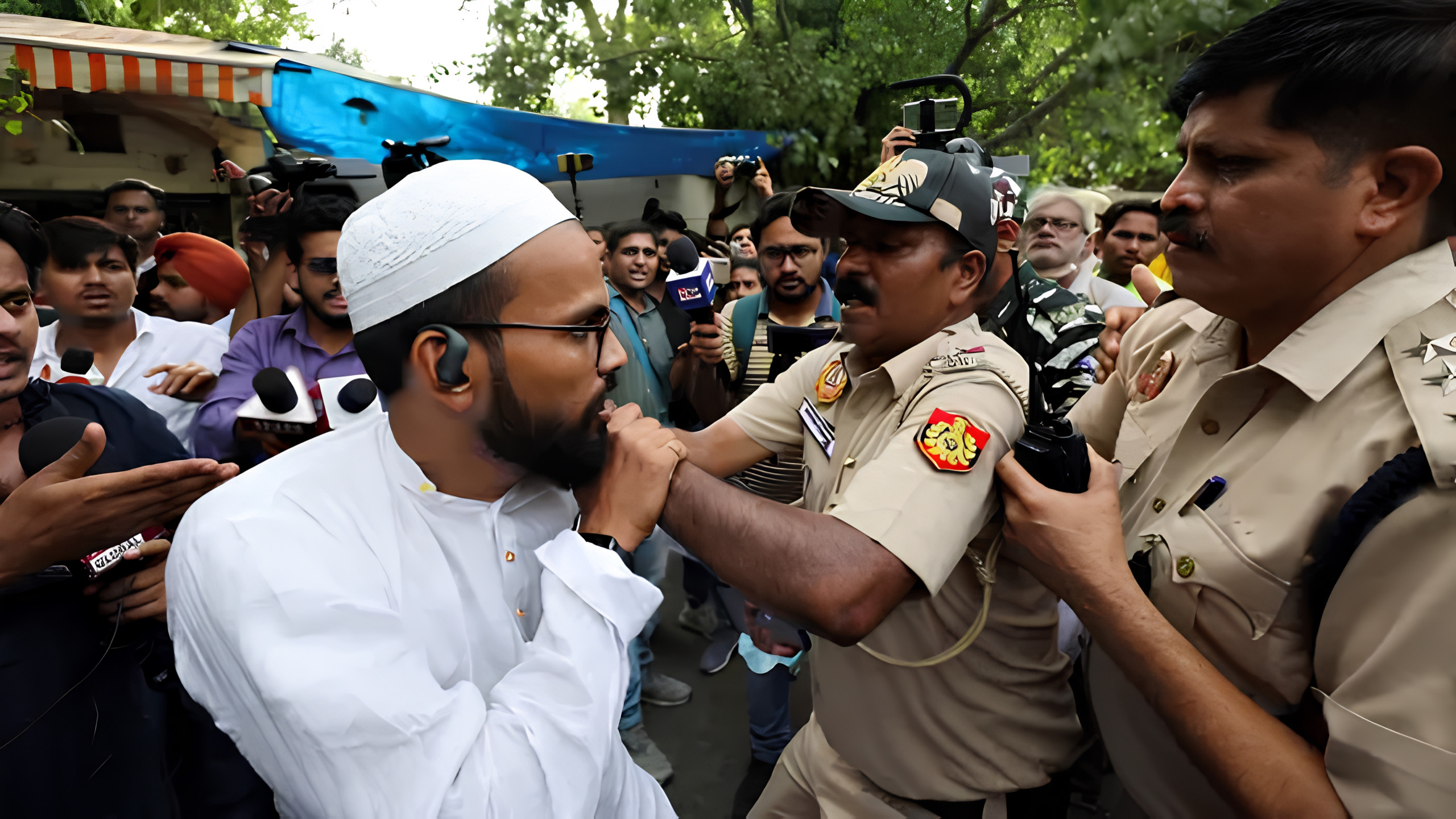




At least 12 journalists were detained by Delhi Police on Sunday, October 11, while covering protests in the national capital against Chief Election Commissioner Gyanesh Kumar.
The demonstrations were linked to concerns over the revision of electoral rolls and demands for his resignation. Reports of journalists being manhandled, pushed into police vehicles and prevented from documenting events have triggered renewed concerns about press freedom and the right to report on matters of public interest.
The police action came amid continuing protests and judicial scrutiny of the restrictions imposed on demonstrators. Journalists at different locations, including Connaught Place and the Ramakrishna Ashram Marg area, said their press credentials did not prevent officers from detaining them. The incidents have drawn criticism from journalists, press freedom organisations, academics and political representatives.
Among those affected were reporters and photojournalists working for Hindustan, The Indian Express, The Hindu, Peek TV and other digital news platforms, along with journalists associated with a national news agency.
Ashish Singh, a reporter with the Hindi daily Hindustan, said police personnel pushed and injured him while he was covering a protest organised by the All India Students Association near Ramakrishna Ashram Marg at around 2:30 pm. According to his account, he repeatedly identified himself as a journalist and showed his press card, but officers continued to handle him roughly.
Singh said he was forced onto a police bus with another journalist and remained there for approximately 20 to 30 minutes before getting off near the Mandir Marg area. He also expressed fear that officers might seize journalists’ phones and delete their recordings.
A photojournalist working for a national news agency similarly alleged that police pushed him into a vehicle while he was documenting the detentions. He said he concealed his camera’s memory card because he feared his equipment could be seized and his footage erased.
Three journalists from The Indian Express’s Hindi edition — Shashwat, Siya and Vijay Kumar — were detained near Connaught Place despite displaying their press credentials. They were taken to Chhatrasal Stadium and released after approximately 45 minutes. A reporter from The Hindu was also briefly detained after being pushed onto a police bus and was released after identifying herself.
Digital journalist Shyam Meera Singh was also caught up in the police action while covering the demonstrations. Videos circulated from the protest showed him being manhandled and pushed into a police detention bus.
His detention intensified concerns about the treatment of independent journalists reporting from protest sites.
Separately, Singh’s X account became unavailable to users in India, with reports describing the action as a suspension or restriction within the country. The circumstances and official reasons for the account’s unavailability should be distinguished from the reported police detention; the two developments raise separate questions about journalists’ ability to report and communicate with the public.
The developments have prompted concern over the safety of journalists covering demonstrations and the ability of digital reporters to publish material documenting police action. Any restriction on a journalist’s account should be accompanied by clarity about the legal basis and the authority responsible.
Journalists from digital news platform Peek TV, including Vedanta Agarwal and Sara Khan, also reported being dragged by police while covering the detention of protesters in Connaught Place.
Khan alleged that a male police officer grabbed her by the neck and pushed her towards a woman security personnel as the journalists attempted to document how protesters were being detained. Their accounts have added to concerns that reporters, including women journalists, faced physical obstruction while attempting to record events.
A senior Delhi Police official, quoted by The Hindu, suggested that some journalists may have been detained because they were working close to protesters and did not move away during detention operations. The official described the detentions as potentially resulting from confusion and advised journalists to maintain distance while police were taking protesters into custody.
Delhi Police’s spokesperson declined to comment on the detentions, according to Hindustan Times.
The DIGIPUB News India Foundation issued a statement dated October 11 expressing grave concern over the conduct of Delhi Police and the Union Government. It referred to the Supreme Court’s directions concerning public transport, restrictions on peaceful protesters, internet services and freedom of movement.
DIGIPUB said that the court’s directions were clear, but that the response on the ground had been contrary to their spirit. The organisation highlighted reports of journalists being detained for a second consecutive day, including reporters from The Indian Express, Peek TV, Hindustan Times and Malayalam news channels. It also raised concerns about independent and digital journalists allegedly being dragged, harassed and physically assaulted while performing their professional duties.
The foundation specifically referred to the reported detention of digital journalist Pragya Mishra while she was reporting from the RK Ashram area. According to the statement, her cameraperson, Anuj, was brutally beaten by police despite carrying a microphone and valid identification.
“Detaining a journalist with a press card and a microphone is not crowd control,” DIGIPUB stated, describing such action as an attempt to prevent the public from seeing what is happening.
The organisation made four principal demands:
- Immediate compliance by Delhi Police and the Centre with the Supreme Court’s directions.
- Immediate release of detained journalists and an end to detentions of media personnel, irrespective of the platform they work for.
- Unhindered access for journalists, whether from legacy media or digital outlets, to cover protests.
- An independent inquiry into alleged illegal detentions and assaults on journalists, including women journalists.
DIGIPUB concluded with a warning about the broader democratic implications of restricting press freedom: “Obstructing the press is obstructing democracy.”
The statement was signed by Dhanya Rajendran, Abhinandan Sekhri and Ritu Kapur.
Support Independent Media
Click Here and Join the Membership of Millat Times to Support Independent Media.
Support Millat Times