
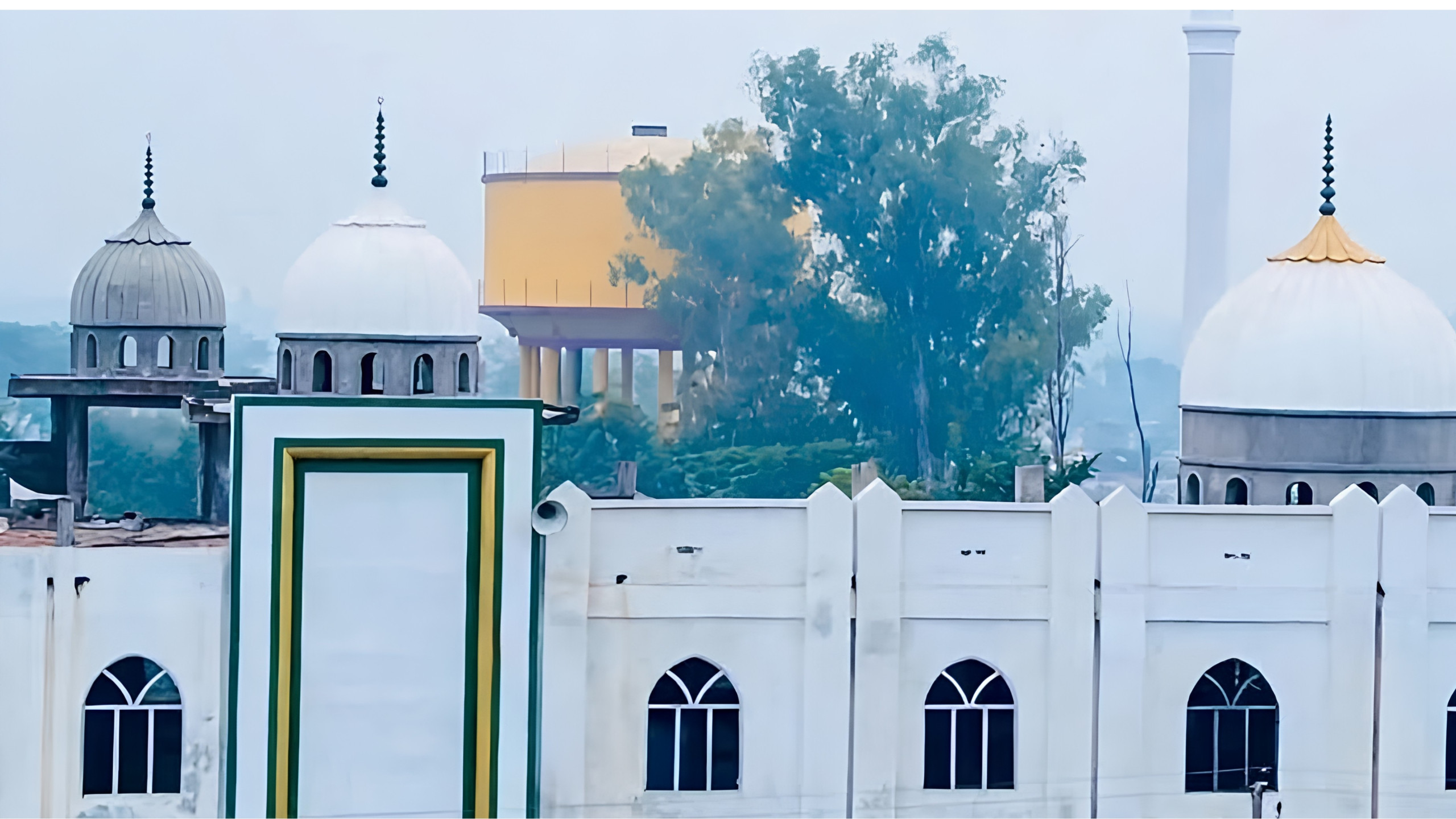




The management of Ziaul Uloom Mosque in Tambaur, Sitapur, received a notice from the Revenue Department on October 7, 2026, directing the removal of structures on disputed land within seven days. The notice concerns the mosque and permanent shops on plot number 541 in Ahmedabad village, Pargana Tambaur. The dispute over the land’s status and use is pending before the Allahabad High Court.
A century-old Muslim graveyard (qabristan) and structures associated with Madarsa Islamia Ziaul Uloom in Tambaur, Sitapur district, are at the centre of a dispute after local authorities issued a seven-day notice seeking the removal of a permanent shop allegedly constructed without permission.
The notice has triggered concern among local Muslims, the mosque committee and the madarsa management, who maintain that the graveyard has existed for generations. They have questioned the timing of the notice, citing an Allahabad High Court order directing the parties to maintain the status quo regarding the nature and possession of the disputed property.
According to a notice dated 5 October 2026, issued by the Tehsildar’s office in Laharpur, the administration has directed the removal of a permanent shop allegedly constructed without permission on a disputed portion of land recorded under Gata No. 541.
The notice, bearing Case No. 6222/T-202610640306222, refers to an earlier order dated 15 May 2026, passed by the Assistant Collector/Tehsildar under Section 67 of the Uttar Pradesh Revenue Code, 2006.
It identifies land measuring approximately 0.194 hectares in Gram Ahmadabad, Pargana Tambaur, and refers to a disputed portion measuring 0.031 hectares. The occupant has been directed to remove the structure within seven days, failing which the authorities have warned of demolition at the occupant’s expense, recovery of costs and possible further legal action.
The administration considers the construction unauthorised. However, the petitioners dispute the proceedings and maintain that the land forms part of an old graveyard whose religious character has remained unchanged.
The notice refers to an Allahabad High Court order dated 4 June 2026 in Writ Petition A227 No. 3461 of 2026.
According to the order quoted in the case records, the court directed, “Status quo in respect of the nature and possession of property, as exists today, shall be maintained by the parties till the next date of listing.”
The community has questioned the fresh notice in light of this direction. Residents and committee members say the administration should avoid action that could alter the property’s existing condition while the dispute remains before the court.
However, the legal effect of the interim order on the subsequent notice and any proposed demolition requires verification against the complete court record, including any orders passed after 4 June 2026.
Maulana Shahid Ali, manager of Madarsa Ziaul Uloom and secretary of the Waqf’s Committee of Management, is the petitioner in the case.
The petition challenges the Tehsildar’s order dated 15 May 2026. According to the petitioners, the disputed land has historically been used as a graveyard and retained that character even after the abolition of the zamindari system.
They argue that although the land vested in the State following zamindari abolition, it continued to be reserved and used as a qabristan. On this basis, they question the revenue authorities’ jurisdiction to initiate proceedings under Section 67 of the Uttar Pradesh Revenue Code.
The petitioners have also raised objections concerning the property’s Waqf status and the legal framework applicable to such disputes.
According to their submissions, the property is registered with the Uttar Pradesh Sunni Central Waqf Board in Lucknow as Waqf No. 279 under Section 37 of the Waqf Act, 1995, and has been uploaded to the UMEED portal.
They argue that the Waqf Board should have been included in the proceedings and have referred to Sections 54 and 85 of the Waqf Act in support of their jurisdictional objections.
The petitioners have also cited earlier dealings by the Nagar Panchayat, Ahmadabad Tambaur, with the structures. They claim that the local body assessed and collected municipal taxes and granted permission for repairs and renovation, which they consider evidence of long-standing administrative recognition.
These claims remain subject to examination against the relevant land, revenue and Waqf records.
The petitioners have further questioned the procedure followed before the order of 15 May 2026 was passed.
According to their submissions, the proceedings initially began in the name of the Gram Sabha. Following jurisdictional objections and a remand in an earlier case, Writ-C No. 3339 of 2026, the Nagar Panchayat became involved in the matter.
The petitioners contend that the Nagar Panchayat’s participation was not supported by the necessary resolution or authorisation. They have also argued that a transfer application was pending before the Board of Revenue when the order was passed.
These objections form part of the petitioners’ case and have yet to be established as findings of the court.
Counsel representing the State and the Nagar Panchayat have defended the revenue proceedings, according to the case details provided.
Their position is that Gata No. 541 is not recorded as Waqf property in the Waqf Board’s records and that the land vested in the State following the abolition of zamindari. They maintain that the Assistant Collector acted within the powers available under Section 67 of the Uttar Pradesh Revenue Code.
The State and Nagar Panchayat have also raised an objection regarding the availability of an alternative statutory remedy under Section 67(5) of the Code, arguing that the petition under Article 227 should not be entertained.
The competing submissions raise questions about the property’s legal status, the jurisdiction of the revenue authorities and the appropriate legal remedy. These issues remain for judicial consideration.
Speaking to Millat Times, the mosque’s Imam, Salman, expressed concern over the notice and the uncertainty surrounding the future of the graveyard.
“We are being harassed. This graveyard, like the mosque, is around 100 years old. A notice has suddenly been issued despite the matter being pending before the Allahabad High Court. We have complete faith in the judiciary,” the Imam told Millat Times.
Members of the mosque committee have also expressed concern in a video circulating on social media. They maintain that the graveyard and associated religious and educational structures have served the local Muslim community for generations.
Committee representatives say the dispute concerns not merely a piece of land but also a place associated with the community’s religious life and the burial of its ancestors. They have urged the administration to respect the court proceedings and avoid action that could alter the property’s existing condition while the dispute remains unresolved.
The age and historical use of the property are central to the community’s position.
According to the case details provided, the Allahabad High Court has heard submissions from both sides, observed that the matter requires consideration, and directed the filing of counter-affidavits within six weeks, followed by rejoinder submissions.
The records cited in the original account also mention earlier listings before different benches, including Justice Jaspreet Singh and Justice S.Q.H. Rizvi, with orders concerning listing dates and procedural compliance.
Residents of Tambaur and surrounding areas are closely following the dispute. Community members have urged the administration to avoid unnecessary confrontation and allow the legal process to run its course.
The central questions include whether the disputed land is legally recognised as Waqf property, whether the revenue authorities have jurisdiction to proceed under Section 67, and how the property’s existing nature and possession are affected by the court’s interim directions.
The outcome could determine the future of the disputed structures and clarify the application of revenue law in cases involving long-standing religious use and contested claims of Waqf status.
For now, the community is seeking a resolution through the judiciary, while the administration maintains its position that the construction is unauthorised.
Support Independent Media
Click Here and Join the Membership of Millat Times to Support Independent Media.
Support Millat Times