

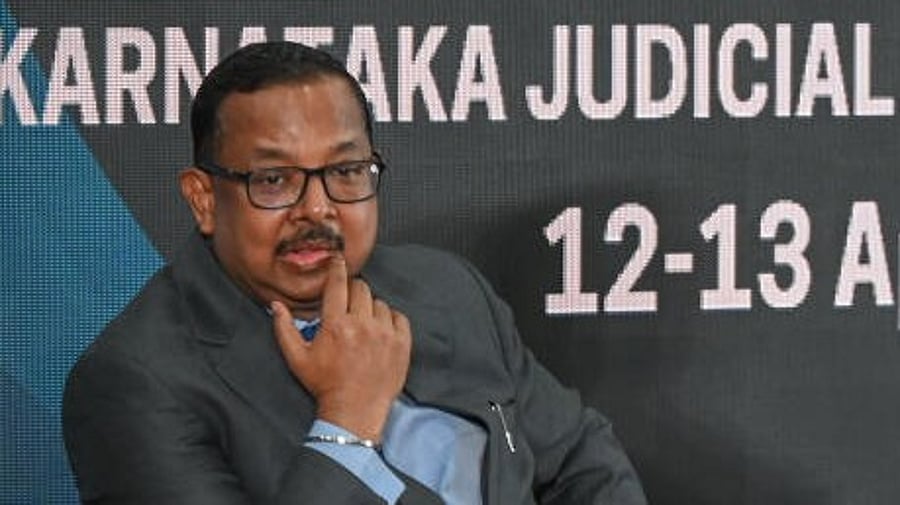

A senior judge of the Supreme Court of India has pointed to what he described as “deep societal faultlines” in the country, citing instances of discrimination against Muslims and Dalits as evidence that constitutional ideals remain distant from lived realities, Live Law reported.
Speaking at a seminar in Telangana on constitutional morality and the role of the district judiciary, Justice Ujjal Bhuyan said that while courts continue to uphold constitutional values, social practices often diverge sharply from those principles even 75 years after independence.
To illustrate the gap, Bhuyan recounted how a Muslim doctoral student was allegedly denied accommodation in New Delhi after revealing her surname.
“My daughter’s friend is doing her PhD programme in a private university at Noida. So, she was looking for an accommodation. She approached a landlady who was running a working women’s hostel in her building in South Delhi. The landlady asked her as to what her name was. When she told her name, which was quite ambivalent, the landlady queried further and asked her about her surname and when she said that, it revealed her Muslim identity. The landlady then told her quite bluntly that accommodation was not available and that she could search for some other place,” said Justice Bhuyan.
The judge cited the episode as an example of how religious identity can still shape access to basic opportunities such as housing.
He also referred to resistance in parts of Odisha to Dalit women cooking mid-day meals in government schools. Under India’s mid-day meal scheme, women — often from anganwadi centres — are employed to prepare food for students, a programme credited with boosting school attendance in rural areas.
However, Bhuyan said some parents had objected to their children eating food prepared by Dalit women, highlighting entrenched caste prejudices.
“These examples are just the tip of the iceberg,” he said, describing them as a mirror reflecting how far society remains from the Constitution’s benchmark of morality.
India’s Constitution guarantees equality before the law and prohibits discrimination on grounds of religion, caste, sex or place of birth. Yet rights groups have long flagged discrimination in housing and education, particularly affecting Muslims and Dalits.
Bhuyan traced the evolution of “constitutional morality” through landmark rulings, including Naz Foundation v. Government of NCT of Delhi and Navtej Singh Johar v. Union of India.
In Naz Foundation, the Delhi High Court read down Section 377 of the penal code to decriminalise consensual same-sex relations, holding that “popular morality” could not override constitutional protections of life and liberty. The ruling was later overturned, before a constitution bench in Navtej Singh Johar restored and expanded those protections, affirming constitutional morality as a guiding principle.
Bhuyan said such jurisprudence reflected the Constitution’s transformative ambitions, but added that social acceptance often lagged behind legal change.
Turning to the lower judiciary, he emphasised that trial courts form the first point of contact for most litigants and must be accorded institutional respect. The supervisory powers of high courts, he said, should function as “a shield, not a sword” — correcting grave jurisdictional errors rather than substituting factual assessments made by trial judges.
On representation within the judiciary, Bhuyan said Telangana had made strides in improving gender balance. Of 655 sanctioned posts in the state judicial service, 478 are currently filled, including 283 by women — more than half.
He added that members of Scheduled Castes, Scheduled Tribes and minority communities were also represented in the state’s judicial ranks, alongside five judicial officers with disabilities appointed following a recent Supreme Court ruling on recruitment of visually impaired candidates.
Greater inclusion of women, marginalised communities and persons with disabilities would help bridge the gap between courts and the public, Bhuyan said. “The judiciary must be an inclusive institution and must represent the diversity of India,” he said, adding that he would welcome sexual minorities and transgender persons into judicial service.
At the same time, he flagged concerns about the reinstated requirement that candidates for entry-level judicial posts have a minimum of three years’ practice at the bar — a rule restored by the Supreme Court last year.
While practical experience could strengthen judicial competence, Bhuyan said the early years of legal practice were often financially uncertain, particularly for those without established backgrounds. The requirement, he added, could disproportionately affect women from rural areas or small towns who may face social pressures or career interruptions.
What impact the rule may have on women’s entry into the judiciary, he said, “is something which only the future will tell.”