
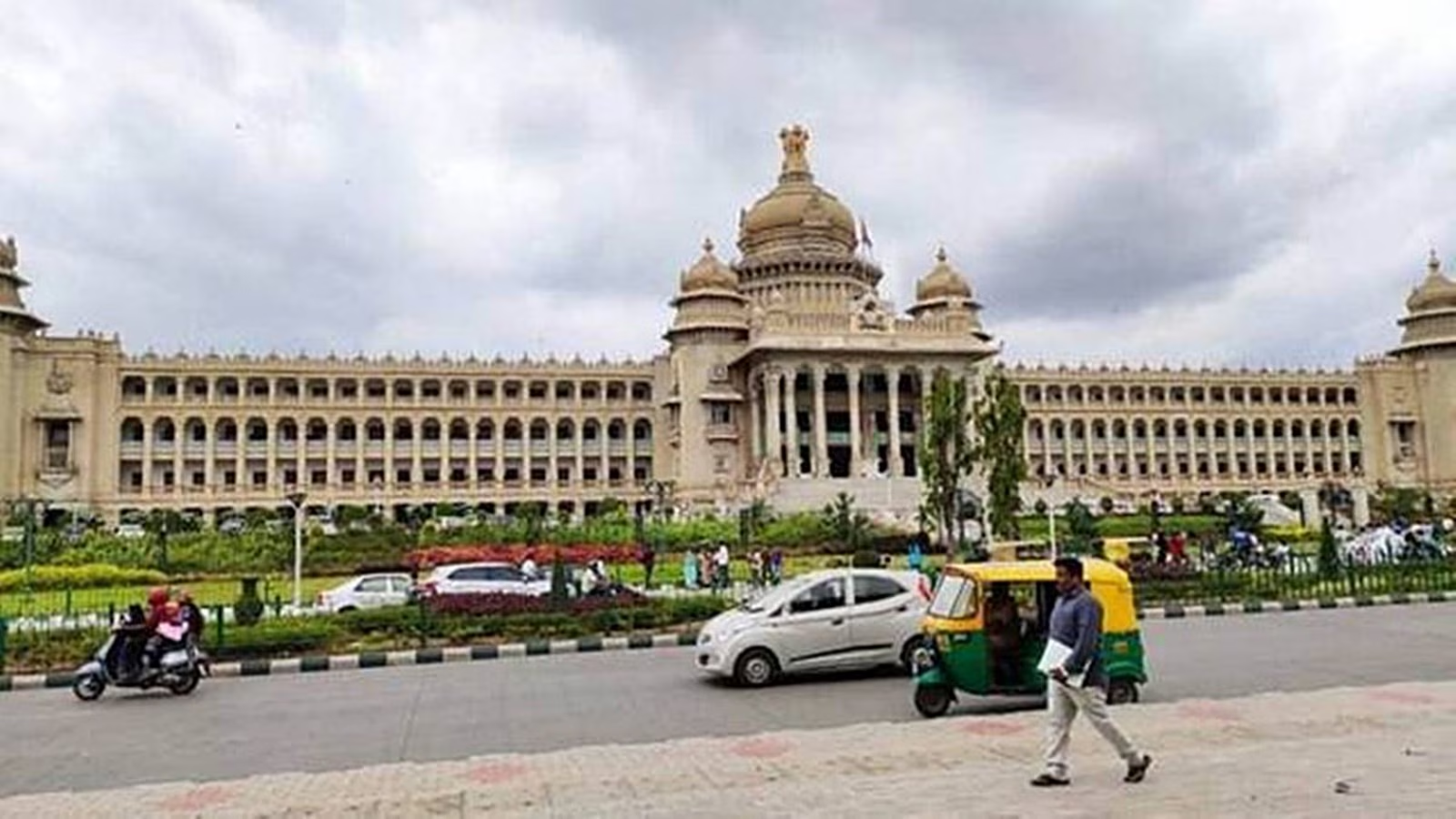

The Karnataka government on Wednesday introduced a bill in the state Assembly aimed at curbing caste-based violence and safeguarding the right of adults to choose their partners, amid rising concern over so-called honour killings and social ostracism, media reports said.
The proposed Freedom of Choice in Marriage and Prevention and Prohibition of Crimes in the Name of Honour and Tradition Bill, 2026 prescribes a minimum sentence of five years’ imprisonment for anyone found guilty of killing an individual or couple in the name of “honour”.
According to the draft, causing grievous hurt would attract a jail term of at least three years along with a fine of up to Rs 3 lakh, while offences involving simple injury would carry a minimum sentence of two years and a fine of up to Rs 2 lakh. All offences under the proposed law would be cognisable and non-bailable.
The legislation seeks to protect the autonomy of consenting adults in marriage, prevent caste-linked crimes and uphold the dignity of inter-caste unions. It also proposes the creation of district-level bodies called “Eva Nammava Vedikes” to facilitate and support such marriages.
Each body would include a retired judge, a police official, a revenue official and a sub-registrar, according to reports.
The government may, in consultation with the High Court, designate specific district courts as fast-track courts to hear cases under the law.
The draft allows couples to inform designated nodal officers about their relationship, either orally or in writing, after which the police would be required to provide protection.
While existing provisions under the Bharatiya Nyaya Sanhita penalise crimes such as murder and assault, the bill notes they do not sufficiently address “brutal forms of violence” linked to preserving “caste honour”.
Such acts include symbolic death rites performed for living individuals, denial of inheritance, social boycotts, poisoning and other covert attempts to harm couples, according to reports.
The bill affirms that individuals have the right to make personal life choices, including whom to marry, and clarifies that parental or family consent is not required once two adults decide to wed.
Also referred to as “Eva Nammava”, meaning “he/she is ours”, the proposal draws on the philosophy of 12th-century social reformer Basavanna, reports added.