


Follow Millat Times for independent journalism.
Opens the app if installed, or Google Play to download it.Delhi’s air pollution reached alarming levels this week, with several air quality monitoring stations unable to record the full extent of toxic pollution after concentrations crossed their maximum measurement capacity, according to the Central Pollution Control Board (CPCB).
The pollution levels reportedly exceeded the upper measuring limit of monitoring equipment, equivalent to nearly 66 times the World Health Organisation’s (WHO) recommended daily limit for PM2.5 particles.
The development has triggered a political controversy, with opposition leaders questioning gaps in official pollution data during the night of Diwali, when firecracker emissions added to the city’s already severe air pollution.
Delhi, among the world’s most polluted capital cities, faces worsening air quality every winter due to vehicle emissions, industrial pollution, construction dust and smoke from agricultural fires in neighbouring states.
However, missing readings during the peak pollution period have raised concerns about whether official monitoring data accurately reflects the severity of the situation.
Aam Aadmi Party’s Delhi president Saurabh Bharadwaj accused the authorities of failing to maintain transparent pollution records. In a video shared on X, he questioned how people could trust a government that allegedly allowed air quality monitoring gaps on Diwali night.
Senior Congress leader Ajay Maken also raised concerns over the missing PM2.5 readings, asking who would be held accountable if pollution levels during the festival were not properly recorded.
The CPCB rejected allegations of deliberate data manipulation. It said the gaps were caused by limitations in measuring extremely high pollutant concentrations and were not an attempt to hide pollution figures.
According to the CPCB, particulate matter analysers installed after the introduction of the National Air Quality Index (NAQI) in 2015 were designed to measure pollution concentrations of up to 1,000 micrograms per cubic metre.
The WHO recommends that average daily PM2.5 concentrations should not exceed 15 micrograms per cubic metre.
PM2.5 refers to extremely fine particles that can penetrate deep into the lungs and enter the bloodstream. Long-term exposure is associated with serious health problems, including respiratory and cardiovascular diseases and an increased risk of cancer.
In a statement issued late Tuesday, the CPCB explained that its automated data validation system excludes hourly readings that exceed the calibrated measurement range.
The board said such situations could occur during occasional extreme pollution episodes, including heavy firecracker use during Diwali, resulting in apparent gaps in data from affected monitoring stations.
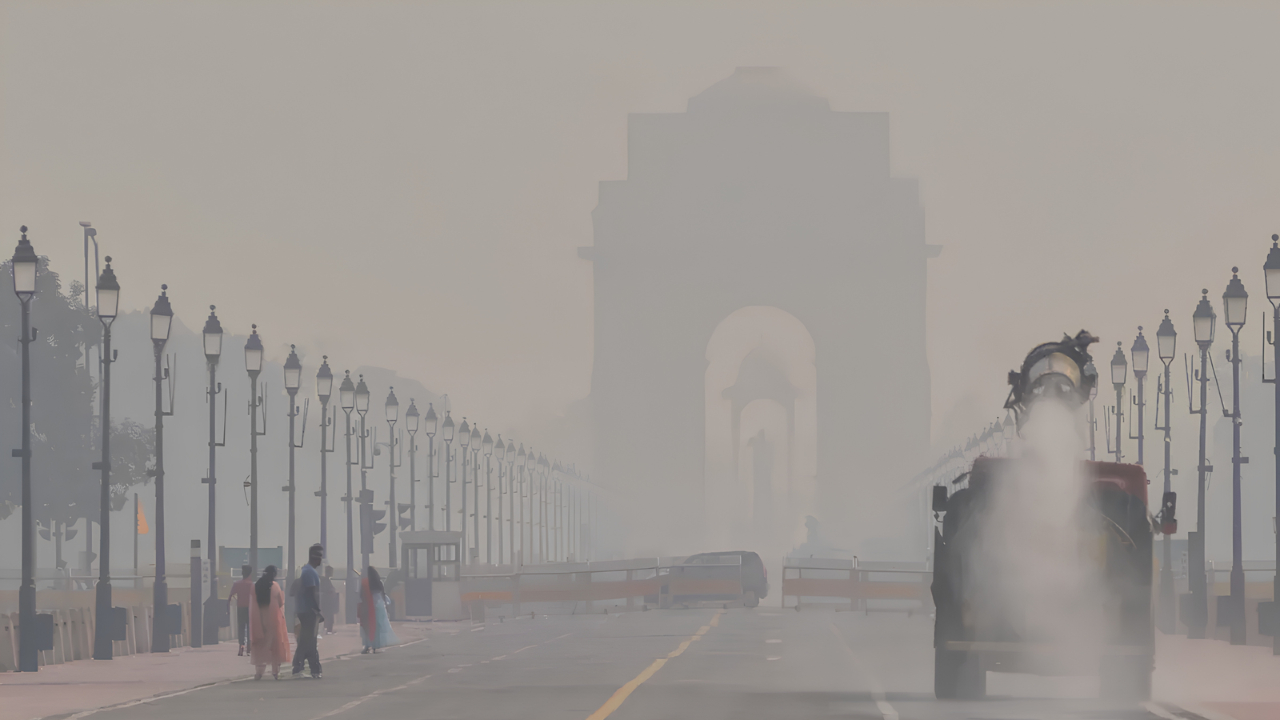
Although thick layers of smoke covered several parts of Delhi early Monday, the actual scale of pollution became clearer only after monitoring stations resumed reporting, approximately eight hours after peak firecracker activity.
According to monitoring organisation IQAir, which cited data from a Delhi government monitoring station, PM2.5 levels in the Mandir Marg area reached 879 micrograms per cubic metre.
The reading was more than 58 times the WHO’s recommended daily limit.
Congress leader Pawan Khera also criticised the missing pollution data, saying that the absence of recorded figures did not mean the pollution itself had disappeared.
He warned that residents continued to breathe poisonous air, putting their health and life expectancy at risk.
The episode has renewed concerns over Delhi’s air pollution monitoring system, the reliability of official air quality data and the authorities’ preparedness to deal with extreme pollution during the winter months.
Support Independent Media
Click Here and Join the Membership of Millat Times to Support Independent Media.
Support Millat Times