


Follow Millat Times for independent journalism.
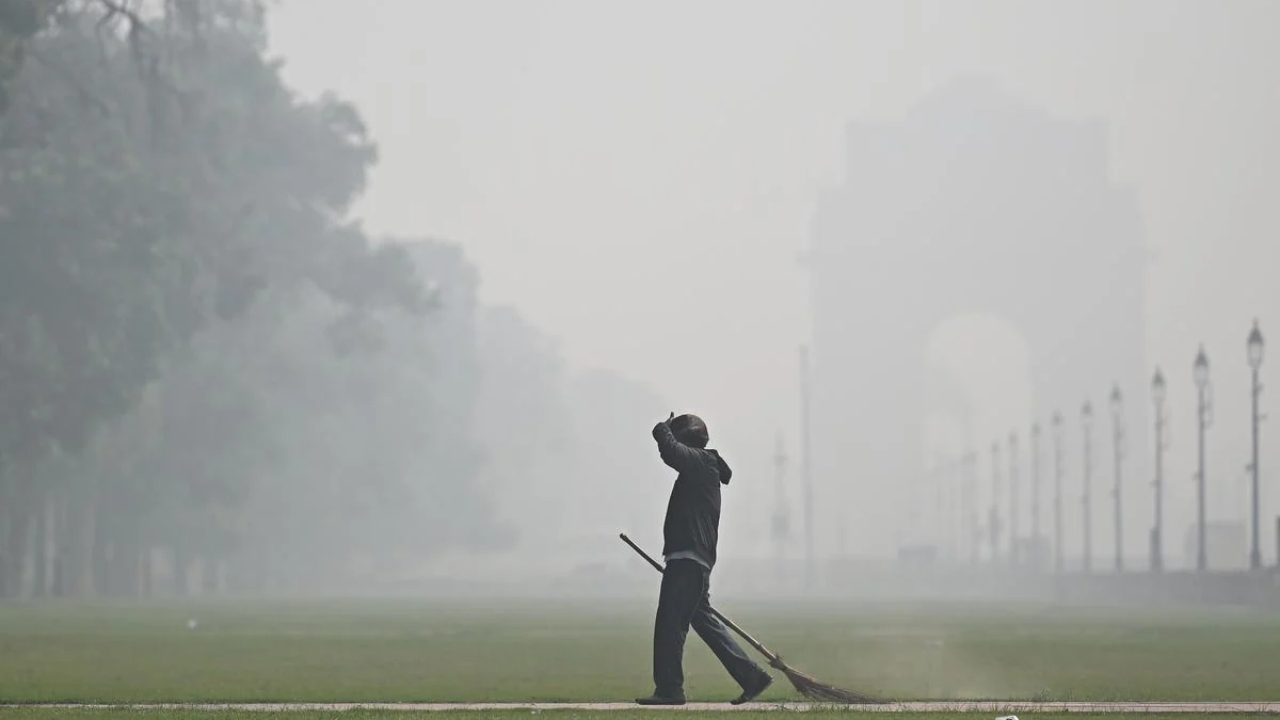
Opens the app if installed, or Google Play to download it.Delhi recorded its highest pre-Diwali air pollution levels in three years, with the average concentration of fine particulate matter rising 97% from the same period last year, according to an analysis by the Centre for Science and Environment (CSE) released on Wednesday, November 11, 2026.
The average PM2.5 concentration in the week before Diwali stood at 236 micrograms per cubic metre in 2026, compared with 120 micrograms per cubic metre in 2025 and 179 micrograms per cubic metre in 2024, the study said.
PM2.5 particles are small enough to penetrate deep into the lungs and pose risks to human health.
Air quality in Delhi typically deteriorates during the winter months as falling temperatures and slower winds trap pollutants close to the ground. Firecrackers used during Diwali, stubble burning in neighbouring Punjab and Haryana, vehicle emissions, industrial activity and coal-fired power plants add to the pollution.
Diwali was celebrated on November 8, 2026, as air quality in the capital had already been worsening in the weeks leading up to the festival.
Anumita Roychowdhury, executive director of research and advocacy at CSE, said the high particulate levels recorded before Diwali indicated that the city’s underlying pollution levels were already elevated.
“Elevated particulate levels before the festival this year show that the baseline pollution is higher than in previous years,” she said.
Roychowdhury said year-round measures to control emissions from major pollution sources remained inadequate. Cleaner air before the onset of winter could have reduced the severity of pollution caused by seasonal weather changes, farm fires and firecrackers, she added.
Vehicles remain major source of local pollution
Delhi’s air quality deteriorated sharply from late October 2026, with the air quality index entering the “very poor” category on November 2, 2026.
Data from the Indian Institute of Tropical Meteorology’s Decision Support System showed that pollution transported from neighbouring National Capital Region districts accounted for more than half of Delhi’s PM2.5 pollution between November 1 and November 8, 2026, the day Diwali was celebrated.
Local sources contributed 33% of the pollution, while stubble burning accounted for 14.2%, according to the CSE analysis.
Among local sources, vehicular emissions were the largest contributor, accounting for 52% of Delhi’s pollution, the study said.
The contribution of stubble burning remained relatively low during much of the period, indicating that severe pollution episodes continued even as farm fires declined.
The study said intense local emissions were driving pollution levels independently of the contribution from agricultural fires.
Punjab reports more than 5,500 farm fires
Meanwhile, the number of farm fires in Punjab rose to 5,517 by Wednesday, November 11, 2026, according to data provided by the state government, PTI reported.
Authorities have registered 1,259 first information reports in connection with farm fires under Section 223 of the Bharatiya Nyaya Sanhita, which deals with disobedience of an order issued by a public servant.
Environmental compensation of more than Rs 85 lakh has been imposed in 1,695 cases. More than Rs 37 lakh has been recovered so far, PTI reported.
Support Independent Media
Click Here and Join the Membership of Millat Times to Support Independent Media.
Support Millat Times