
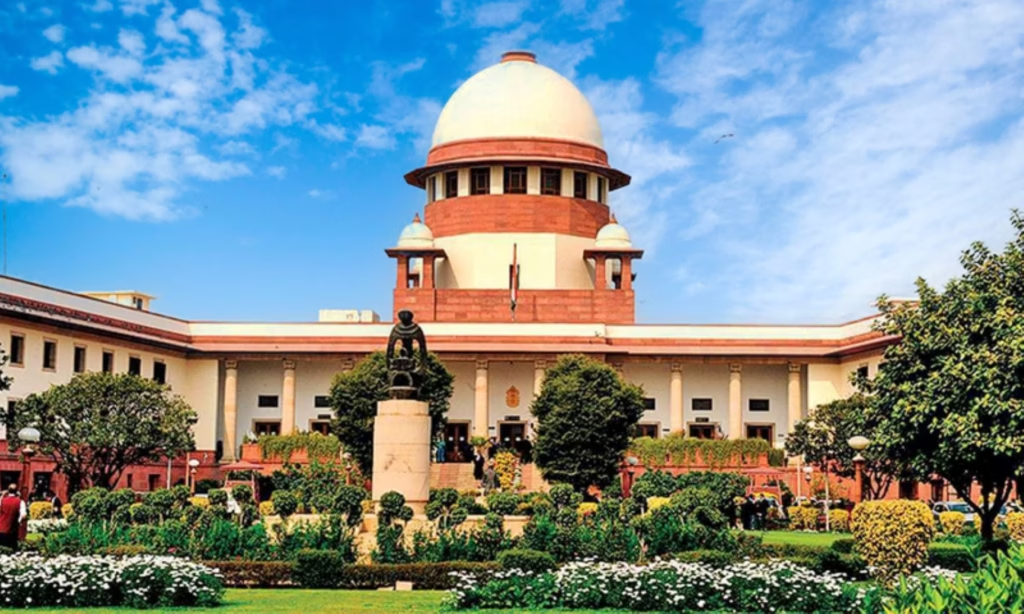

Court reportedly questioned the legal status of Rohingya in India, compared their entry to that of ‘intruders digging tunnels’ and asked whether those entering illegally were entitled to food, shelter and education.
A group of former judges, senior advocates and civil society members on Friday issued an open letter to Chief Justice of India, expressing “deep concern” over remarks made by a Supreme Court bench during a hearing on the alleged custodial disappearance of Rohingya refugees.
The 5 December letter, signed by three former high court judges and more than two dozen lawyers and rights advocates, said comments made by the bench led by Chief Justice Surya Kant on 2 December risked “dehumanising” Rohingya refugees and undermining constitutional protections guaranteed to all persons residing in India.
The petition before the court, filed by researcher and human rights advocate Rita Manchanda, concerns allegations that Rohingya refugees held in Indian custody had gone missing.
During oral observations, judges reportedly questioned the legal status of Rohingya in India, compared their entry to that of “intruders digging tunnels,” and asked whether those entering illegally were entitled to food, shelter and education.
The signatories said such remarks were contrary to “core constitutional values” and could weaken public trust in the judiciary’s role as a protector of the vulnerable. “A remark that equates vulnerable persons … seeking shelter with ‘intruders’ who ‘dig tunnels’ further dehumanises those fleeing genocidal persecution,” the letter stated.
Calling the Rohingya “the most persecuted minority in the world,” the letter recounted decades of discrimination faced by the Muslim minority in Myanmar, including the denial of citizenship and waves of violence documented by international bodies.
Thousands have fled to India over the years, seeking safety from what the International Court of Justice has described as acts amounting to ethnic cleansing.
The signatories emphasised that the Indian Constitution guarantees the right to life and personal liberty under Article 21 to “every human being, be he a citizen or otherwise,” citing the Supreme Court’s 1996 judgment in NHRC v. State of Arunachal Pradesh. They argued that conflating refugees with illegal migrants ignores established legal principles, including the international norm of non-refoulement, which prohibits returning individuals to places where they face persecution.
India, they said, has historically distinguished refugees from other immigrants and has hosted communities including Tibetans, Sri Lankan Tamils and refugees from the 1971 Bangladesh crisis. The letter noted that India’s own Standard Operating Procedures for refugee claims, updated in 2019, recognise the need to assess claims based on a well-founded fear of persecution.
The group asked the Chief Justice to publicly reaffirm the judiciary’s commitment to constitutional morality, human dignity and equal justice. “The majesty of the Supreme Court … is measured not merely by the number of verdicts or administrative measures but by the humanity with which those verdicts are delivered,” the letter said.
The signatories include former Delhi High Court Chief Justice A.P. Shah, former Madras High Court judge K. Chandru, former Patna High Court judge Anjana Prakash, senior advocates Rajeev Dhavan, Colin Gonsalves, Chander Uday Singh and members of the Campaign for Judicial Accountability and Reforms, including activist-lawyer Prashant Bhushan.
The Supreme Court has not yet commented publicly on the concerns raised in the letter.