
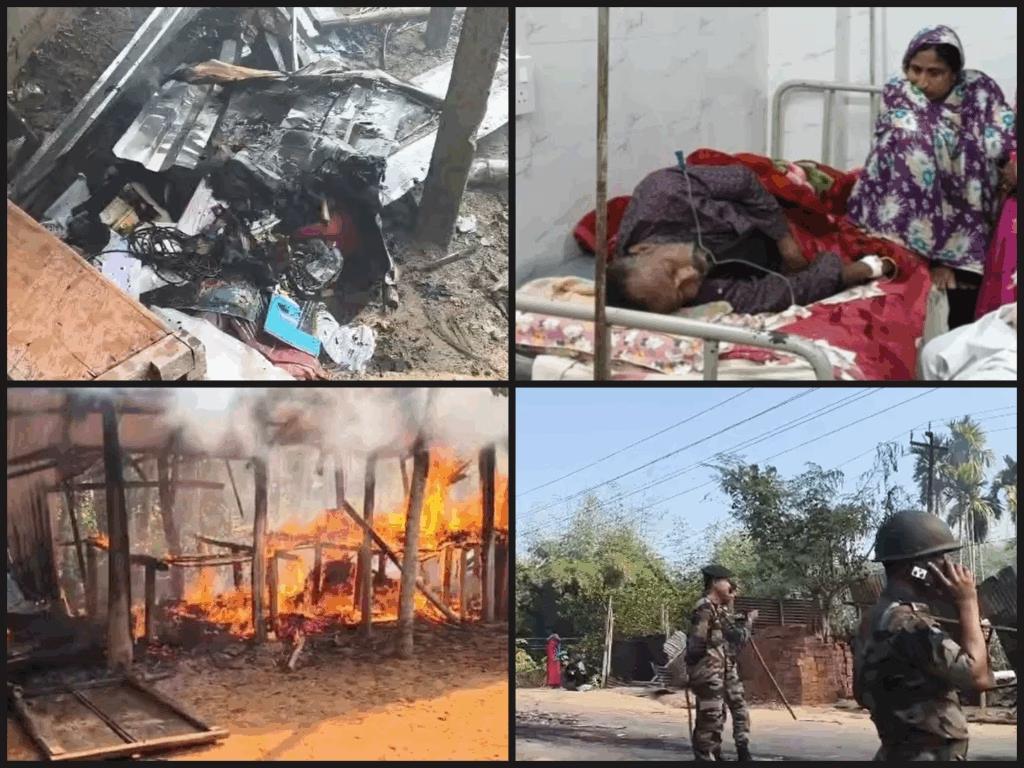

A dispute over religious donations spiralled into arson, assault, and alleged attacks on a mosque in Tripura’s Fatikroy, leaving Muslim families homeless and raising serious questions about police response and political accountability.
GROUND REPORT
by Abu Md Kawchar Hussen
The smell of charred walls, blackened metal sheets, still lingers in parts of Fatikroy, a quiet Assembly constituency in Tripura’s Unakoti district. For residents of Saidarpar–Shimultala and nearby Kumarghat areas, the calm of everyday life was shattered on Saturday morning when a dispute over religious donations escalated into one of the most serious episodes of communal violence the region has witnessed in recent years.
What began as a routine collection of donations for a Hindu religious event allegedly spiralled into targeted attacks on Muslim homes, shops, vehicles, and a mosque, leaving several families homeless, livelihoods destroyed, and the local administration facing sharp questions over its response.
In Fatikroy and surrounding villages, residents say the collection of donations for religious festivals—across communities—has long been a customary and largely peaceful practice. Muslim families, locals point out, have traditionally contributed money, building materials, and labour for events organised by Hindu neighbours.
This time, however, tensions surfaced early on Saturday. According to residents, a group of people, described as outsiders by locals, moved through Muslim-dominated areas demanding donations. Shopkeepers and residents who asked for time or questioned the manner of collection were allegedly subjected to verbal abuse and threats.
Within hours, what followed was a rapid escalation that many say appeared planned rather than spontaneous.
The violence is said to have first erupted in the Bhairabthali area, where a tom-tom vehicle carrying wooden planks was stopped. The timber belonged to Masebbir Ali, a licensed trader known locally for running a legal business for years. The wood, according to residents, was meant for constructing the mimbar (pulpit) of a mosque.
Witnesses claim the vehicle was halted and the driver told it would not be allowed to pass unless donations for the puja were paid. When informed, Masebbir Ali rushed to the spot and reportedly assured the group that the donation would be given later.
That assurance, locals say, did not defuse the situation.
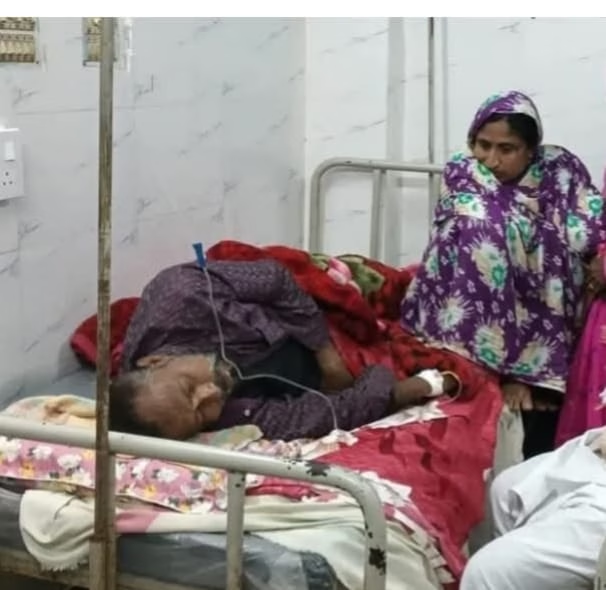
According to eyewitnesses, Masebbir Ali was assaulted with sticks and fists, and around Rs 80,000 he was carrying for business purposes was allegedly snatched. He sustained serious injuries and collapsed at the scene.
As word of the assault spread, tensions rippled across nearby localities.
Masebbir Ali was first taken to Fatikroy Hospital, where his family alleges he did not receive adequate emergency treatment. He was later shifted to Kailashahar District Hospital. Family members claim the delay worsened his condition, and as of the latest reports, he remains in critical care.
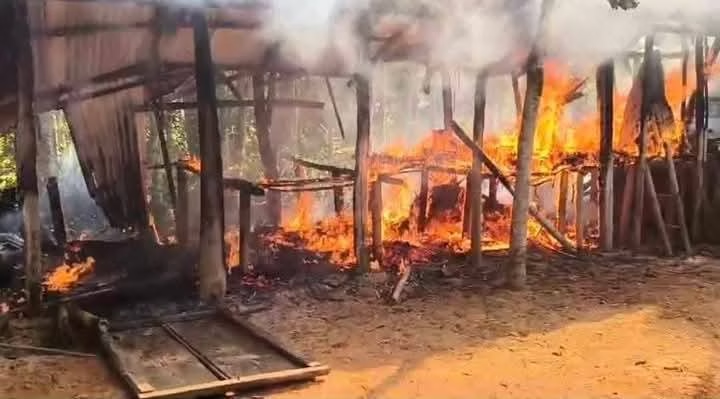
By late morning, violence had spread. Groups of men from Hindu community allegedly moved through Muslim neighbourhoods, setting fire to shops, houses, vehicles, and agricultural assets. Eyewitnesses describe scenes of panic as flames engulfed structures within minutes.
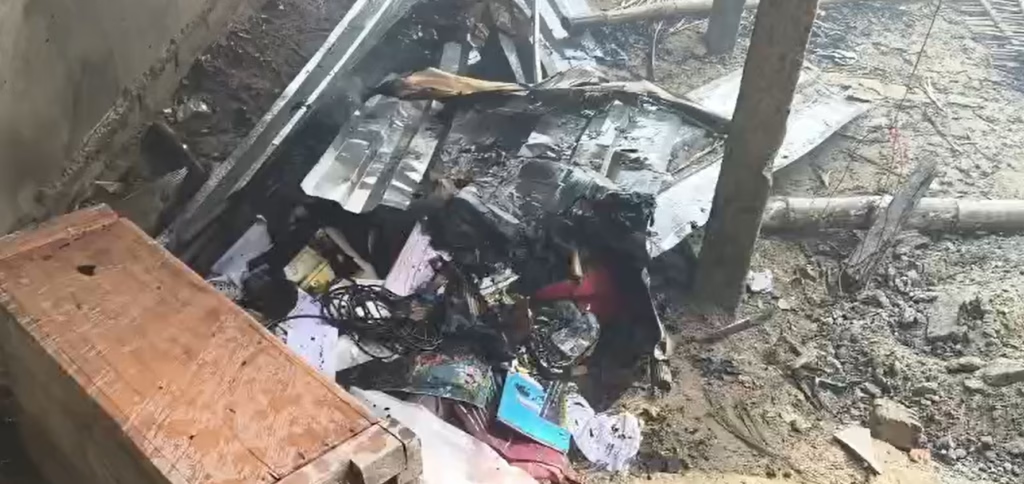
Among those affected is Asma Khatun, who ran a small edible oil shop that supported her family. “This shop was our only source of income,” she said, standing near the blackened remains. “When I tried to stop the fire, I was beaten. Now we have nothing.”
Mutasir Mia, a young man who earned his living by driving auto-rickshaws, lost all three of his vehicles. Ajbor Ali lost his only auto. Ali Ahmed, who had spent nearly a decade working as a labourer in Bengaluru, watched the dumper truck he bought with his savings burn to ashes.
Farmer Mokaddas Ali lost two tractors, cattle feed, and a small poultry unit. He was injured in violence and nursing his injuries at a hospital.
Several homes also suffered partial destruction, with boundary walls demolished and belongings looted or burnt.
Residents say the destruction appeared systematic, with attackers moving from one property to another.
One of the most sensitive aspects of the violence was the alleged attack on a mosque in the area. Locals claim miscreants vandalised the structure, breaking doors and windows before setting parts of it on fire. Newly installed tiles were destroyed, and allegations have emerged that copies of the Holy Quran were burnt.
The mosque is located not far from a police outpost, a fact that has intensified public anger.
“This was not just an attack on property,” said a local elder. “It was an attack on our dignity and faith.”
Muslim community alleges inaction of the police during the violence. Several witnesses claim law enforcement personnel were present but failed to intervene as shops and homes were set ablaze.
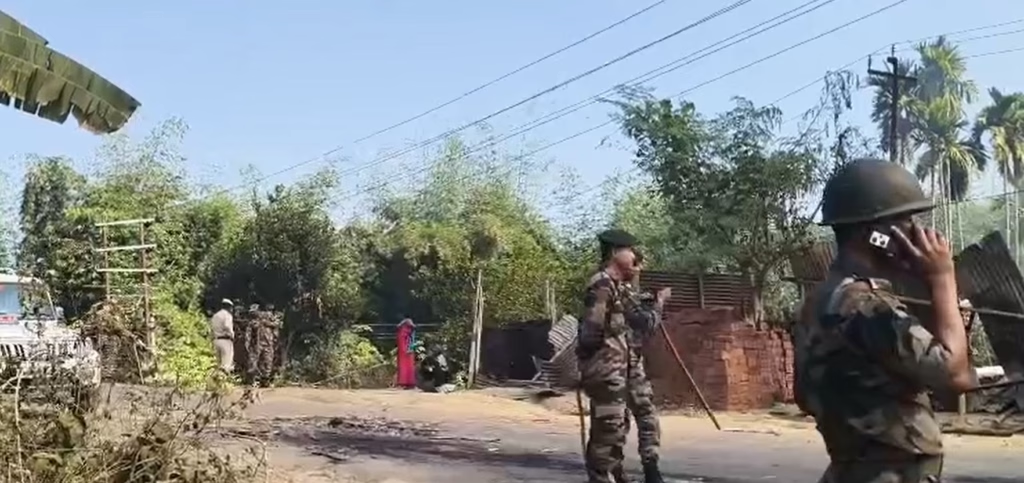
The administration eventually imposed Section 163 of the Bharatiya Nagarik Suraksha Sanhita (BNSS), allowing restrictions on movement and public gatherings to control the situation. Groups of gun wielding paramilitary forces fan across the town as an uneasy calm prevails on the streets.
A few arrests were made, but locals allege that three individuals from the affected Muslim community were also detained, further fuelling resentment.
The incident has triggered political controversy in Tripura. The violence occurred in the 51st Assembly Constituency, represented by Minister Sudhanshu Das.
Residents allege that he described the incident as a “clash between two groups” during a press interaction, a characterisation many locals strongly dispute.
Opposition leaders have been vocal. Jitendra Chaudhury of CPIM, who is Leader of Opposition in the state Assembly, accused the BJP-led government of failing to protect minorities, alleging that while Kumarghat was burning, the Chief Minister was attending a roadshow in North Tripura.
A Congress delegation attempting to visit the affected area the following day was stopped by police citing security concerns.
Congress Legislature Party leader Birajit Sinha protested the move, calling it an attempt to prevent political scrutiny.
Meanwhile, Mobasar Ali, Chairman of the State Waqf Board and former MLA, visited the violence-hit localities, met affected families, and filed an FIR demanding a fair investigation and strict legal action.
Families who lost homes, businesses, and years of savings, are now dependent on relatives and neighbours for food and shelter. They are demanding transparent and impartial investigation, arrest and punishment of those responsible, adequate compensation for losses
While calm has returned to Fatikroy for now, it is fragile with Muslims living in the fear of what happens next.