
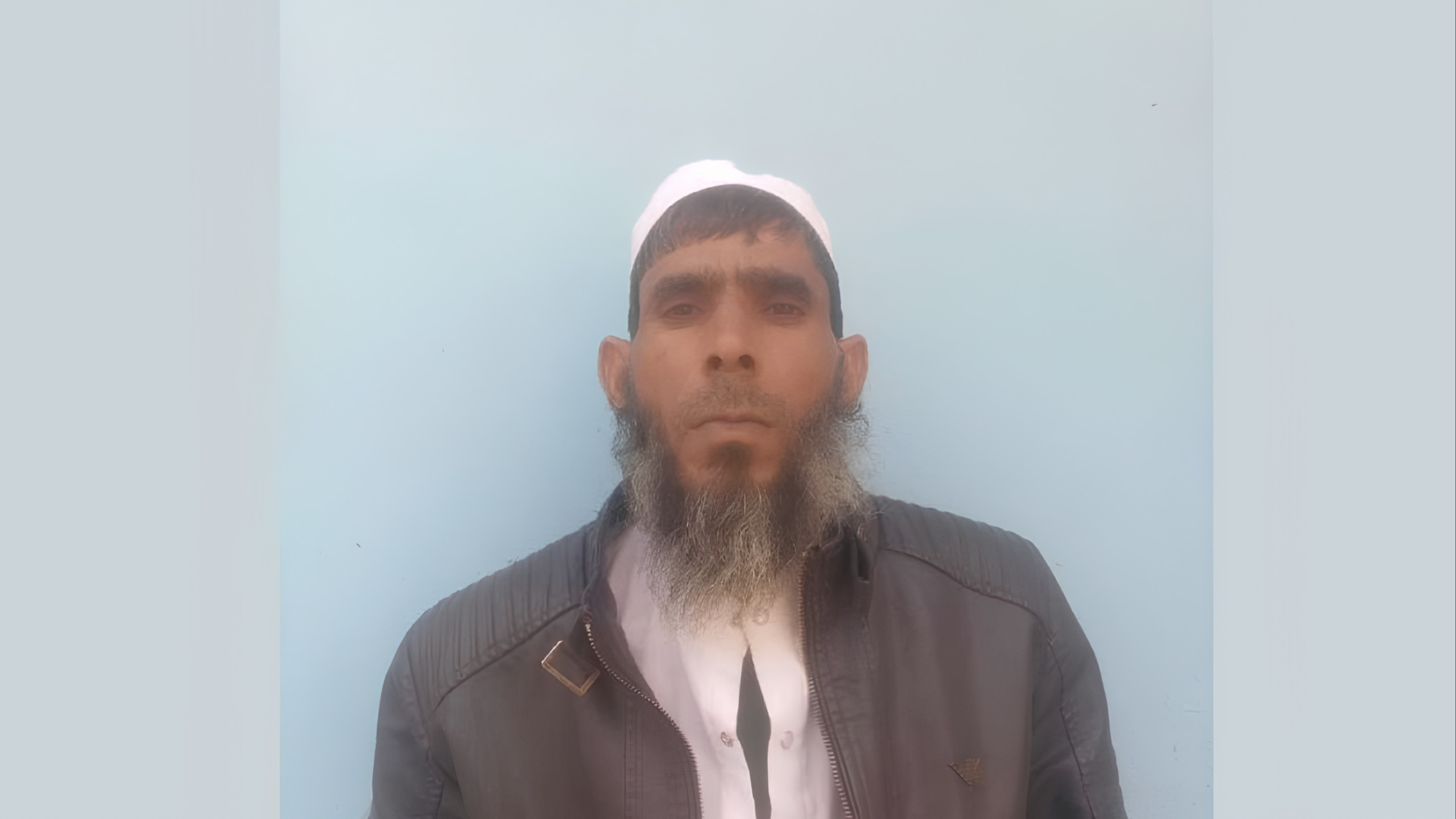




A 40-year-old Muslim farmer from Rajasthan’s Alwar district was killed outside a police station on Sept. 24 after being attacked with stones, with his family alleging he was targeted because of his religious identity, The Wire reported.
Saikun Khan, a resident of Barawas village, had left home that morning to buy a tyre for his motorcycle. He told his family he would return soon to tend to the onion crop he had planted, according to The Wire.
He never returned.
The Wire reported that Khan, a father of three, was attacked outside the gate of the Baroda Meo police station. Police later arrested a 21-year-old local man identified as Harsh in connection with the killing.
Khan’s family told The Wire that he had no known dispute with anyone and alleged that his beard and skullcap may have made his Muslim identity apparent.
“We don’t know why my brother was killed. He didn’t have any enmity with anyone,” Khan’s younger brother, Irshad Khan, told The Wire.

“His only crime was that he sported a beard and wore a skullcap. We suspect he was killed because it was evident from his attire that he was a Muslim.”
According to the family’s account, Khan had travelled to Baroda Meo, about 10 km from Barawas, on a motorcycle with another villager who had work in the town. After dropping him off, Khan went to buy a tyre and some household items, The Wire reported.
Khan’s father, Nasru Khan, told The Wire that the attacker suddenly struck his son on the head with a heavy stone outside the police station.
“He fell down and his legs were trapped under the motorcycle. The man then took a sharp stone and kept hitting Saikun, crushing his head,” Nasru said, according to The Wire.
Police told The Wire that Khan was initially taken to a community health centre in Baroda Meo and then referred to a hospital in Alwar. He died before reaching the hospital, the report said.
The killing led to protests and a sit-in by local residents, who demanded compensation for Khan’s family and action against the accused, The Wire reported.
Sher Mohammad Meo, head of the Meo Panchayat, alleged that Harsh had earlier been brought to the police station following a dispute with his father. He claimed Harsh had threatened to kill someone after being released, but police did not take action.
The Rajasthan police have denied that the killing was motivated by religious hatred and said they were investigating the allegation that Harsh had earlier been inside the police station.
Alwar Additional Superintendent of Police Priyanka Raghuvanshi told The Wire that Harsh’s behaviour after his arrest appeared to suggest that he could be mentally disturbed, but said police would establish his mental condition only after medical examinations.
“The claim that Khan was killed because he is a Muslim is not true,” Raghuvanshi told The Wire, adding that the family’s initial complaint did not mention such a motive.
Raghuvanshi said police had registered a murder case against Harsh.
She told The Wire that a preliminary inquiry suggested Harsh had previously had a dispute with his father and had become violent. Police were investigating the allegation that he had earlier been brought to the Baroda Meo police station, she said, but had so far found no evidence supporting it.
Raghuvanshi also said the location of the attack could not be seen from inside the police station. Police officers rushed outside after hearing cries for help and separated the accused from Khan, she said.
The killing drew criticism from Rajasthan’s opposition Congress.
Tika Ram Jully, leader of the opposition in the Rajasthan assembly, criticised the BJP-led state government over the incident, calling it a failure of law and order and questioning how an attack could take place outside a police station.
The Wire reported that grief and uncertainty prevailed at Khan’s home in Barawas as villagers visited the family.
Khan’s father said his son left behind three children, including a minor son.
“The only places where my brother would go were the field and the mosque. He lived a very simple life,” Irshad told The Wire.
“We still can’t believe that he is no more with us.”
Support Independent Media
Click Here and Join the Membership of Millat Times to Support Independent Media.
Support Millat Times