




Follow Millat Times for independent journalism.
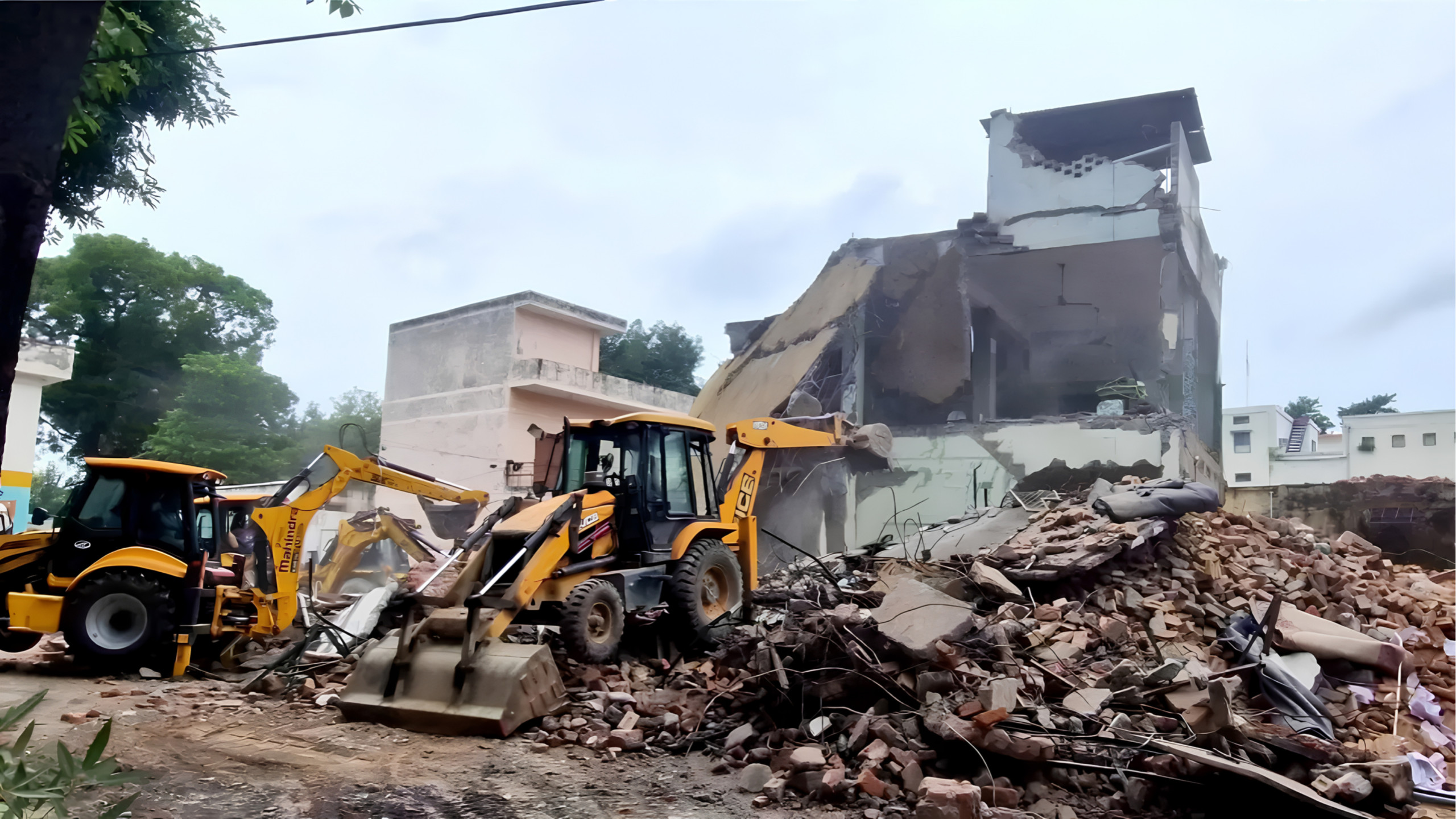
Opens the app if installed, or Google Play to download it.The Supreme Court of India has directed the transfer of a contempt petition alleging the demolition of a nearly 100-year-old mosque in Uttar Pradesh’s Saharanpur to the Allahabad High Court, where the alleged violation of the Court’s guidelines against punitive bulldozer demolitions can be examined.
The petition, filed by Imran Ahmad against Uttar Pradesh Chief Secretary Shashi Prakash Goyal, alleged that the mosque was demolished in violation of the Supreme Court’s November 13, 2024, judgement, which laid down safeguards against arbitrary demolitions of properties belonging to individuals accused or convicted in criminal cases.
A Bench comprising Chief Justice of India Surya Kant, Justice Joymalya Bagchi and Justice V. Mohana was hearing the matter on November 23, 2026, in Imran Ahmad v. Shashi Prakash Goyal (Diary No. 60722/2026).
Appearing for the petitioner, Advocate Fozia Rahman argued that the demolition had been carried out in breach of the safeguards established by the Supreme Court in its landmark November 2024 judgement.
She submitted that the authorities’ alleged failure to comply with the Court’s directions raised serious questions about the implementation and authority of the Supreme Court’s ruling.
The November 13, 2024 judgement prohibits authorities from demolishing someone’s home or property merely because the person is accused or convicted of a criminal offence.
The Court had made it mandatory for authorities to issue a prior show-cause notice, provide an opportunity for a personal hearing, pass a reasoned demolition order and allow the affected person sufficient time to challenge the decision.
It had also warned that officials violating these directions could face contempt proceedings and prosecution, besides being held personally responsible for restoring demolished properties and paying compensation.
During the hearing, Chief Justice Surya Kant questioned how a contempt petition could be directly maintained before the Supreme Court when the underlying facts and alleged violations had not yet been established through appropriate proceedings.
The CJI told the petitioner’s counsel, “How contempt is maintainable, madam? First go and establish your right. Approach the High Court. Challenge the action. On the basis of this court’s judgement, you might succeed. We have laid down the principles. Wherever these principles have been violated, in what factual context and background, that first you have to establish through appropriate proceedings.”
When the petitioner’s counsel insisted that the Supreme Court’s 2024 guidelines were not being implemented, the CJI said the Bench was confident that the Allahabad High Court would give effect to the Supreme Court’s directions.
He indicated that the petitioner could approach the Supreme Court again if appropriate relief was not granted by the High Court.
Justice V. Mohana also emphasised that every allegation of violation of a Supreme Court judgement could not be brought directly before the apex court, particularly when determining the facts required a detailed examination.
The judge observed, “Every order which is violative of Supreme Court judgement cannot come back to the Supreme Court itself. You have to go to the respective High Courts.”
Following the hearing, the Supreme Court directed that the record of the contempt petition be transferred to the Allahabad High Court for appropriate consideration.
The Bench clarified that if the High Court finds that the Supreme Court’s November 2024 directions were violated, the necessary consequences would follow.
The Supreme Court, however, did not examine the legality of the Saharanpur mosque demolition or determine whether the authorities had violated its guidelines.
The proceedings are significant for individuals and communities challenging demolitions allegedly carried out in violation of the Supreme Court’s safeguards against punitive bulldozer action.
The 2024 judgement established binding safeguards for demolition proceedings across the country. However, allegations concerning individual demolitions must first be examined by the jurisdictional High Court, where the notices issued, hearing procedures followed and nature of the demolished structure can be assessed.
The Allahabad High Court will now have the opportunity to examine the allegations concerning the nearly century-old Saharanpur mosque and determine whether the authorities complied with the Supreme Court’s directions.
Case details:
- Case title: Imran Ahmad v. Shashi Prakash Goyal
- Case number: Diary No. 60722/2026
- Date of order: November 23, 2026
- Court: Supreme Court of India
- Bench: CJI Surya Kant, Justice Joymalya Bagchi and Justice V. Mohana
- Petitioner: Imran Ahmad
- Respondent: Shashi Prakash Goyal, Chief Secretary, Government of Uttar Pradesh
- Counsel for petitioner: Advocate Fozia Rahman
- Next forum: Allahabad High Court
Support Independent Media
Click Here and Join the Membership of Millat Times to Support Independent Media.
Support Millat Times