
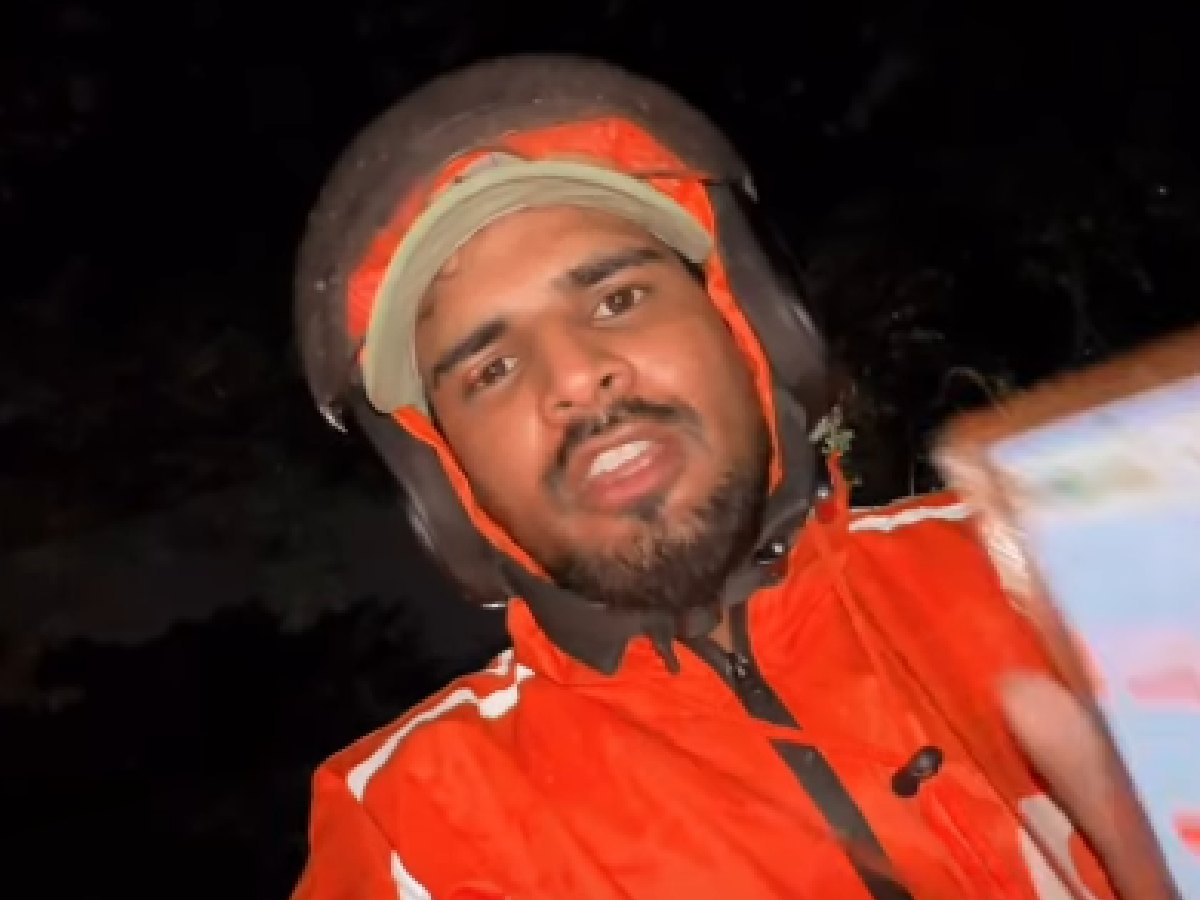




When Aftab Khan checked the details of a food delivery order assigned to him in Jaipur’s Raja Park neighbourhood in May, one line stopped him in his tracks.
“Muslim Delivery Boy should not be sent,” the customer instruction read.
For Khan, a Swiggy delivery partner and independent rapper who has spent years writing songs on social issues, the message felt painfully familiar. Across India, food delivery workers have periodically found themselves at the centre of communal controversies, with customers objecting to the religion of the person bringing food to their doorstep. In 2019, a Hyderabad customer allegedly refused to accept an order because the delivery worker was Muslim, prompting widespread outrage and a police complaint. Similar incidents resurfaced in subsequent years, raising questions about discrimination in the gig economy.
Khan initially believed he had encountered another example of the same prejudice.
“I was very sad when I saw it,” he recalled. “I felt it was unconstitutional. I thought people should know that such things are happening.”
He recorded a short video describing the message and posted it online. Within days, the clip exploded across social media, gathering millions of views and drawing reactions from across the country.
Yet the story that followed would complicate the narrative.
Instead of reassigning the order, Khan decided to complete the delivery himself. He says he wanted to understand why the customer had written the instruction and whether the hostility reflected a deeply held belief or a misunderstanding.
“What is the problem with a particular religion?” he remembers asking himself on seeing the note.
Before walking up to the customer’s home, Khan pulled out his phone and recorded a short video about the communally worded instruction attached to the order. The clip would soon go viral. But Khan was not content to leave the matter at that. He proceeded with the delivery.
When he arrived, the confrontation many expected never materialised.
Up meeting the customer, brought up the note directly, hoping to understand the thinking behind it.
According to Khan, the customer explained that the note had been written long ago in anger and had remained in the application’s instruction field without being removed. Delivery apps often preserve customer instructions across multiple orders unless users manually edit them. The customer apologised, Khan says, and removed the message after he explained how it appeared to delivery workers.
The encounter transformed Khan’s understanding of the incident.
“I felt it was important to tell the whole story,” he said. “If we only tell half the story, people form their own opinions.”
That conviction led him to post a second video — one that attracted only a fraction of the attention received by the original clip. While the first video generated outrage, the second focused on reconciliation, apology and dialogue.
The disparity was telling. In an era shaped by algorithmic outrage, stories of conflict often travel further than stories of resolution.
But Khan insists that the second video mattered more.
“This was my message of love and brotherhood,” he said. “If we want a better future for our country, we have to talk to each other.”
His remarks come at a moment when debates around religious identity increasingly shape public life. Against that backdrop, a customer note on a food delivery application quickly became a symbol of wider anxieties about exclusion and belonging. Yet Khan remains reluctant to reduce the incident to a simple story of communal hatred.
A resident of Jaipur’s Ghat Gate area and father of two sons, Khan says his closest friends include Hindus. He points to years of positive interactions during his work as a delivery partner, recalling customers who asked him to donate undelivered food to those in need rather than let it go to waste.
“It is not true that everyone thinks the same way,” he said. “I meet good people every day.”
That insistence on nuance has distinguished Khan’s response from many viral controversies. Rather than using the incident to condemn an entire community, he has repeatedly argued that individuals should not be judged by the actions of a few.
“If one person does something wrong,” he said, “an entire community gets defamed.”
“Deal with people with love,” he said. “If someone speaks harshly and I also speak harshly, things become worse. If I respond with respect, maybe the other person will understand.”
Support Independent Media
Click Here and Join the Membership of Millat Times to Support Independent Media.
Support Millat Times