
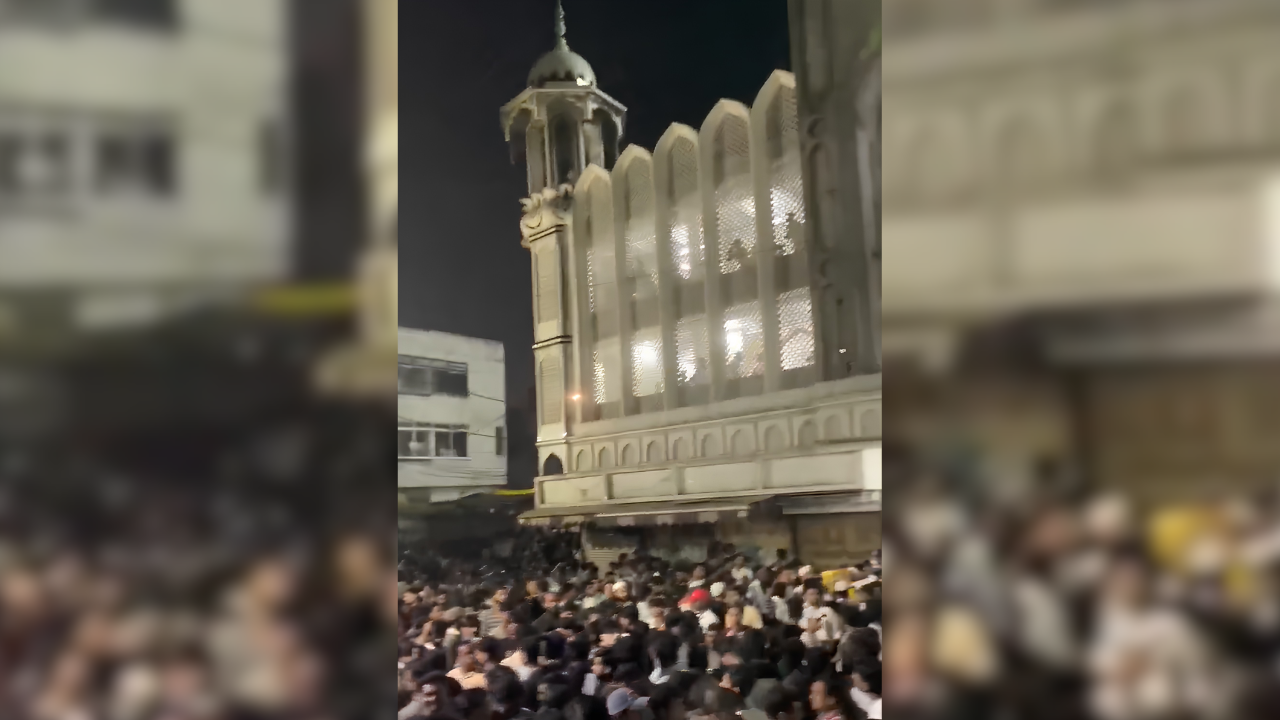




Residents gathered near a nearly 600-year-old mosque in Ujjain around midnight on Sunday to protest a proposal to remove part of the structure as part of a road-widening project ahead of the 2028 Simhastha Kumbh.
A large number of residents gathered near the Shahi Masjid, opposing the proposed action and urging authorities to explore alternatives that would allow the road to be widened without affecting the historic place of worship.
The protest came as authorities prepared to proceed with the proposed removal of a portion of the mosque. Protesters demanded that the structure be protected and called for dialogue between the administration, mosque representatives and local residents.
The Madhya Pradesh High Court’s Indore bench on Sept. 9 dismissed petitions filed by the Shahi Masjid Waqf Panchayat Mochiyaan challenging the proposed removal of part of the mosque for the road-widening project.
The order came as authorities prepare Ujjain for the 2028 Simhastha Kumbh, a major Hindu religious gathering expected to draw large numbers of pilgrims. The court noted the need for infrastructure and arrangements to deal with the anticipated crowds.
The road-widening programme is part of a broader infrastructure push in Ujjain ahead of the religious gathering. Authorities have cited traffic management, public safety and the need to accommodate pilgrims as reasons for widening roads and improving connectivity.
The road-widening drive has also drawn attention to land transactions involving the family of Madhya Pradesh Chief Minister Mohan Yadav.
Yadav had earlier said the demolition drive began from his own ancestral house as part of the road-widening exercise.
An investigation by The Indian Express reported that Yadav’s family and their real-estate companies acquired at least 137 plots covering 168 acres in Ujjain for about Rs 45 crore in the two years after he became chief minister in December 2023. The report said about 111 acres of the land were located near road and highway projects announced by his government.
The newspaper also reported that the family’s land holdings in Ujjain had increased from about 167 acres in 2021-23, when Yadav was a minister, to about 335 acres in 2024-25, after he became chief minister.
The findings have raised questions about the proximity of the family’s land purchases to government infrastructure projects. However, the investigation itself does not establish that any road or infrastructure project was undertaken to benefit Yadav, his family or their companies.
The Indian Express said it sent detailed questions to Yadav and his office on April 13 but had not received a response. State government officials quoted by the newspaper rejected linking the extended family’s real-estate activities to Yadav’s political career, saying some relatives had been in the property business for years.
A relative, Anant Yadav, also said the family had been in the real-estate business since 2010 and had the right to buy, develop and sell private land.
The land issue has added another layer to debate over the road-widening programme, which authorities say is necessary to prepare Ujjain for the expected influx of pilgrims during Simhastha 2028.
The mosque dispute comes after a portion of another mosque in Ujjain was removed earlier this month during road-widening work, with heavy police deployment at the site.
The action triggered protests by sections of the Muslim community, with residents and community members opposing the removal of mosque structures and calling for greater consideration of religious sites during infrastructure projects.
Ujjain City Qazi Khaliqur Rahman had earlier called for religious sites belonging to different communities to be treated equally during road-widening work.
“There should be no discrimination in the road-widening exercise, and religious places of all communities should be treated equally,” he said.
He also urged the administration to respect religious sentiments while carrying out development work.
The latest dispute comes against the backdrop of several road-widening-related controversies in Ujjain.
Residents opposing the proposed removal of part of the Shahi Masjid said the structure had been part of the locality for decades and that its religious and community significance should be considered before any demolition.
They called for dialogue between the administration, mosque representatives and local residents.
Authorities have maintained that the infrastructure work is aimed at preparing Ujjain for the expected influx of pilgrims during Simhastha 2028 and improving road capacity, traffic flow and public safety.
The latest midnight protest reflects tensions between Ujjain’s preparations for the 2028 religious gathering and demands from local communities for the preservation of religious structures.
Support Independent Media
Click Here and Join the Membership of Millat Times to Support Independent Media.
Support Millat Times