
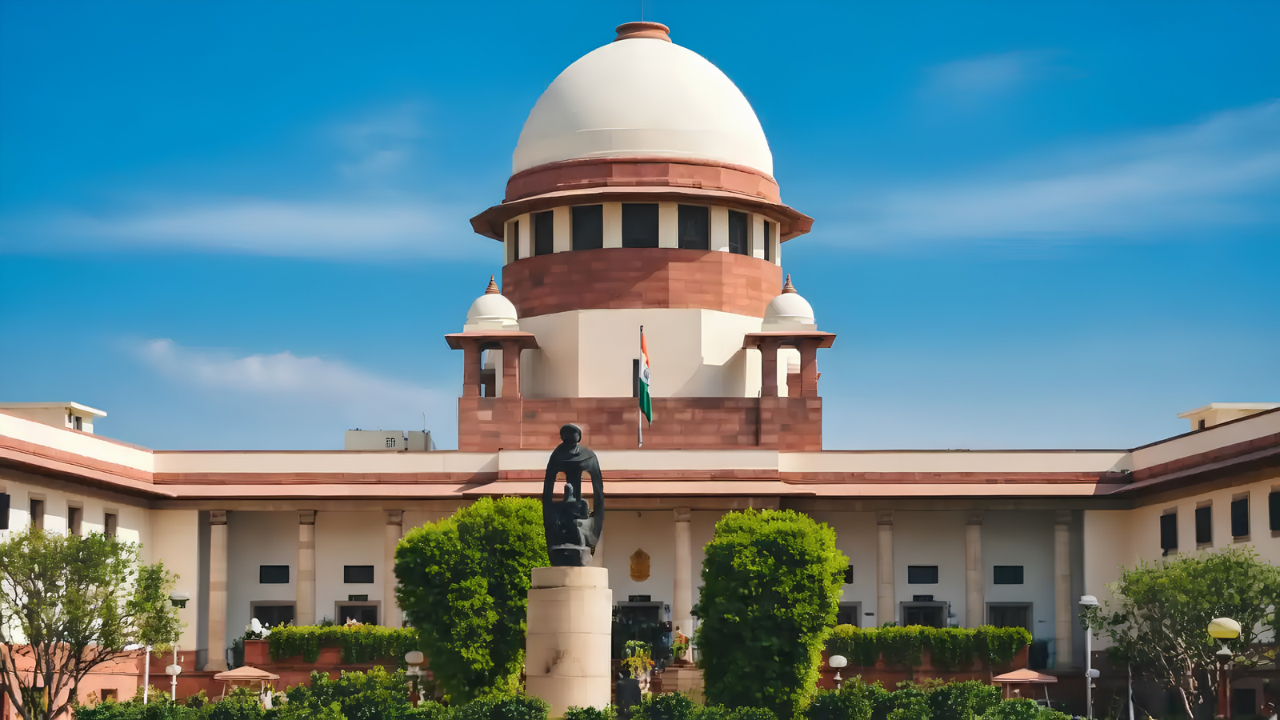




The Supreme Court has said that every citizen, including children, has a fundamental right to access the internet, rejecting the idea of completely restricting minors from the digital space in the name of safety.
A bench of Justices JB Pardiwala and K Vinod Chandran made the observation in an order passed on Thursday while hearing a petition alleging that social media platforms were not fulfilling their legal obligations to report material related to child sexual abuse and exploitation to the authorities.
“Denying the same altogether would be as absurd as saying children below a certain age do not have a conscience worth protecting or a freedom of speech worth expressing,” the bench said.
The court examined whether children should be entirely kept away from the internet and social media, emphasising that their safety and freedom were not mutually exclusive.
“Our children are entitled to both,” the bench observed.
The remarks come amid concerns over the circulation and promotion of child sexual abuse material online. On July 3, the BBC reported that Instagram, owned by Meta, had been running paid advertisements in India that allegedly promoted such material.
According to the report, some advertisements used phrases such as “rape video” and “child video” and directed users to Telegram channels where the material could be purchased.
Publishing or transmitting child sexual abuse material is a criminal offence under Indian law, including the Information Technology Act, 2000, and the Protection of Children from Sexual Offences Act, 2012.
Two days after the BBC report, the Union government issued a notice to Meta directing it to disable advertisements and content allegedly facilitating access to child sexual abuse material.
Internet a source of knowledge and expression
During Thursday’s hearing, the Supreme Court described the internet as a marketplace of ideas, creative expression and information.
For children living in remote areas, the internet is often the only available source of education and information, the bench said.
It also noted that children with special needs may rely on the internet as an important means of finding companionship.
The court acknowledged growing international efforts to restrict social media access for children below a specified age, citing safety concerns. However, after considering the issue, it declined to endorse a blanket approach that would deny children access to the internet altogether.
Debate over age-based social media restrictions
The observations come amid a wider international debate over restricting children’s access to social media.
Australia became the first country to introduce a nationwide ban on social media accounts for children under 16, with the restrictions taking effect in December 2025.
The United Kingdom also announced plans to restrict social media access for under-16s in June, citing concerns about exposure to harmful content.
In India, Karnataka and Andhra Pradesh have also considered restrictions for children in the same age group.
In March, Karnataka Chief Minister Siddaramaiah announced plans to prohibit social media use by children under 16, though he did not specify when the measure would come into force. The Andhra Pradesh government had said in 2025 that it was considering a similar restriction.
Following Karnataka’s announcement, the Internet Freedom Foundation said online child safety required serious, evidence-based policymaking rather than prohibitions driven by headlines.
India’s Digital Personal Data Protection Act requires organisations handling children’s personal data to obtain verifiable consent from a parent or lawful guardian before processing it.
Support Independent Media
Click Here and Join the Membership of Millat Times to Support Independent Media.
Support Millat Times