


Follow Millat Times for independent journalism.
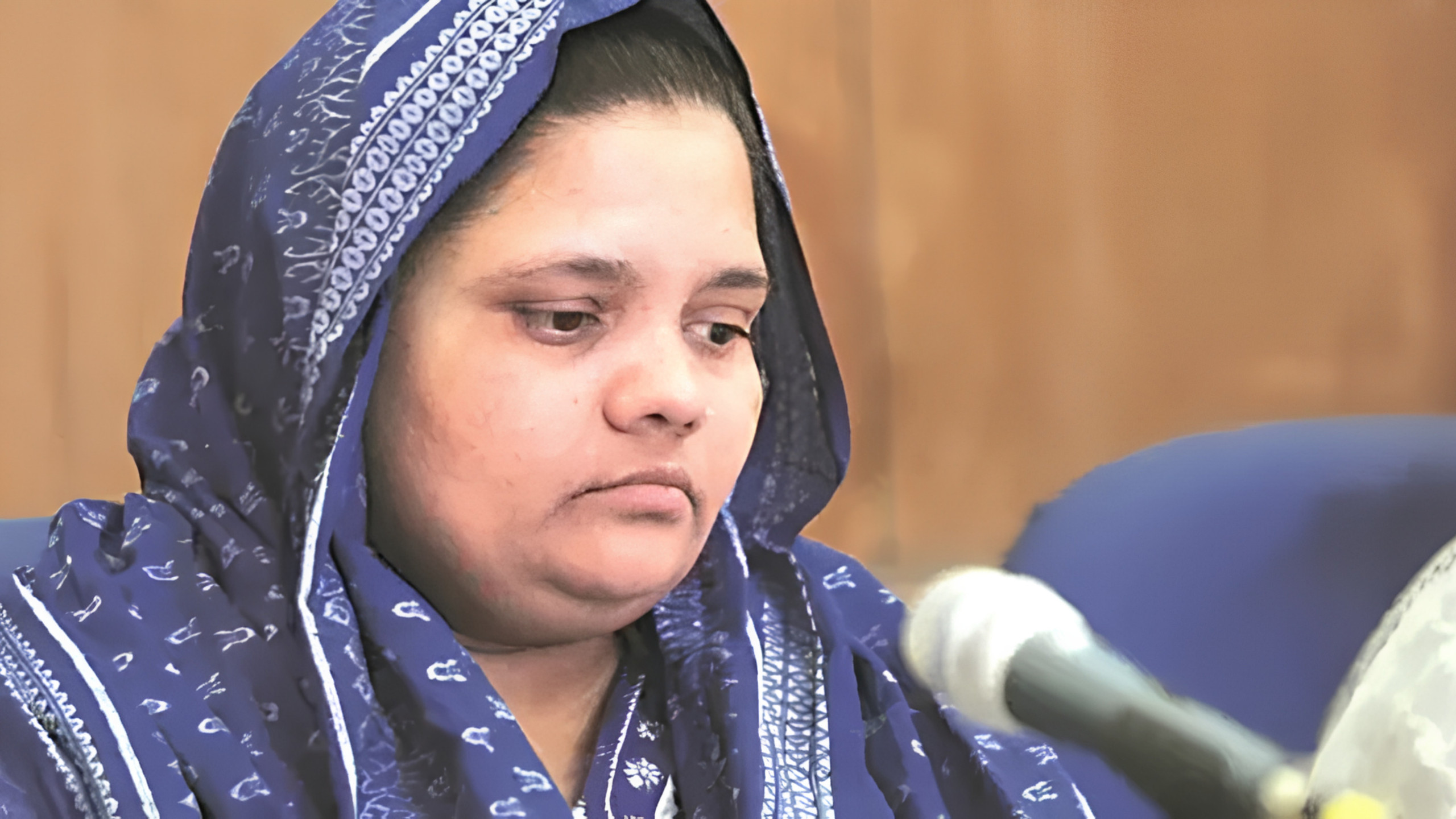
Opens the app if installed, or Google Play to download it.Bilkis Bano, one of the most prominent survivors of the 2002 anti-Muslim violence in Gujarat, will inaugurate an international conference on women organised by the Girls Islamic Organisation (GIO) Kerala in Kochi on Sunday, 15 November.
Bano’s participation comes after more than two decades of struggle for justice following the gang rape of her and the murder of seven members of her family during the 2002 violence. Her legal battle became a landmark case, particularly after the Supreme Court overturned the remission granted to the 11 men convicted in the case in January 2024.
Organised by the GIO Kerala state committee, the conference will take place at Rajendra Maidan in Kochi, which has been named ‘Mujadila Square’ for the event.
The programme is part of GIO Kerala’s campaign, ‘Being, Becoming, Belonging’, which began on 20 August. The campaign seeks to examine women’s rights and social conditions from an Islamic perspective and explore ways to create a more women-friendly society.
The campaign has two key objectives. The first is to study the rights and spaces Islam granted to women, alongside the social conditions that supported women during the Prophet’s time. The second is to draw lessons from that understanding and propose ideas and practical interventions to make contemporary society more inclusive and supportive of women.
Spread across four venues, the conference will feature paper presentations and discussions on a range of subjects. Academics, researchers, writers and activists from India and abroad are expected to lead the sessions.
Among the speakers are Dr Sariya Cheruvallil, professor at Coventry University in the United Kingdom; Dalia Saleh, researcher at the University of Cambridge; Palestinian writer and journalist Reem Mahmoud Al Haddad; Nousheen Farooq, student leader at Jamia Millia Islamia; A. Rahmathunnisa, national secretary of Jamaat-e-Islami; and P. Mujeeb Rahman, Ameer of Jamaat-e-Islami Kerala.
Other participants include Shaheen K. Moidunny, professor at the University of Leeds; Dr Shilpa Das; Monolita Chatterjee, chairperson of the Indian Institute of Architects Kerala Chapter; senior product designer Tanya Prasad; Ganga Dileep C., founder of Studio Recycle Bin; Sumayya Fathima; and journalist Jisha M.
Biyumma, the mother of Zakariya, who has spent years in prison, and his sister Bushra will also address the gathering. Raihana Kappan and Dr Noorjahan K., a social activist and social science researcher, are among the other speakers.
T. J. Vinod MLA will inaugurate the concluding session. Studies conducted on different subjects as part of the ‘Being, Becoming, Belonging’ campaign will also be presented during the conference.
The organisers have arranged a separate venue and dedicated sessions for children. A song produced by GIO will be released during the event, which will conclude with a musical performance by playback singer Dana Razik.
GIO Kerala state president K. Shifana, state general secretary Rizwana Sherin, and state vice presidents Ashiqa Sherin and Lulu Marjan announced the conference at a press conference.
Bilkis Bano’s journey to the conference stage is marked by a long and difficult fight for justice.
In March 2002, when she was five months pregnant, Bano fled her village of Randhikpur in Gujarat’s Dahod district with members of her family and other Muslims as violence against the community spread across the state.
The group was attacked by a mob while travelling through the district. Bano was gang-raped during the assault, and seven members of her family were killed. Among those murdered was her three-year-old daughter.
The violence of 2002 left nearly 2,000 people, most of them Muslims, dead across Gujarat. Narendra Modi was the state’s chief minister at the time and has faced serious allegations over his government’s handling of the violence.
In December 2003, the Supreme Court directed the Central Bureau of Investigation (CBI) to investigate the gang rape case. The accused were arrested in 2004. After Bano expressed concerns about threats and the possibility of an unfair trial in Gujarat, the Supreme Court transferred the proceedings to Maharashtra.
In 2008, a court convicted 11 men of gang rape and murder and sentenced them to life imprisonment.
Bano’s legal struggle continued for years. In 2019, the Supreme Court directed the Gujarat government to pay her compensation and provide her with a government job and accommodation of her choice.
However, the case returned to the national spotlight on 15 August 2022, when the Gujarat government granted remission to all 11 convicts, allowing them to walk free from Godhra sub-jail.
Their release sparked widespread outrage, particularly after they were welcomed outside the prison by relatives and members of right-wing Hindu groups, with some offering them sweets and touching their feet.
Bano challenged the remission decision in the Supreme Court. On 8 January 2024, the court quashed the remission orders, ruling that the Gujarat government did not have the authority to grant the relief. It held that the Maharashtra government, where the trial had taken place, had the relevant jurisdiction.
The Supreme Court directed all 11 convicts to surrender. They subsequently returned to prison within the period set by the court.
More than two decades after the attack, Bano’s struggle remains an important part of the wider conversation about justice, accountability and the rights of survivors of communal violence in India.
Her presence at GIO Kerala’s international conference in Kochi is expected to bring that experience into discussions on women’s rights, dignity, justice and the need for a more inclusive society.
Support Independent Media
Click Here and Join the Membership of Millat Times to Support Independent Media.
Support Millat Times