
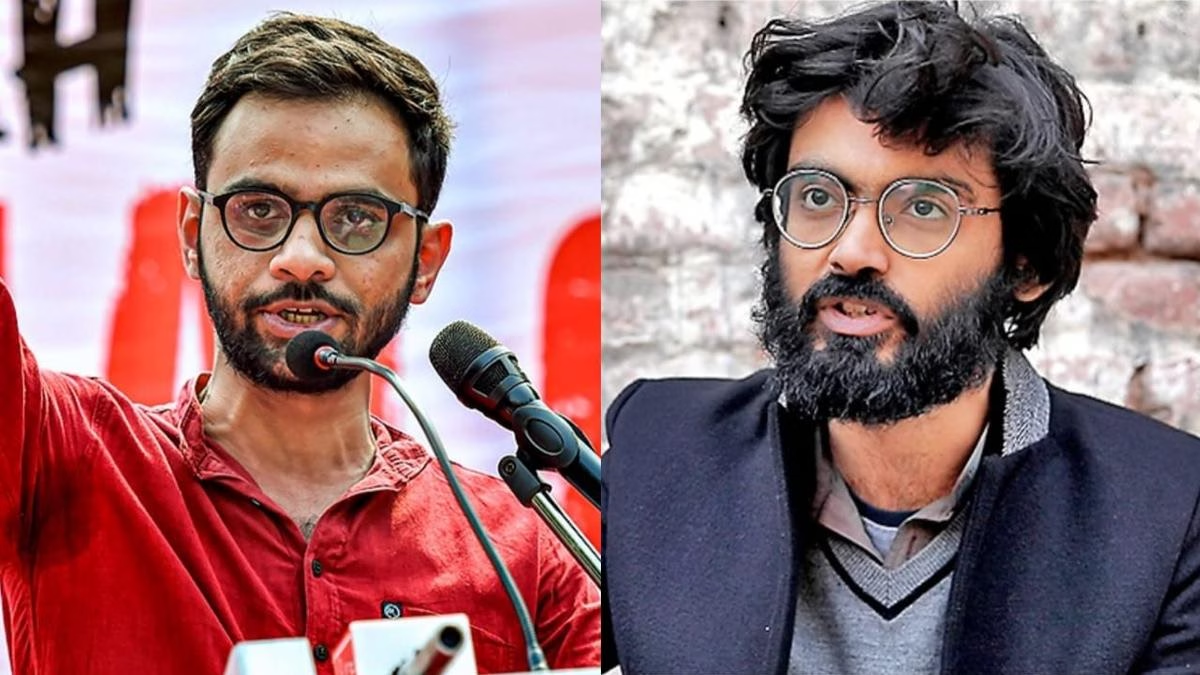



Delhi Police has opposed fresh bail applications by activists Umar Khalid and Sharjeel Imam in a case linked to the 2020 northeast Delhi riots, arguing that the petitions were legally untenable and sought to mislead the court.
The police told the Delhi High Court that the two men were among the alleged key planners of a wider conspiracy behind the violence, which erupted in February 2020 during protests over India’s citizenship law.
The clashes in northeast Delhi killed 53 people and injured hundreds. Most of those killed were Muslims.
Khalid, Imam and several other activists were arrested between January and September 2020. Prosecutors have charged them under the Unlawful Activities (Prevention) Act, the Prevention of Damage to Public Property Act, the Arms Act and provisions of the Indian Penal Code.
Police allege that the violence was part of a broader plan to damage the reputation of the government led by Prime Minister Narendra Modi and was linked to protests against the Citizenship Amendment Act.
The trial has not yet begun.
The latest applications represent the activists’ third attempt to secure bail. Their earlier pleas were rejected, including by the Supreme Court.
Police, citing a Supreme Court ruling in January, said the circumstances and alleged risk posed by individual defendants were different and that the conditions set out in that ruling for renewed bail applications had not been satisfied.
In January, the Supreme Court granted bail to five other defendants in the case — Gulfisha Fatima, Meeran Haider, Shifa-ur-Rehman, Shadab Ahmed and Muhammad Saleem Khan.
The court had said Khalid and Imam could seek bail again once protected witnesses had been examined or after one year. It also cautioned that delays in trials involving anti-terror legislation could not automatically override statutory restrictions on bail.
Police have argued that neither condition has been met.
The activists’ latest pleas also rely on a Supreme Court ruling in May that stressed the principle that bail should generally be granted and imprisonment treated as an exception, including in cases involving India’s anti-terror law.
Police have told the High Court that the May ruling, delivered by a different bench in another matter, cannot displace the directions issued by the Supreme Court in January.
The Delhi High Court is considering the latest bail applications.
Support Independent Media
Click Here and Join the Membership of Millat Times to Support Independent Media.
Support Millat Times