
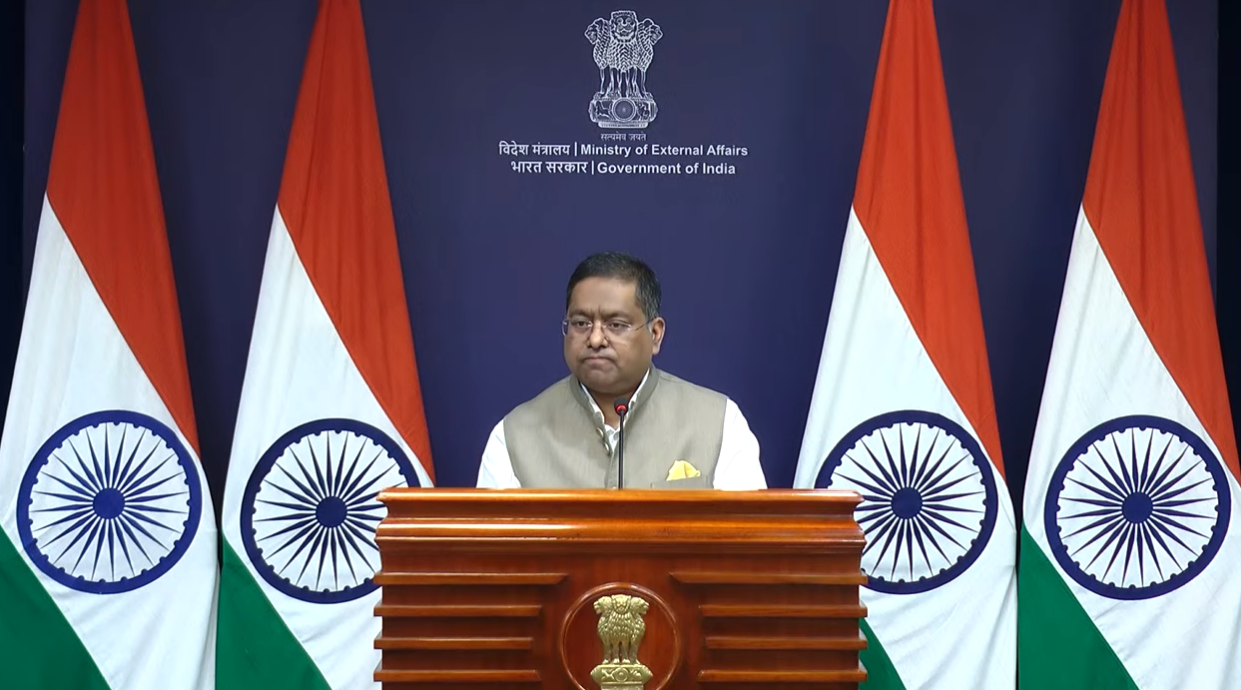




India has rejected a call by a U.S. religious freedom panel for sanctions against members of the Rashtriya Swayamsevak Sangh, calling the commission biased and questioning its credibility.
The U.S. Commission on International Religious Freedom said on Wednesday that senior RSS leaders should not receive high-level meetings or diplomatic courtesies in the United States. The recommendation came ahead of RSS chief Mohan Bhagwat’s planned visit to the country.
The RSS is a Hindu nationalist organisation and the ideological parent of India’s ruling Bharatiya Janata Party.
Commission Chair Asif Mahmood said Prime Minister Narendra Modi was a member of the RSS and accused the organisation and groups linked to it of attacks on religious minorities, including Christians and Muslims.
India’s Ministry of External Affairs rejected the criticism on Friday.
Foreign ministry spokesperson Randhir Jaiswal said the commission had for years made what he called misleading and provocative statements about India.
“The organisation you are talking about is known to everyone as a biased organisation,” Jaiswal told reporters, adding that it had its own agenda and lacked credibility.
The commission in March recommended that the United States designate India a “country of particular concern” over alleged serious and continuing violations of religious freedom. It was the seventh time the panel had made the recommendation.
The commission also called for targeted sanctions against individuals and organisations, including the RSS and India’s external intelligence agency, the Research and Analysis Wing. Proposed measures included asset freezes and entry restrictions.
The commission is an independent U.S. government body that monitors religious freedom worldwide and makes policy recommendations to the U.S. government. Its recommendations are not binding.
In an India-focused report issued in November, the commission said the relationship between the RSS and BJP had contributed to legislation it described as discriminatory, including laws relating to citizenship, religious conversion and cow slaughter.
India rejected that report as a selective and distorted assessment based on questionable sources and what it called ideological narratives.
Support Independent Media
Click Here and Join the Membership of Millat Times to Support Independent Media.
Support Millat Times