
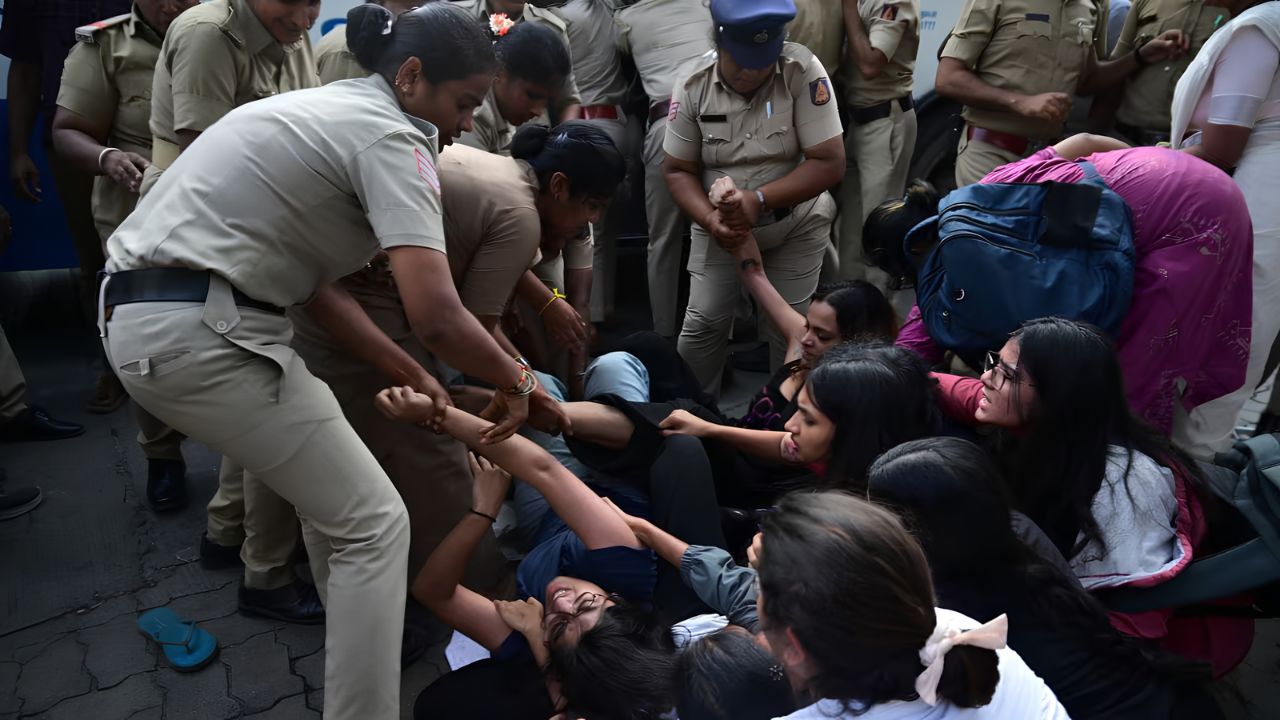


UN experts have expressed concern over what they described as a repeated heavy-handed police response to youth-led protests in New Delhi and other parts of India over the past three months, urging authorities to uphold the right to peaceful assembly and investigate alleged human rights violations.
The experts said police had used excessive force, detained protesters arbitrarily and imposed restrictions on demonstrations, calling for accountability for abuses reported during recent and previous protests.
“This crackdown reflects a broader, troubling pattern,” the experts said, adding that they had repeatedly raised concerns with Indian authorities over restrictions on peaceful assembly, excessive use of force, arbitrary detention, enforced disappearances and the targeting of student activists.
In March, 10 student and labour rights activists were reportedly detained by plainclothes police in New Delhi and held incommunicado for more than 24 hours. They were allegedly subjected to ill-treatment, threats, coercion and forced declarations before being released following habeas corpus proceedings, the experts said.
Over recent months, hundreds of thousands of students and their supporters have gathered peacefully across the country to protest government decisions concerning the education system and, more recently, deletions from electoral rolls. The experts said the latter affected 130 million people, reportedly including members of Muslim, Scheduled Caste and Scheduled Tribe communities.
Despite the peaceful nature of the demonstrations, law enforcement agencies reportedly used force against unarmed students, including baton charges, and prevented thousands of people from joining the protests, the experts said.
They also cited reports that more than 7,000 young people, journalists, human rights defenders, lawyers and political party members had recently been detained arbitrarily in New Delhi and taken to detention centres far from the city. Their phones were allegedly seized and protest-related material deleted, with most detainees, including protest leaders, released after about 24 hours.
The experts said protesters had sustained injuries, with some reporting ill-treatment in custody. They expressed particular concern over allegations of sexual violence and other forms of gender-based abuse during demonstrations and related detentions.
They also raised concerns over the use of Section 163 of the Bharatiya Nagarik Suraksha Sanhita (BNSS), India’s criminal procedure law, to impose sweeping restrictions on public gatherings, suspend public transport and shut down internet services.
Such measures, the experts said, raised concerns over India’s international obligations to protect freedom of peaceful assembly and expression, the right to liberty and personal security, and the rights of human rights defenders.
Restrictions on peaceful assembly must have a legal basis, pursue a legitimate objective and be necessary and proportionate, they said.
The experts urged Indian authorities to immediately stop the excessive use of force, lift blanket bans on public gatherings and refrain from the misuse of digital surveillance, including biometric tools, and internet shutdowns.
They also called for an independent, impartial and thorough investigation into the conduct of law enforcement agencies and affiliated forces, with a view to ensuring accountability, justice and compensation for victims.
The government must take steps to prevent further violations and protect the democratic right of students and others to assemble and voice their grievances, the experts said, adding that authorities should pay particular attention to the gender-specific impact of restrictions and reprisals against protesters.
Support Independent Media
Click Here and Join the Membership of Millat Times to Support Independent Media.
Support Millat Times