


Follow Millat Times for independent journalism.
Opens the app if installed, or Google Play to download it.Bageshwar Dham preacher faces backlash from religious leaders and political figures after a viral video shows him comparing the appearance, posture and actions of the two Hindu deities.
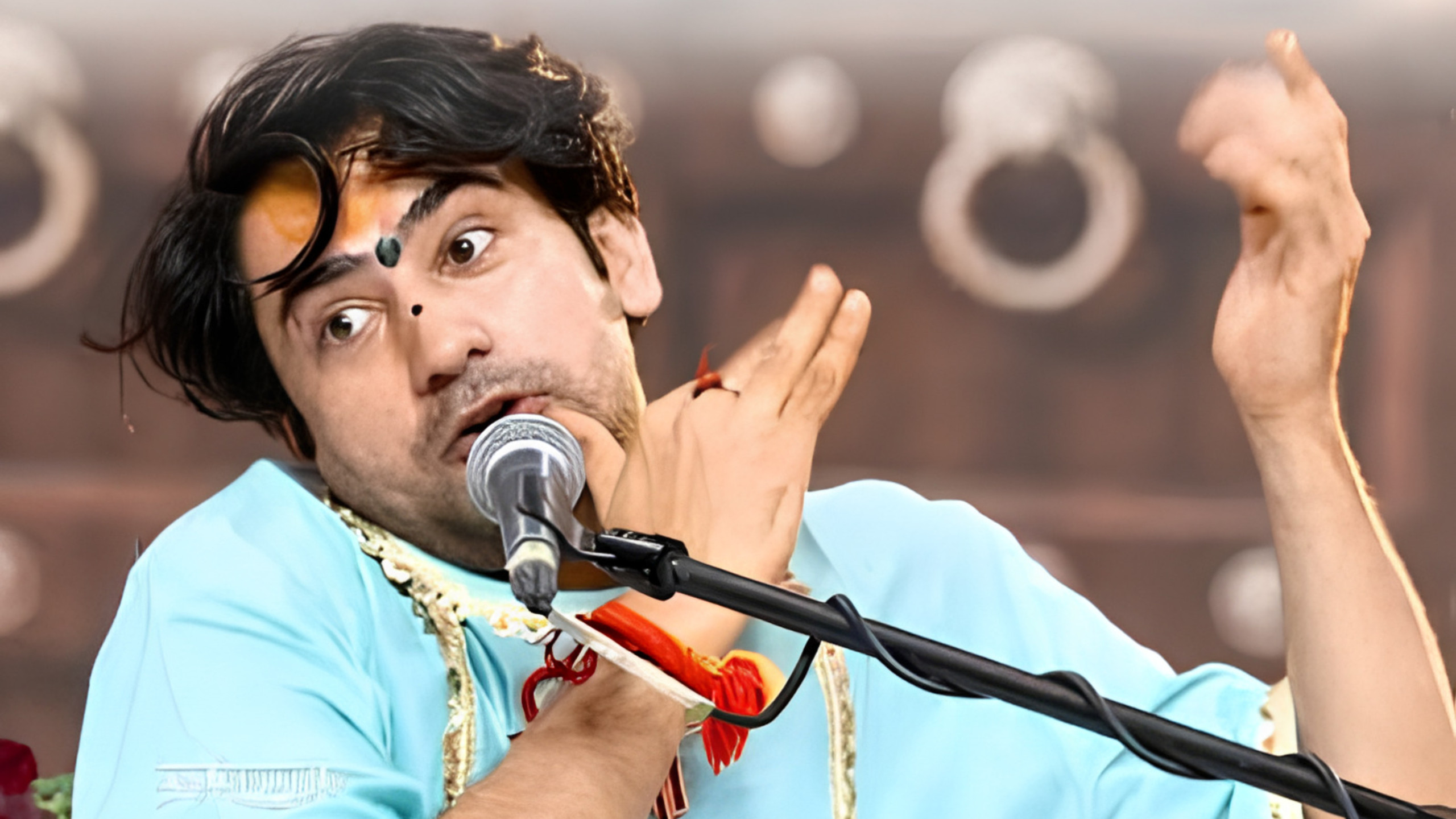
Bageshwar Dham head priest and religious preacher Dhirendra Krishna Shastri has apologised following a major controversy over his remarks comparing Lord Ram and Lord Krishna during a religious discourse in Madhya Pradesh.
The preacher faced criticism from religious leaders, devotees and political figures after a video of his speech went viral on social media, with several people accusing him of making inappropriate comparisons between two widely worshipped Hindu deities.
The controversy began on October 29, when Shastri was delivering a Ram Katha programme in Karera, in Madhya Pradesh’s Shivpuri district.
During his speech, he compared the physical appearance, posture and characteristics associated with Lord Ram and Lord Krishna, making remarks that many devotees considered disrespectful towards Lord Krishna.
In the viral video, Shastri described Lord Ram as someone who stands straight, walks straight and has a straightforward name.
In contrast, he referred to Lord Krishna as someone who stands in a bent posture, with his feet crossed, waist bent and neck tilted while playing the flute.
He reportedly said, “Our Ram stands absolutely straight. His name is straight, he looks straight and walks straight. Yours is crooked, he looks crooked and walks crooked.”
Shastri also compared Lord Krishna’s flute-playing with Lord Ram’s use of the bow and arrow. He said that playing the flute was a form of entertainment, while using a bow was not a game. Pointing towards a flautist present on the stage, he suggested that playing the flute was not something extraordinary.
The remarks quickly attracted attention after clips from the programme circulated widely on social media. Many devotees objected to the language used by the preacher, arguing that comparing the two deities in such a manner was inappropriate and could hurt religious sentiments.
The remarks triggered criticism from several religious figures associated with the Braj region, particularly Mathura and Vrindavan, which are closely connected with the life and worship of Lord Krishna.
Several religious leaders reportedly objected to the comparison, arguing that Lord Ram and Lord Krishna are both regarded as incarnations of the same divine entity in Hindu traditions. They said that placing one deity above the other through comparisons of appearance, posture or religious significance was inappropriate.
Members of the Yadav community also reportedly expressed objections to the comments. The controversy gained further momentum as social media users questioned why a religious preacher would use such language while addressing devotees.
Critics argued that religious leaders should exercise caution while speaking about figures who hold deep spiritual and emotional significance for millions of people.
The controversy also entered the political arena, with Samajwadi Party president Akhilesh Yadav demanding action against the preacher.
Without directly naming Shastri in his criticism, Yadav described the reported remarks as extremely unfortunate and objectionable. He questioned the rationale behind comparing Lord Ram and Lord Krishna in a manner that appeared to place one above the other.
Yadav said that both deities were incarnations of the same divine entity and that genuine followers of Sanatan traditions worshipped both.
He further warned that such statements could create divisions and resentment within society. He called for the matter to be taken up at the highest level and demanded appropriate action against the preacher.
His intervention brought additional political attention to an already escalating religious controversy.
The controversy intensified further when Samajwadi Party chief Akhilesh Yadav demanded the cancellation of all programmes organised by Dhirendra Krishna Shastri. Speaking to reporters in Varanasi, Uttar Pradesh, Yadav accused the Bageshwar Dham preacher of insulting Sanatan Dharma through his remarks about Lord Krishna.
Yadav said, “I will only say about Dhirendra Shastri ji that all his programmes should be cancelled. He has done the work of insulting Sanatan Dharma.”
Facing growing criticism, Dhirendra Shastri subsequently released a clarification, expressing regret over his remarks and saying that his intention was never to insult Lord Krishna or create differences between the two deities.
In his clarification, Shastri said that his comments were part of an explanation of a devotional verse and had been made in a humorous and devotional context. He argued that some people had watched only a portion of the video and misunderstood the meaning of his words.
He also referred to the devotional tradition in which the gopis playfully express their grievances towards Lord Krishna. According to him, saints and poets have historically used such expressions to convey affection and devotion towards the deity.
Shastri insisted that he was himself a devotee of Lord Krishna and had repeatedly raised his voice in support of the Krishna Janmabhoomi issue.
He said that he had no intention of dividing devotees or suggesting that Lord Ram and Lord Krishna were different in their divine status.
However, he acknowledged that his words could have hurt people’s feelings and offered an apology with folded hands.
“If our words, sentiments or interpretation have caused any distress or hurt to anyone, we offer our sincere and humble apologies,” he said in his clarification.
The controversy has once again highlighted the influence of religious preachers and the responsibility that comes with addressing large audiences.
While Shastri maintains that his remarks were made in a devotional and humorous context, the reaction from devotees and religious figures shows how sensitive comparisons involving revered religious personalities can become.
The incident has also raised questions about the language used during religious discourses and the impact of viral video clips in amplifying controversies.
Although Shastri has apologised and clarified his position, the episode has sparked a wider discussion about religious sensitivity, public accountability and the need for restraint when speaking about matters of faith.
The central question remains whether religious humour and devotional expressions should have clearer boundaries, particularly when they involve figures worshipped by millions of people.
Support Independent Media
Click Here and Join the Membership of Millat Times to Support Independent Media.
Support Millat Times