


India has rejected criticism of its human rights record at the United Nations, saying unverified allegations and incomplete data should not be used to portray the country negatively.
Barkha Tamrakar, a deputy secretary in the Ministry of External Affairs, told the United Nations General Assembly in New York on Wednesday that human rights should not be used as a tool for political pressure or to single out countries selectively.
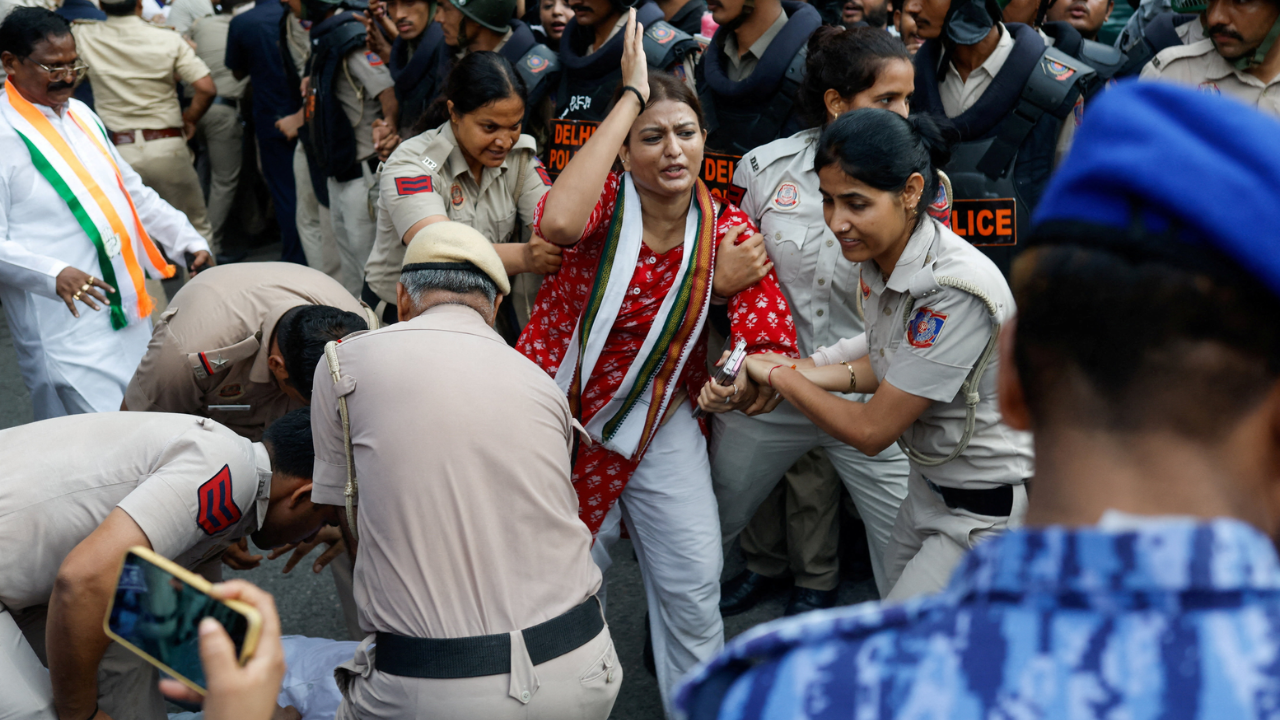
Her remarks came a day after UN human rights experts raised concerns over what they described as repeated heavy-handed police responses to peaceful, youth-led protests against Chief Election Commissioner Gyanesh Kumar over his handling of the special intensive revision of electoral rolls.
The experts said more than 7,000 people, including journalists, lawyers, human rights defenders and political party members, had been detained in New Delhi earlier this month and taken to detention centres in remote locations.
They described the arrests as part of a broader pattern of concern, citing previous warnings to Indian authorities over restrictions on peaceful assembly, excessive use of force, arbitrary detention, enforced disappearances and the targeting of student activists.
Responding to the criticism, Tamrakar said India was committed to the rule of law and pointed to constitutional and institutional safeguards against human rights violations.
She cited Article 21 of the Constitution, which guarantees the right to life and personal liberty, and said an independent judiciary provided safeguards against alleged disappearances.
Tamrakar also referred to the Right to Information Act, independent media and civil society as mechanisms that strengthen transparency and accountability. She said national and state human rights commissions provided channels for complaints and redress.
India signed the International Convention for the Protection of All Persons from Enforced Disappearance on February 6, 2007, but has not ratified it. The treaty prohibits enforced disappearances and establishes obligations for states to prevent and address the practice.
Tamrakar said international engagement on human rights should be guided by dialogue, consultation, cooperation, transparency and non-selectivity.
She added that India was willing to clarify specific cases through established channels.
Support Independent Media
Click Here and Join the Membership of Millat Times to Support Independent Media.
Support Millat Times