


Follow Millat Times for independent journalism.
Opens the app if installed, or Google Play to download it.Israel has entered a crucial phase of political uncertainty after Israeli President Isaac Herzog selected opposition leader Gadi Eisenkot to make the first attempt at forming the country’s next government. The decision represents a significant setback for Prime Minister Benjamin Netanyahu, whose political alliance failed to secure sufficient support following the October 27 parliamentary elections.
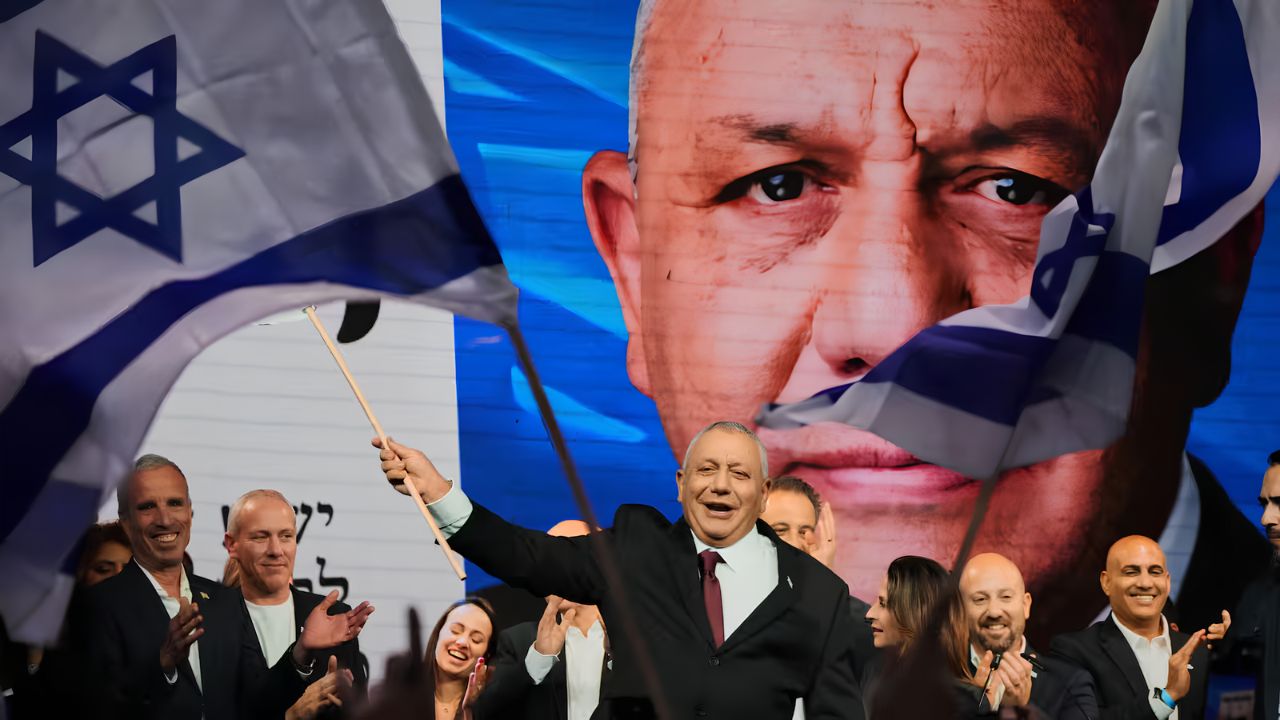
Eisenkot, who leads the Yashar party, is expected to receive the official mandate at a ceremony at the President’s Residence in Jerusalem on Sunday. Under Israeli law, he will have 28 days to assemble a governing coalition, with the possibility of receiving an additional 14 days if required.
The Israeli president’s decision followed consultations with representatives of political parties elected to the 120-member Knesset, Israel’s parliament. During the consultations, parties representing 67 lawmakers recommended Eisenkot for the task, while 46 lawmakers supported Netanyahu. The ultra-Orthodox United Torah Judaism party, which holds seven seats, did not endorse either candidate.
Following the announcement, Eisenkot expressed his commitment to establishing what he described as a national emergency government, saying that he would make every effort to fulfil the responsibility.
Despite receiving the backing of a parliamentary majority during the consultations, Eisenkot faces complicated negotiations before he can establish a functioning government.
His potential coalition partners remain divided over several important political issues, particularly cooperation with Arab-led parties and the participation of ultra-Orthodox political groups.
Some members of Eisenkot’s opposition bloc have expressed reservations about depending on Arab-led parties for parliamentary support. At the same time, several parties that supported his campaign had promised voters that they would oppose Netanyahu and the ultra-Orthodox parties.
Eisenkot has also maintained that he would not form a coalition with Netanyahu, arguing that political leaders who held positions of significant responsibility during the October 7, 2023, Hamas-led attack should leave public life.
However, his party has indicated that members of Netanyahu’s Likud party could potentially participate in a future government if they distance themselves from far-right political allies and accept Eisenkot’s proposed political principles.
Responding to the political developments, Israeli Prime Minister Benjamin Netanyahu called for the formation of a national unity government.
However, Netanyahu’s proposal reportedly includes the participation of his existing political allies, including far-right and ultra-Orthodox parties, making an agreement with Eisenkot’s bloc difficult.
Netanyahu warned against forming a government dependent on Arab-led parties, claiming that such an arrangement would threaten Israel’s security.
Eisenkot’s Yashar party rejected Netanyahu’s approach, accusing him of using the language of national unity while maintaining alliances with extremist political groups.
The party said Likud members could join a government led by Eisenkot if they accepted its conditions and ended their alliance with far-right factions.
Meanwhile, political developments suggest that some ultra-Orthodox parties could play an important role in determining the next Israeli government.
Yisrael Beytenu leader Avigdor Liberman has indicated that he could consider cooperating with ultra-Orthodox parties, despite years of political disagreements, particularly over military service exemptions for ultra-Orthodox men.
Reports have also suggested that United Torah Judaism may be open to negotiations with an Eisenkot-led government. Sources cited by Israeli media indicated that the Shas party might avoid opposing such an arrangement if the religious leadership of United Torah Judaism approves it.
However, Shas has publicly rejected reports suggesting that it is preparing to join an Eisenkot-led coalition.
If the opposition bloc secures the cooperation of United Torah Judaism and Shas, it could potentially reach the 61-seat threshold required to maintain a parliamentary majority, even without formal participation from Arab-led parties.
The question of compulsory military service for ultra-Orthodox men is expected to become one of the most difficult issues in coalition negotiations.
Eisenkot and several opposition leaders have advocated mandatory military, national or civilian service for all citizens, challenging the longstanding exemptions enjoyed by much of the ultra-Orthodox community.
Democrats party leader Yair Golan has also expressed openness to cooperation with ultra-Orthodox parties but insisted that any political agreement must include meaningful commitments on military recruitment, employment opportunities and equal responsibilities.
These demands could complicate negotiations with religious parties that have traditionally defended exemptions for their community members.
The coming weeks will be decisive for Israel’s political future. Although Israeli President Isaac Herzog’s decision has given Eisenkot the first opportunity to form a government, the success of his efforts will depend on whether rival political groups can overcome their differences.
If Eisenkot fails to secure sufficient support within the allotted period, Netanyahu could potentially receive another opportunity to form a government.
For now, Israel remains caught in a difficult political contest, with coalition negotiations likely to determine whether the country gets a new leadership or faces another round of political uncertainty.
Support Independent Media
Click Here and Join the Membership of Millat Times to Support Independent Media.
Support Millat Times