


Follow Millat Times for independent journalism.
Opens the app if installed, or Google Play to download it.By Ayesha
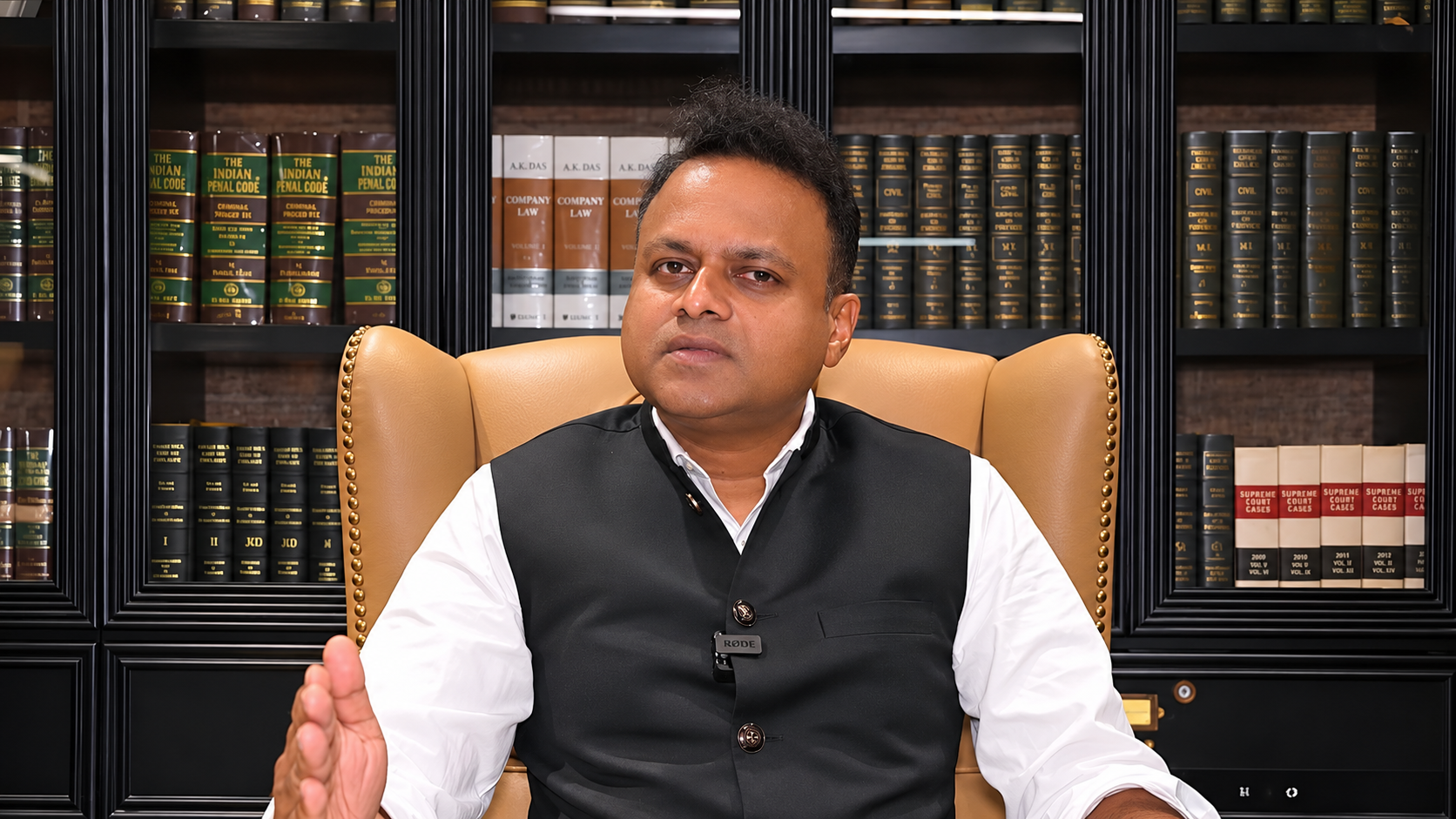
Democracy is tested not only when people vote but also when they question those in power. For Rajya Sabha MP Haris Beeran, the right to dissent, the credibility of elections and the independence of constitutional institutions are closely connected. In his view, when citizens begin questioning whether their votes truly reflect their will, the foundations of democracy itself come under scrutiny.
In an interview with Millat Times, Beeran spoke about the growing questions surrounding India’s electoral process, the role of the Election Commission of India (ECI), peaceful protests and student representation. He also recalled his intervention in the 17-day agitation at Jamia Millia Islamia, where students were demanding a definite timeline for student union elections.
For Beeran, the credibility of elections is fundamental to the survival of a democratic system. He argued that India cannot claim to be a strong democracy merely on the basis of its size if the electoral process does not reflect the genuine will of its people.
“The basis of democracy is elections. Without elections, there is no democracy,” he said.
Expressing concern over the functioning of the Election Commission, Beeran said that questions surrounding electoral procedures could have serious consequences for democratic stability. He referred to disagreements reportedly involving election commissioners over decisions taken by the Chief Election Commissioner regarding the implementation of the Special Intensive Revision (SIR) of electoral rolls.
He argued that such disagreements raise questions about the institution’s independence and its responsibility to ensure free and fair elections.
Beeran also referred to the deletion of approximately 90 lakh voters from electoral rolls in West Bengal and the subsequent establishment of tribunals to address complaints and facilitate the restoration of eligible voters’ names.
These developments, he suggested, have added to public concerns about the electoral process. He maintained that the Election Commission must command public confidence and function independently of political influence.
Beeran was particularly critical of the BJP’s defence of the Chief Election Commissioner whenever allegations are raised against the office.
He questioned why ruling party spokespersons were repeatedly defending a constitutional authority that is expected to function independently.
“I don’t know why BJP is defending the Chief Election Commissioner as if the Chief Election Commission is one of the allies of NDA,” he remarked.
Referring to allegations surrounding the Chief Election Commissioner, Beeran said that if they were established, action should be taken. He also pointed out that the constitutional process for removing a Chief Election Commissioner involves impeachment.
His remarks reflected a broader concern about the relationship between constitutional institutions and political power. For Beeran, the independence of the Election Commission is not simply an administrative issue; it is central to maintaining public trust in the democratic process.
The discussion also turned to the right of citizens and students to protest. Defending peaceful demonstrations, Beeran described dissent as an essential feature of democracy rather than a challenge to its existence.
“Democracy itself means there should be dissent. Dissent is actually a safety valve,” he said.
Comparing dissent to the safety valve of a pressure cooker, he explained that allowing people to express disagreement prevents frustration from building into something more serious.
Referring to Article 19 of the Constitution, Beeran said citizens have the right to freedom of speech and expression, including the freedom to express disagreement with the government.
He emphasised that peaceful protest is a constitutional right, while maintaining that demonstrations must remain peaceful.
His argument was particularly relevant to the students of Jamia Millia Islamia, whose prolonged agitation had brought the question of student representation back into focus.
Beeran said he became involved in the Jamia protest after students contacted him on its 17th day. They informed him that the health of those on hunger strike was deteriorating and requested his intervention.
Concerned about their condition, he contacted the university’s Vice-Chancellor at around 9 pm. Both acknowledged the seriousness of the situation and agreed that the deadlock needed to be resolved.
Beeran then arranged a video call with representatives of different student groups through his private secretary, who is also a research scholar at Jamia. During the conversation, he understood that the central demand was a fixed timeline for conducting student union elections.
The following day, he met the Vice-Chancellor and Registrar at the university and presented the students’ demands.
According to Beeran, the administration initially expressed difficulty in announcing a definite date because Jamia’s constitution required approval through several stages, including the President of India, the Union Ministry of Education and legal vetting.
He insisted that the approval process could take time, but the university should commit to a clear deadline.
Following discussions, May 15, 2027, was agreed upon as the deadline for finalising the university’s constitution.
The second issue concerned student union elections. Citing the Lyngdoh Committee recommendations, which provide for university elections within six to eight weeks of the commencement of the academic session, the administration agreed to July 17, 2027, as the proposed election date.
The students also demanded the withdrawal of disciplinary actions taken against them during the protest.
Beeran said these demands were subsequently accepted after a meeting involving the Vice-Chancellor, Registrar, Deans and other university officials. The agreement included three commitments: finalising the university constitution by May 15, conducting student union elections on July 17, and withdrawing actions taken against students during the agitation.
He described the agreement as the turning point that brought the 17-day protest to an end.
For Beeran, the significance of the agreement goes beyond the immediate resolution of the agitation. He described the proposed elections as an important opportunity for students to reclaim democratic representation on campus.
He said the Vice-Chancellor had informed him that the last student union election was held in 2006, but the elected union remained in place for only three months. Beeran said the upcoming elections would therefore mark an important moment in Jamia’s student politics.
He urged students to use the opportunity to develop political awareness and participate responsibly in democratic processes.
“There are a lot of things happening outside your campus which you have to react to,” he said, adding that such responses should come through peaceful and democratic means.
He also encouraged Jamia students to become an example for universities across the country.
Throughout the conversation, Beeran returned to a common theme: democracy cannot function without participation, accountability and the freedom to disagree.
Whether it is a voter questioning the electoral process or a student demanding representation from a university administration, the ability to raise questions remains central to democratic life.
His intervention at Jamia, he suggested, was an attempt to resolve a deadlock through dialogue rather than confrontation. His wider concerns about elections reflected a similar belief that institutions must remain accountable to the people they serve.
At a time when questions about electoral credibility and the space for peaceful dissent continue to shape political debate in India, Beeran’s central message was that democracy must be protected not only through elections but also through the rights and freedoms that give those elections meaning.
Support Independent Media
Click Here and Join the Membership of Millat Times to Support Independent Media.
Support Millat Times