
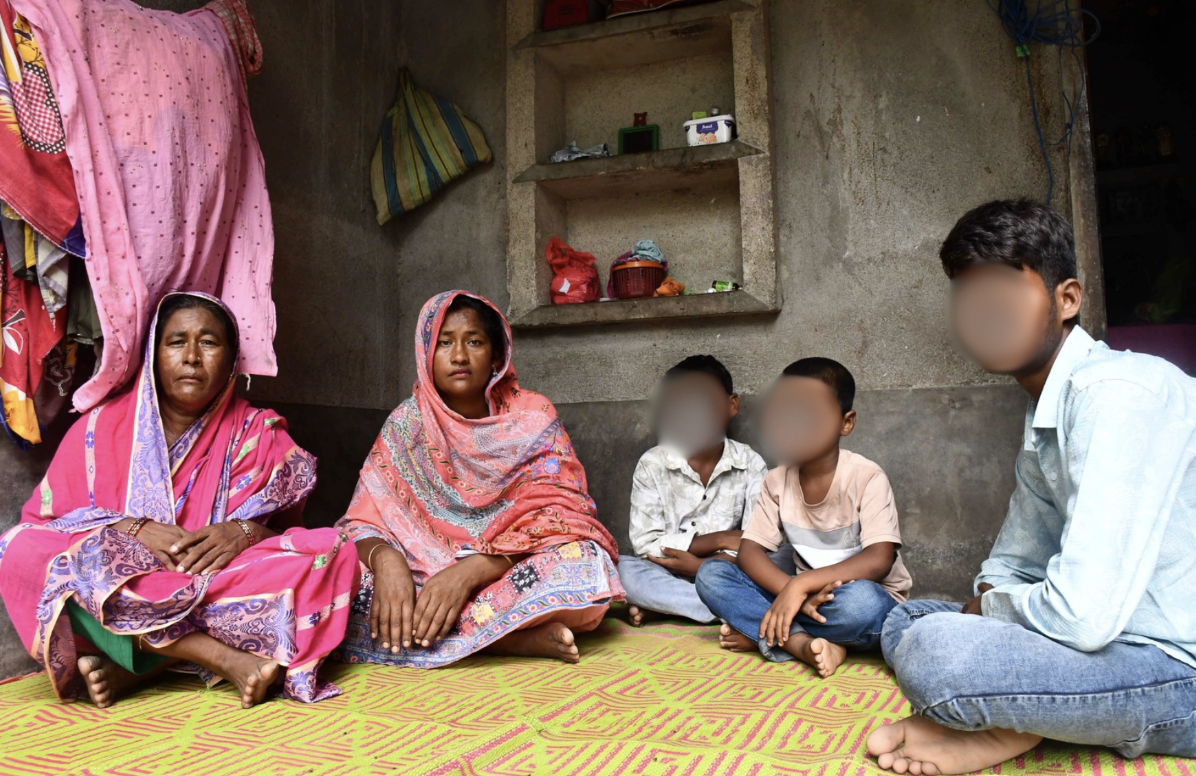




Six West Bengal natives, including three minors and two women, were picked up in June 2025 as suspected illegal migrants in Delhi, taken to Assam, and forcibly deported to Bangladesh.
Four of them returned in July 2026, after spending a year in Bangladesh as actual immigrants.
Sweety Bibi, 33, and her sons, aged 17 and seven, along with Danish Sekh, returned from Bangladesh on July 8 this year. Danish’s wife and her eight-year-old son, who were deported with them, were allowed to return six months earlier, in December last year.
In an interview with The Red Mike, Sweety described how she was taken from her home in Delhi during an exercise to identify suspected Bangladeshi migrants. She said she produced her Aadhaar card and other documents and told officials that she was from Birbhum in West Bengal.
Sweety Bibi and her two sons, Kurban and Imam, were picked up from a neighbouring shanty. Sunali and her son were detained when she went to the police station to ask about her husband.
They were soon produced before the Foreigners Regional Registration Office (FRRO) in RK Puram. The office, on June 26, 2025, issued deportation orders for all six. They were allegedly taken to Assam and pushed into Bangladesh, while their families remained unaware of their deportation.
None of them recall when exactly they were left at the edge of a forest after being taken out of a police vehicle. Even though Sunali grew up in forested areas in Birbhum, Bengal, she said the darkness was unlike anything she had seen before. Danish, Sunali, their son Sabir, along with Sweety, her two sons, Kurban and Imran, did not know where they were left, and yet the Border Security Force ordered them to run into the woods.
When they refused, the BSF personnel said, “Run, or get shot,” she said.
They ran even though they had nothing with them. No food, money, or identification documents; the authorities had taken everything before deporting them.
Recalling those days in the interview, she said, “Family wandered for about 10 days through forests, rivers and muddy areas without adequate food or money.”
“Children cried from hunger, and the family drank water from rivers to survive,” she added.
The Red Mike’s interview presented Sweety’s account as part of a wider question over how citizenship claims are verified when people are suspected of being foreign nationals. The case has also raised questions about the legal procedure followed before people are removed from the country.
After reaching Bangladesh, Sweety and the children were eventually taken into custody by Bangladeshi authorities in the Chapainawabganj area, according to reports. She remained there for several months while efforts were made to secure the family’s release and return to India.
The legal battle subsequently reached the Supreme Court. In November 2025, the court questioned how citizenship could properly be examined while the people concerned remained outside India.
The Union government later told the court that the individuals would be brought back on humanitarian grounds and that their citizenship claims would be examined after their return.
Another member of the group, Sunali Khatun, who was pregnant at the time, had earlier been brought back to India following judicial intervention. She later gave birth in West Bengal.
Sweety, her two sons and Danish Sheikh eventually returned through the Mahadipur border in Malda on July 8, 2026.
The Indian Express reported that Bangladesh Border Guard handed them over to the BSF before they proceeded towards their homes in West Bengal.
The Supreme Court proceedings were subsequently closed after the Centre informed the court that the people concerned had been brought back. The court left the underlying questions of law open.
For Sweety, however, the legal dispute has had consequences beyond the courtroom. Reports say her children lost substantial schooling during their time in Bangladesh, while the family returned to uncertainty over housing, work and rebuilding their lives.
Her account, as presented in The Red Mike interview, puts a human face on a citizenship dispute that moved from Delhi to Assam, then across the border into Bangladesh and finally to India’s Supreme Court. The case continues to raise questions about verification, due process and the treatment of people whose nationality is disputed.
While the authorities had treated the group as suspected Bangladeshi migrants, the subsequent judicial intervention resulted in their return to India, with their citizenship status to be examined after repatriation.
The case has raised questions over the verification of citizenship documents, procedures followed before deportation and the treatment of Bengali-speaking workers whose citizenship is disputed.
The Calcutta High Court had earlier questioned the haste with which the deportation was carried out, while government authorities had disputed the citizenship claims made by those detained.
Support Independent Media
Click Here and Join the Membership of Millat Times to Support Independent Media.
Support Millat Times