
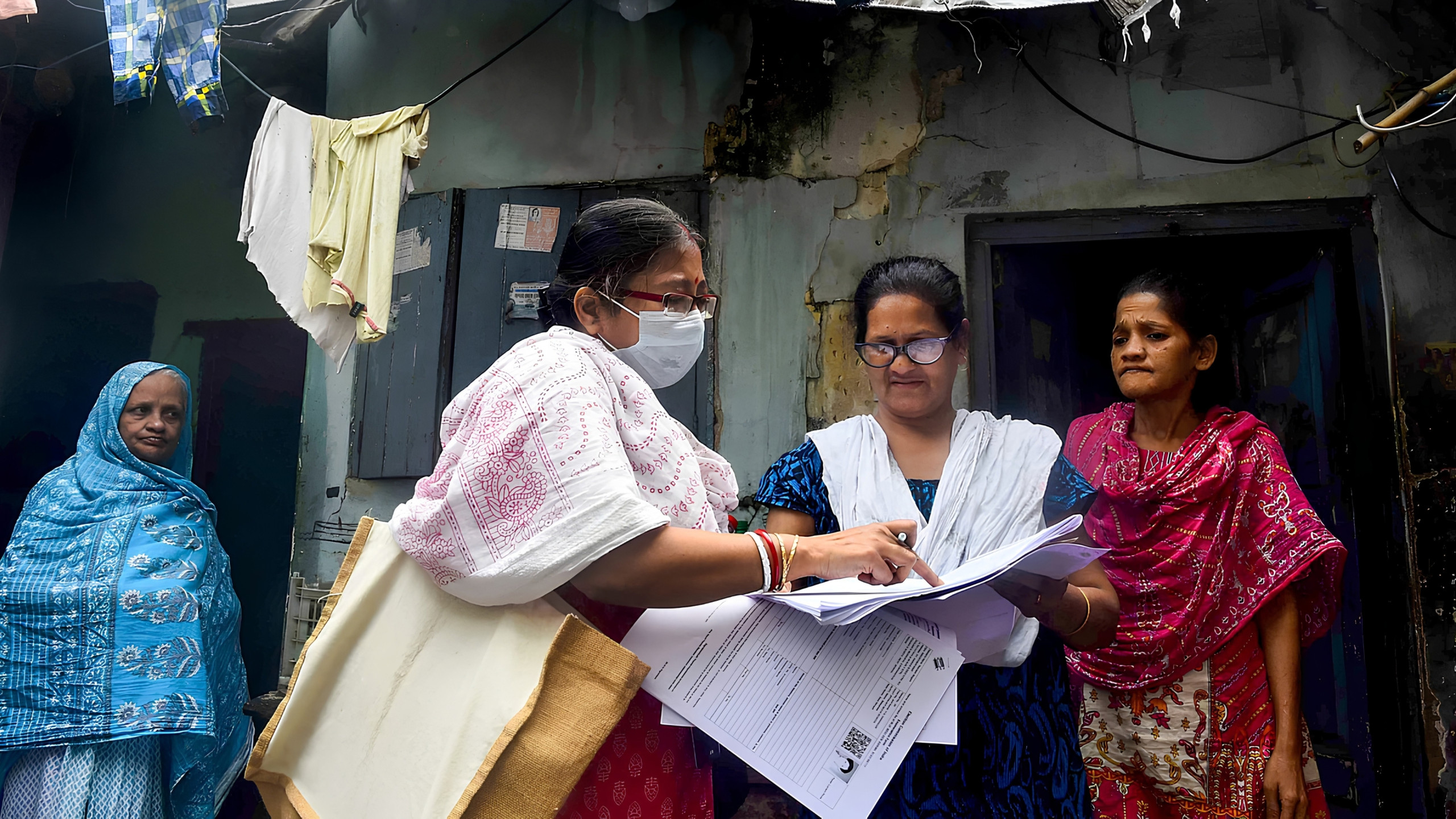




The fate of nearly 18.8 lakh voters whose names were deleted from West Bengal’s electoral rolls remains undecided, with tribunals recording decisions in only 1.95% of the appeals filed against their exclusion, a new analysis by the Civic Research Group (CRG) shows.
The dataset, covering all 294 Assembly constituencies across 23 districts, recorded 19,15,941 appeals from deleted electors whose EPIC numbers could be validated against the Election Commission of India (ECI) portal.
However, only 37,272 appeals, 1.95% of the total, had a recorded tribunal decision as of September 28.
The remaining 18,78,669 appeals, or 98.05%, were still awaiting an outcome, the dataset shows.
Of the appeals that had been decided, 30,828 were approved, while 6,444 were rejected.
CRG defines an approved appeal as one in which the tribunal overturns the Judicial Officer’s decision and restores the elector’s status. A rejection means the earlier decision to delete the elector’s name was upheld.
Approvals accounted for 82.71% of all recorded decisions. CRG, however, cautioned that the decided cases represent only a small and geographically uneven portion of the total appeals.
Therefore, the 82.71% approval rate cannot be used to predict the outcome of the 18.78 lakh pending appeals.
CRG began its research with 27,05,162 deleted-elector records from the adjudication phase.
The group processed 25,75,663 EPIC numbers, equivalent to 95.21% of the deletion records.
Of these, 23,42,259 EPIC numbers returned valid responses on the ECI portal, with names matching the deletion lists. This validated group represented 86.58% of all deleted-elector records examined.
The appeal figures in the report are based on this validated group.
Among electors with validated EPIC numbers, 81.80% had an appeal recorded.
The vast majority of applications were submitted online. A total of 17,67,095 applications, or 92.23%, were recorded as online, while 1,48,846 applications, or 7.77%, were recorded as offline.
Another 4,26,318 validated records were classified as “not applied.”
CRG cautioned that this category may also include electors who submitted appeals offline but whose applications had not yet been entered into the portal. It therefore cannot be treated as a definitive count of voters who did not appeal.
The distribution of recorded decisions varied sharply across districts.
Hooghly alone accounted for 20,703 decisions, 55.55% of all recorded decisions in the state.
By contrast, Murshidabad, which had the largest number of applications, recorded only 275 decisions.
At the constituency level, 31 Assembly constituencies had no recorded tribunal decision. The remaining 263 constituencies had at least one recorded decision.
CRG said the ECI does not publish a consolidated status report covering all appeal cases. Researchers were therefore required to check appeal statuses by EPIC number.
The research relied on the ECI’s adjudication deletion lists and supplementary electoral rolls, alongside digitised records from the Sabar Institute’s SIR Deleted Data Repository.
Unresolved records were manually checked against published deletion rolls by unpaid volunteers.
However, the dataset remains incomplete.
According to CRG, 1,29,499 deletion records had not been processed, while 2,33,404 processed EPIC numbers could not be validated. The appeal status of these records could therefore not be established.
CRG said the publication of electoral records as image-based PDFs made accurate data conversion difficult. It also pointed to an OTP requirement introduced on September 18, which made independent verification of individual EPIC numbers considerably harder.
The report covers appeals filed by electors against their exclusion from the electoral rolls during the adjudication process. It does not cover appeals against inclusion filed by the ECI or third parties.
CRG stressed that its figures should be treated as operational indicators rather than definitive findings of fact.
Portal responses, incomplete records, differences in timing and cases awaiting review may affect the classifications. The organisation has advised that key figures be checked against official records and individual case files before being relied upon.
Support Independent Media
Click Here and Join the Membership of Millat Times to Support Independent Media.
Support Millat Times