


Follow Millat Times for independent journalism.
Opens the app if installed, or Google Play to download it.Exclusive conversation with Abdul Malik Mujahid: Historic Muslim victories in 2026 US midterms
By Shams Tabrez Qasmi
The 2026 US midterm elections witnessed a striking political development that attracted attention far beyond American borders: the unprecedented success of Muslim American candidates.
For the first time in US history, a Muslim was elected to the Senate. Several Muslim representatives also secured or retained seats in the House, while dozens more won or led races at state and local levels.
These victories came amid intense Islamophobic rhetoric, heavy outside spending targeting some candidates and sharp partisan divisions between Democrats and Republicans.
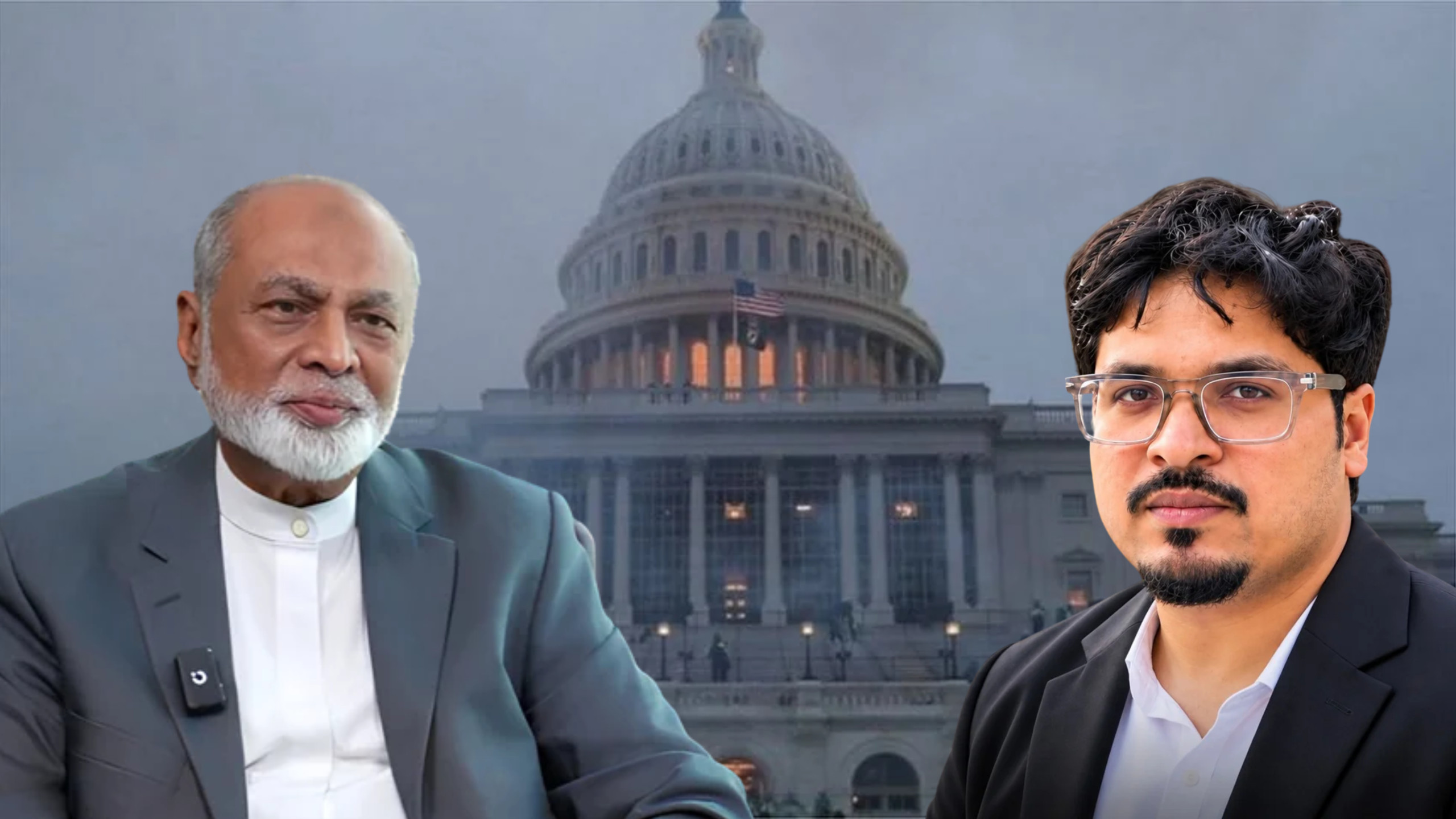
In an exclusive conversation with Millat Times, American Muslim leader, imam, author and nonprofit executive Abdul Malik Mujahid offered an analysis of the results. He placed the victories in historical context, examined Muslim political participation and discussed their implications for American democracy, minority representation and the country’s two major parties.
Mujahid, a long-time advocate of Muslim civic engagement through platforms such as Sound Vision and Muslim Network TV, highlighted the sustained efforts behind these electoral gains.
The most prominent result was the election of Abdul El-Sayed, a physician and former public health official of Egyptian American background, to the US Senate from Michigan.
El-Sayed defeated Republican Mike Rogers in an open-seat race, becoming the first Muslim American senator. In his victory speech, he affirmed his full name and faith, turning an issue opponents had sought to weaponise into a point of pride. During the campaign, he had used the phrase “inshallah”; in his victory speech, he said “alhamdulillah”.
Several Muslim candidates also won House races. Incumbents Ilhan Omar of Minnesota, Rashida Tlaib of Michigan and André Carson of Indiana secured re-election.
Newcomers, including Adam Hamawy in New Jersey, the state’s first Muslim congressman, added to the tally. Reports indicated that at least seven Muslim members would serve in the next Congress. Wins in state legislatures, county and municipal offices, school boards and judicial races brought the broader number of successful Muslim candidates into the dozens, with some estimates approaching or exceeding 100 across all levels.
Mujahid described these results as the outcome of sustained, patient work rather than a sudden political emergence. Although Muslim Americans account for roughly 1–2 per cent of the national population, their concentration in certain urban and suburban districts, coupled with growing civic engagement, has given them considerable influence in key races.
Organised voter outreach, coalition-building with other minority and progressive groups, and an emphasis on local issues have all contributed to this success.
The 2026 midterms took place under a Republican presidential administration, with control of Congress at stake. Historically, the president’s party often loses seats in midterm elections. The conversation examined how Muslim voters and candidates navigated this political environment.
Most successful Muslim candidates ran as Democrats, reflecting the community’s longstanding voting patterns. However, Mujahid cautioned against interpreting the results as evidence of unconditional partisan loyalty.
Muslim Americans have also supported Republican candidates on particular issues. Their priorities, including civil rights, foreign policy, particularly Palestine and the Muslim world, economic opportunity and protection from discrimination, do not always fit neatly within party lines.
Republicans, meanwhile, relied in some races on national security and cultural messaging, including warnings about “Sharia” and immigration from Muslim-majority countries.
Former President Donald Trump and his allies have repeatedly claimed that increased Muslim immigration could lead to the introduction of Sharia law. Such claims resurfaced in campaign rhetoric and attack advertisements.
Mujahid described this as a familiar form of fear-mongering that misrepresents both Islamic law and the realities of the US Constitution. He noted that such rhetoric has long been used to mobilise sections of the electorate but failed to prevent Muslim candidates from winning competitive races in 2026.
On the Democratic side, the victories reflected a combination of progressive energy and coalition-building. Candidates who spoke openly about Gaza, public health, economic fairness and civil liberties found receptive audiences in diverse constituencies.
The conversation also highlighted that Muslim voters, like other Americans, are concerned with everyday issues such as jobs, healthcare, education and public safety, while remaining deeply invested in questions of justice abroad. El-Sayed’s experience as a doctor and public health leader, for instance, helped him connect local concerns with broader policy issues.
A central theme was the resilience required to succeed in a hostile political environment. Muslim candidates faced millions of dollars in outside spending, negative advertisements questioning their loyalty and portraying them as threats, as well as personal attacks.
Despite this, voters, including significant numbers of Jewish voters in some races, according to reporting on El-Sayed’s campaign, supported them. Mujahid saw this as evidence that fear-based campaigns can lose their effectiveness when communities organise and candidates demonstrate a record of public service.
He also emphasised the long history of Muslim American political participation. From the first Muslim members of Congress to the emergence of the “Squad” and now a Muslim presence in the Senate, each election cycle has expanded the pool of candidates, campaign infrastructure, donor networks and voter mobilisation capacity.
Organisations involved in voter registration, public education and turnout campaigns have played an important role. Mujahid has long argued that mosques and community institutions should encourage civic participation without formally endorsing candidates, in keeping with nonprofit regulations. He reiterated the importance of this approach.
Unity among Muslim Americans, who come from diverse South Asian, Arab, African American, African immigrant and other backgrounds, was another important part of the discussion. While complete political uniformity is unrealistic, coordinated efforts around shared priorities can strengthen the community’s influence.
Looking ahead, Mujahid suggested that these victories could shape both policy debates and the internal dynamics of the major parties. A Muslim senator and a larger Muslim contingent in the House will bring additional perspectives to discussions on foreign policy, civil liberties, healthcare and domestic equity. Their presence will also test the ability of American institutions to accommodate greater religious and ethnic diversity at the highest levels of government.
For Democrats, the results reinforce the importance of minority and progressive coalitions. For Republicans, the failure of anti-Muslim messaging in some competitive races may prompt a reassessment, even as cultural and national security issues remain central to the party’s appeal elsewhere.
Mujahid also connected Muslim American political representation to broader global concerns. Representation in the world’s most powerful democracy carries symbolic importance and offers opportunities to influence discussions on conflicts in the Middle East, South Asia and elsewhere.
At the same time, he cautioned against reading too much into a single election cycle. Lasting political influence requires sustained engagement, strong institutions and the ability to deliver results for constituents from all backgrounds.
Throughout the nearly 37-minute conversation, one practical message stood out: participation matters.
A relatively small demographic group can exert considerable influence when voters turn out, candidates run effective campaigns and communities invest in long-term organisation. Mujahid’s own career, spanning media, education, advocacy and interfaith engagement, reflects the importance of building independent platforms that inform and mobilise communities.
The conversation ended on a note of measured optimism. Historic firsts do not erase continuing challenges, including discrimination, disagreements over foreign policy and partisan gridlock. However, they demonstrate how democratic participation can expand representation when citizens claim their place through the ballot box and sustained activism.
For Muslim Americans, the 2026 midterms marked not an endpoint but a significant new chapter, one that minority communities and political observers around the world will continue to follow.
As results are certified and the new Congress prepares to convene, the conversation with Mujahid offers insight into how a minority community has translated demographic presence, organisational capacity and public service into political influence. Amid intense partisan competition, the achievement is both an important American political development and an illustration of democratic possibility.
Support Independent Media
Click Here and Join the Membership of Millat Times to Support Independent Media.
Support Millat Times