
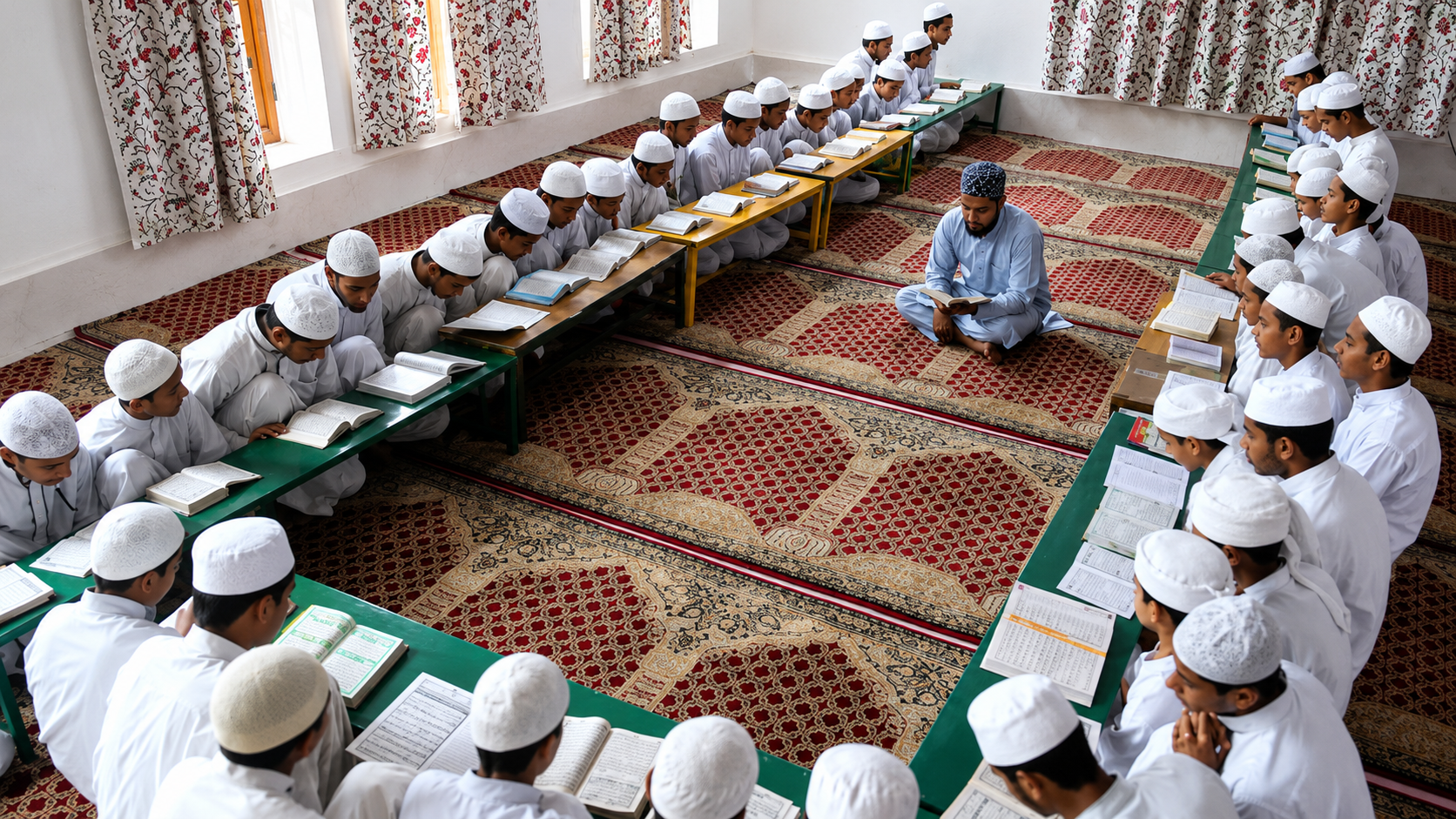




Several Muslim organisations and opposition leaders have criticised Uttarakhand’s decision to discontinue government grants for 456 madrasas from the 2027-28 financial year, calling the move a threat to minority educational rights.
The Uttarakhand Cabinet, headed by Chief Minister Pushkar Singh Dhami, approved the withdrawal of the grant system after abolishing the Uttarakhand Madrasa Education Board and replacing it with the Uttarakhand State Minority Education Authority, officials said.
The state government said the existing grant mechanism had become unnecessary after the new authority was established to recognise, regulate and monitor minority educational institutions. Only institutions recognised under the new framework will be eligible to operate, it said.
Additional Secretary in the Chief Minister’s Office Banshidhar Tiwari said the Madrasa Board ceased to function on July 1 and the budget allocation linked to its grant system would therefore be removed from the 2027-28 financial year.
“The Madrasa Board no longer exists, so the grant mechanism and the related budget provision are no longer required,” Tiwari said.
The new policy also ends recognition of traditional madrasa qualifications such as Maulvi, Alim and Munsi for government job applications. Officials said bringing students under the Uttarakhand Education Board would provide qualifications recognised for higher education and public employment.
The government said recognised minority institutions would continue to receive benefits available under the central government’s U-DISE scheme through the new authority, even though direct state grants would stop.
The decision has drawn criticism from Muslim groups, who accused the state government of undermining minority educational institutions.
Maulana Shahabuddin Razvi Bareilvi, president of the All India Muslim Jamaat, alleged that the move was part of a wider effort to restrict religious education for Muslims. He referred to the earlier closure of unauthorised madrasas and the abolition of the Madrasa Education Board as signs of a broader policy shift.
Jamaat-e-Islami Hind Vice President Mohammed Saleem Engineer said the decision reflected “an atmosphere of hostility towards Muslims” and argued that the Constitution protects the right of religious communities to establish and manage educational institutions.
He said recognised madrasas provide religious education as well as subjects such as Hindi and English, contributing to the country’s education system.
Samajwadi Party MP Ziaur Rahman Barq also criticised the move, saying it violated minority rights and that governments should ensure equal treatment of all communities.
However, All India Imam Association President Maulana Sajid Rashidi said privately funded madrasas supported through community contributions such as zakat would face limited impact because they do not depend on government grants or government-appointed teachers.
The Uttarakhand government said the reforms were aimed at bringing minority educational institutions under a single regulatory framework and improving educational standards.
Support Independent Media
Click Here and Join the Membership of Millat Times to Support Independent Media.
Support Millat Times