
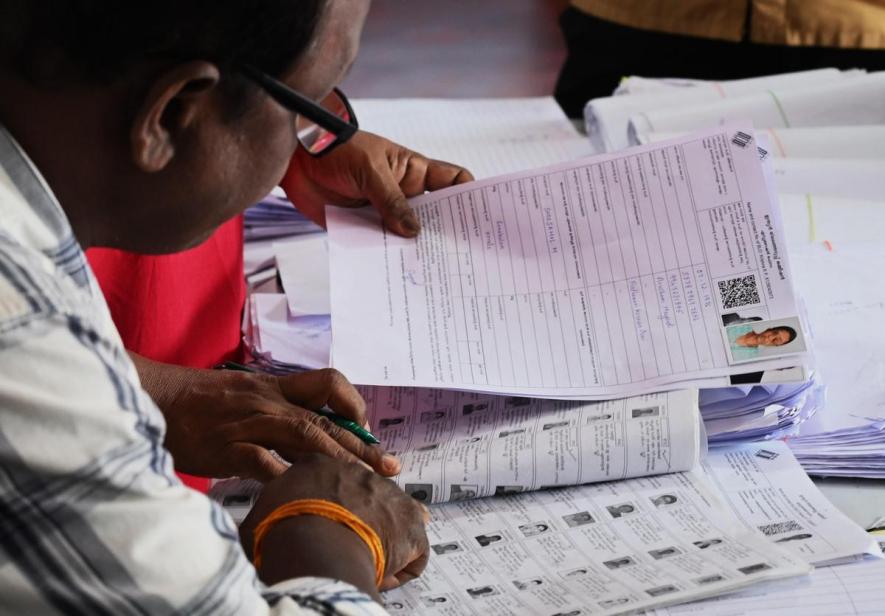




Three independent United Nations human rights experts have asked India to respond to concerns that a nationwide voter roll revision exercise may have wrongfully removed millions of eligible voters from electoral rolls and disproportionately affected Muslims and other minority communities, according to an official U.N. communication made public this week.
The communication, dated May 1, 2026, and marked AL IND 8/2026, was signed by Nicolas Levrat, U.N. Special Rapporteur on minority issues, Irene Khan, Special Rapporteur on the promotion and protection of the right to freedom of opinion and expression, and Nazila Ghanea, Special Rapporteur on freedom of religion or belief.
The experts said they had received information concerning the Election Commission of India’s Special Intensive Revision (SIR) of electoral rolls, launched in November 2025 across nine states and three union territories. According to the communication, the exercise covered 321 districts and 1,843 assembly constituencies.
The Election Commission has said the purpose of the revision was to ensure that all eligible citizens are included in electoral rolls, remove ineligible voters and make the process of adding or deleting names transparent.
However, the U.N. experts said information they had received alleged that about 52 million names were removed during the exercise across the affected states and union territories. The communication said West Bengal was among the worst affected, with about 9.1 million names reportedly deleted.
The experts stressed that these allegations had not been independently verified, stating in the communication that they did not wish to prejudge their accuracy and were seeking clarification from the Indian government.
According to the letter, many affected individuals alleged they had been removed from electoral rolls despite possessing valid identity documents. The communication said Muslim voters were reportedly disproportionately affected and cited allegations that in the Nandigram assembly constituency around 95% of deleted names belonged to Muslims, although Muslims account for about a quarter of the constituency’s electorate.
The experts also referred to concerns previously raised by U.N. special procedure mandate holders regarding the National Register of Citizens (NRC) and electoral rolls, noting that similar issues had been communicated to India in 2018. The letter thanked the Indian government for its earlier responses and encouraged it to continue engaging with U.N. human rights mechanisms.
The communication expressed concern that minor spelling differences in official documents may have been used as grounds for deleting voters from electoral rolls. It also referred to reports that an artificial intelligence-based system was used to flag irregularities in voter data, raising questions about transparency, possible errors and algorithmic bias.
The experts said the use of AI in an electoral process could undermine democratic fairness if legitimate voters were wrongly excluded and called on India to explain the safeguards used to prevent such outcomes.
The communication also referred to proceedings before India’s Supreme Court. It said that on April 16 the court, exercising its powers under Article 142 of the Constitution, allowed voters in West Bengal whose appeals against deletion were accepted before specified deadlines to regain their voting rights before the state’s two-phase assembly elections held on April 23 and April 29.
The experts nevertheless expressed concern that the large number of appeals and the limited time available before polling may have prevented many eligible voters from obtaining relief before the elections.
The communication also criticised what it described as discriminatory rhetoric by some politicians and senior public figures in connection with the voter revision exercise. It cited public statements referring to “illegal Bangladeshi immigrants” and the phrase “Detect, Delete and Deport”, saying such language could stigmatise Muslim citizens and members of other minority communities.
The experts said such rhetoric could raise questions under international human rights treaties to which India is a party, including the International Covenant on Civil and Political Rights and the International Convention on the Elimination of All Forms of Racial Discrimination.
In the communication, the rapporteurs asked the Indian government to provide information on the implementation of the SIR process, the total number of names removed, the reasons for deletions, safeguards against discrimination, the handling of objections and appeals, and measures taken to ensure that eligible citizens were not denied the right to vote.
They also sought information on remedies available to people who were wrongly removed from electoral rolls and asked what steps had been taken to ensure accountability where errors had occurred.
Under the U.N. Human Rights Council’s special procedures system, governments are normally given 60 days to respond to such communications. Both the communication and any response received may be published by the Office of the U.N. High Commissioner for Human Rights.
U.N. special rapporteurs are independent experts appointed by the Human Rights Council. They serve in their personal capacities and do not speak on behalf of the United Nations.
The Election Commission of India and the Ministry of External Affairs did not immediately respond to requests for comment on the communication. India has previously maintained that its electoral processes are conducted in accordance with the Constitution and domestic law and has defended engagement with U.N. human rights mechanisms while rejecting allegations it considers unfounded.
Support Independent Media
Click Here and Join the Membership of Millat Times to Support Independent Media.
Support Millat Times