
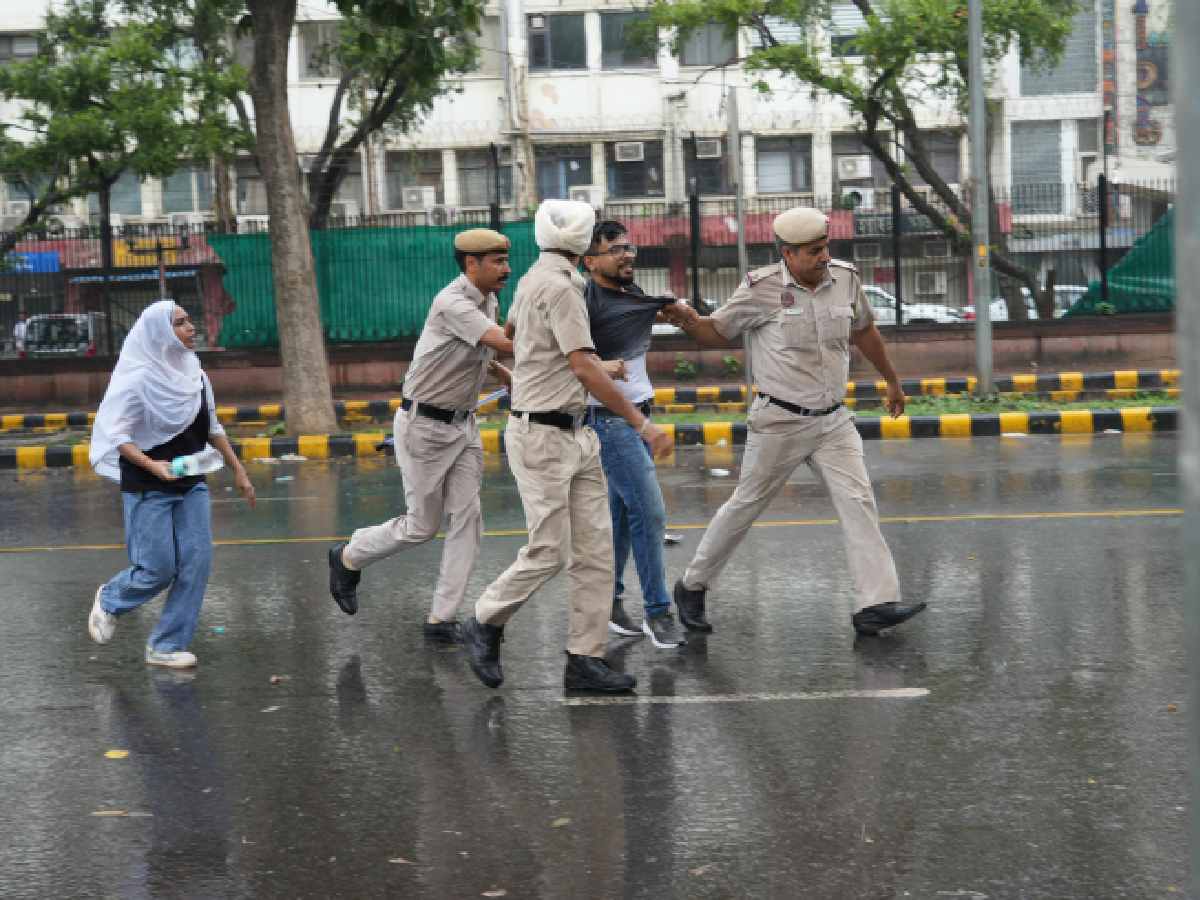




Delhi Police launched a fresh crackdown on social media content linked to the agitation, directing online platforms to remove posts, videos, memes and comments that allegedly contained abusive or offensive remarks against Prime Minister Narendra Modi and government.
The move has reignited a debate over freedom of expression, digital censorship and the limits of state intervention in online political speech.
According to Delhi Police officials, a dedicated cyber and social media monitoring team has been tracking online activity since the July 20 “Sansad Chalo” march and the subsequent protests at Jantar Mantar.
After reviewing hundreds of posts across multiple platforms, authorities issued notices to social media intermediaries directing them to remove content they considered abusive, objectionable or in violation of Indian law. Police officials insist the exercise is not intended to suppress criticism of the government but to remove content that allegedly contains offensive language against the Prime Minister and could disturb public order.
Officials said a large number of flagged posts have already been removed following the notices and that monitoring of new uploads is continuing. Police also indicated that further legal action may follow if similar content continues to circulate online.
The takedown notices have drawn criticism from digital rights organisations, which argue that political expression enjoys constitutional protection and that any restrictions must meet strict legal standards.
The Internet Freedom Foundation (IFF) called on the Delhi Police to immediately disclose and withdraw the notices.
In a statement, the organisation said, “On the reports available, the content being removed is political expression. The movement at Jantar Mantar has been conducted as much through reels, memes, posters and digital artwork as through assembly on the ground. This is how a digital-native generation speaks about accountability.”
IFF further argued that Article 19(2) of the Constitution permits restrictions on free speech only on eight specific grounds and that “offensiveness” is not one of them. It also referred to the Supreme Court’s landmark Shreya Singhal v. Union of India (2015) judgment, which struck down Section 66A of the Information Technology Act after holding that vague terms such as “grossly offensive” and “annoyance” could not be used to criminalise protected speech. According to IFF, the Delhi Police now appears to be relying on similar standards through notices whose legal basis has not been publicly disclosed.
The Software Freedom Law Center, India (SFLC.in) also criticised the police action, saying that restrictions on online speech must comply with constitutional safeguards and due process. The organisation warned that broad or opaque takedown requests could create a chilling effect on free expression and urged authorities to publicly clarify the legal provisions under which the notices had been issued. SFLC.in stressed that criticism of public officials should not automatically be treated as unlawful merely because it is harsh or politically uncomfortable.
Reports indicate that several videos uploaded by independent YouTube creators covering the protests or containing offensive remarks against the Prime Minister were removed after platforms received police notices. However, Delhi Police has not released any official list identifying specific YouTube channels or creators whose content was targeted, making it impossible to independently confirm individual cases.
Among those claiming to have been affected is Abhinav Bisht, who rose to prominence during the student protests. Bisht said his Instagram account @isaac1rl, which had more than 500,000 followers, was suspended following the crackdown.
Posting from a newly created Instagram account, he appealed to supporters to help trend the hashtag #BringBackIsaac across Instagram, X and other social media platforms.
Digital rights activist Yaqut Ali also claimed that multiple videos had become inaccessible in India after the police action. In a post on X, he wrote:
“5 videos posted on @instagram on July 26, all of them are now unavailable in India. Can anyone here help me please? @Meta.”
The post suggested the videos had been geo-blocked for Indian users, although neither Meta nor the authorities publicly commented on the specific case.
Police sources maintain that the objective of the exercise is to prevent social media from becoming a platform for abusive or inflammatory content and insist that lawful criticism of the government is not being targeted. Officials said cyber teams would continue monitoring online platforms and issue additional notices whenever content is found to violate applicable legal provisions.
They are also examining whether some posts could attract provisions relating to public order, incitement or other offences under existing laws.
The latest police action has once again placed the spotlight on the balance between regulating abusive online content and protecting political speech in India’s digital public sphere. With civil liberties groups questioning the legal basis of the takedown notices and demanding greater transparency, the controversy is likely to face continued public, legal and constitutional scrutiny in the coming days.
Support Independent Media
Click Here and Join the Membership of Millat Times to Support Independent Media.
Support Millat Times