
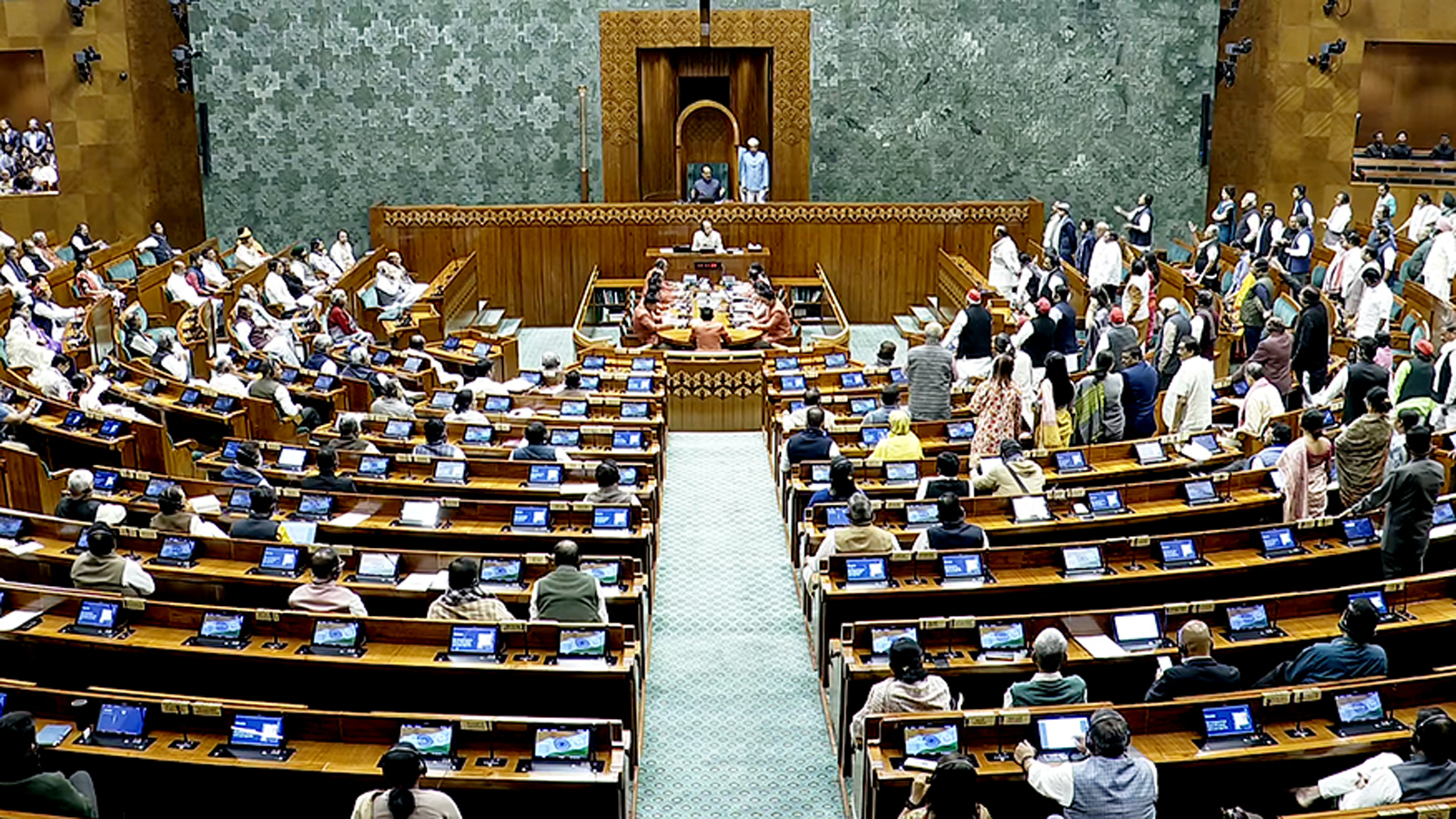




The Lok Sabha on Wednesday referred the proposed amendment to India’s foreign funding law for NGOs to a joint parliamentary committee, after opposition parties and civil society groups raised concerns over the powers it would give the government.
The Foreign Contribution Regulation Amendment Bill, 2026, seeks to change the rules governing how non-governmental organisations receive and hold foreign donations.
Under the proposed law, the government could take control of an organisation’s foreign funds and assets if its registration under the Foreign Contribution Regulation Act, or FCRA, expires or is cancelled.
The FCRA requires NGOs receiving money from abroad to maintain a valid registration.
The bill was introduced in the Lok Sabha in March. Opposition parties have called the proposed changes excessive, arguing that they would give the government wide powers without adequate safeguards.
The move to send the bill to a joint committee came after protests in Parliament. Churches and civil society groups in Mizoram have also opposed the legislation. A large protest was held in Aizawl on Tuesday, with participants saying the proposed changes could disproportionately affect churches, religious minorities and NGOs.
Parliamentary Affairs Minister Kiren Rijiju said opposition members could raise their concerns before the committee. The motion to refer the bill was moved by Minister of State for Home Nityanand Rai.
The 31-member committee will have 21 members from the Lok Sabha and 10 from the Rajya Sabha. It is expected to submit its report before the winter session.
What does the bill propose?
One of the most significant changes concerns what happens to an NGO’s foreign-funded assets if its FCRA registration is cancelled or expires.
The bill proposes that such funds and assets could initially be placed under the control of a government-appointed “designated authority”. If the organisation fails to restore its registration, the government’s control could become permanent.
The authority would be allowed to use, transfer or dispose of the assets for what the bill calls “public purposes”.
The provision would apply to all organisations covered by the FCRA, not only religious institutions. The bill says the religious character of a place of worship would be preserved.
Opposition MPs and civil society organisations have criticised the proposal, saying it could significantly expand government control over NGOs.
The issue is particularly relevant to states such as Mizoram, where churches and other organisations rely on foreign contributions for a range of activities.
Government figures show that more than 6,600 NGOs lost their FCRA registrations between 2016-17 and 2021-22.
The government also told Parliament in 2023 that 13,520 registered non-profit organisations received more than Rs 55,700 crore in foreign contributions between 2019-20 and 2021-22.
The proposed amendments have also attracted criticism from the United States. Congressman Riley Moore said earlier this month that the changes could affect Christian organisations and potentially harm India-U.S. relations.
Ministry of external affairs rejected the criticism, saying regulation of foreign funding was an internal matter for India and that such decisions were taken by Parliament.
Support Independent Media
Click Here and Join the Membership of Millat Times to Support Independent Media.
Support Millat Times