
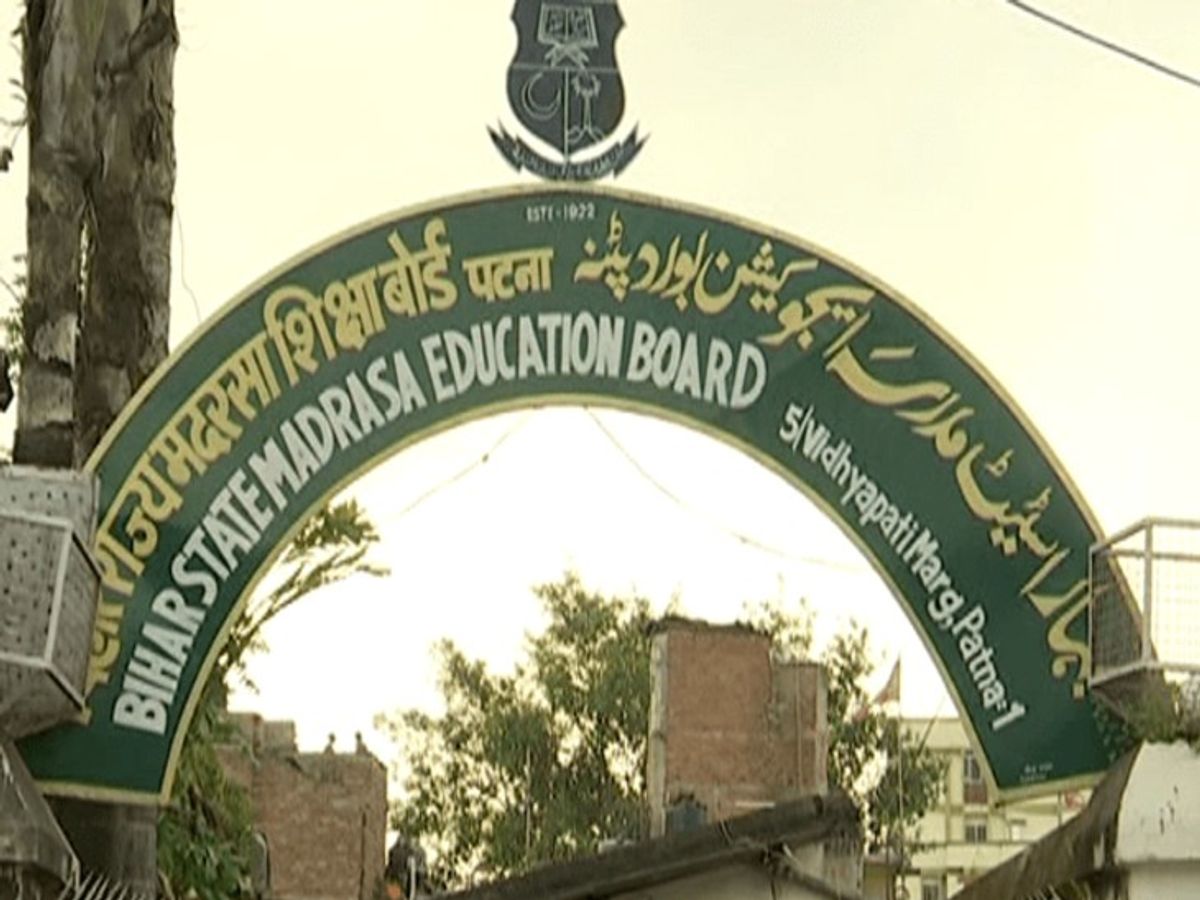




The Bihar government has ordered inspections of state-funded madrasas and Sanskrit schools to assess educational standards and ensure compliance with official regulations, according to an order issued by the state’s Education Department.
The directive, signed by Education Department Secretary Vinod Singh Gunjiyal, instructs District Education Officers to conduct physical verification of state-funded madrasas across the state. Under the order, three-member teams comprising a local school headmaster, the Block Development Officer, and an Education Department official will carry out inspections in each block and submit reports to higher authorities.
According to the order, the teams will examine whether institutions are complying with Education Department rules and norms. They will also review student enrolment and attendance, the availability of teaching staff, infrastructure and facilities, and the utilisation of government grants and funds. The inspections are intended to identify shortcomings and recommend measures to improve educational quality and institutional functioning.
Reacting to the move, Janata Dal United legislator Sanjeev Kumar Singh said the government has the authority to conduct such inspections whenever necessary. However, he raised concerns about delayed salaries for madrasa teachers, stating, “The unfortunate part is that the teachers in these madrasas have not received their salaries for around 3-4 months.”
Opposition leaders also questioned the rationale behind the exercise. RJD MLC Qari Sohaib said the government should first explain the outcome of a similar survey conducted two years ago before ordering a fresh inspection.
“This survey makes little sense. The government should first explain what happened to the survey conducted two years ago. Were its recommendations implemented? If not, was the earlier survey found to be flawed? If there were shortcomings, has any action been taken against those responsible for the process?” Sohaib said.
He argued that the more urgent concerns were the delayed salaries of madrasa teachers and the large number of vacancies in schools and madrasas that remain unfilled. According to him, these issues have a direct impact on both educational standards and the livelihoods of those employed in the sector.
Sohaib also suggested that some people may view the latest inspection drive as politically motivated. “Many people may view this latest exercise as an attempt to appease the majority community by projecting an image of increased scrutiny of madrasas, thereby creating the perception of tighter control over Muslims rather than addressing the real challenges facing educational institutions,” he said.
Maulana Anees ur Rahman Qasmi, working president of the All India Milli Council, said the group did not oppose the government’s power to carry out inspections, but viewed the exercise with suspicion because of what he described as the BJP’s “unfavourable view towards Muslims”. He said the deputy chief minister had recently assured community representatives that there was “no ill will” behind the exercise.
Support Independent Media
Click Here and Join the Membership of Millat Times to Support Independent Media.
Support Millat Times