
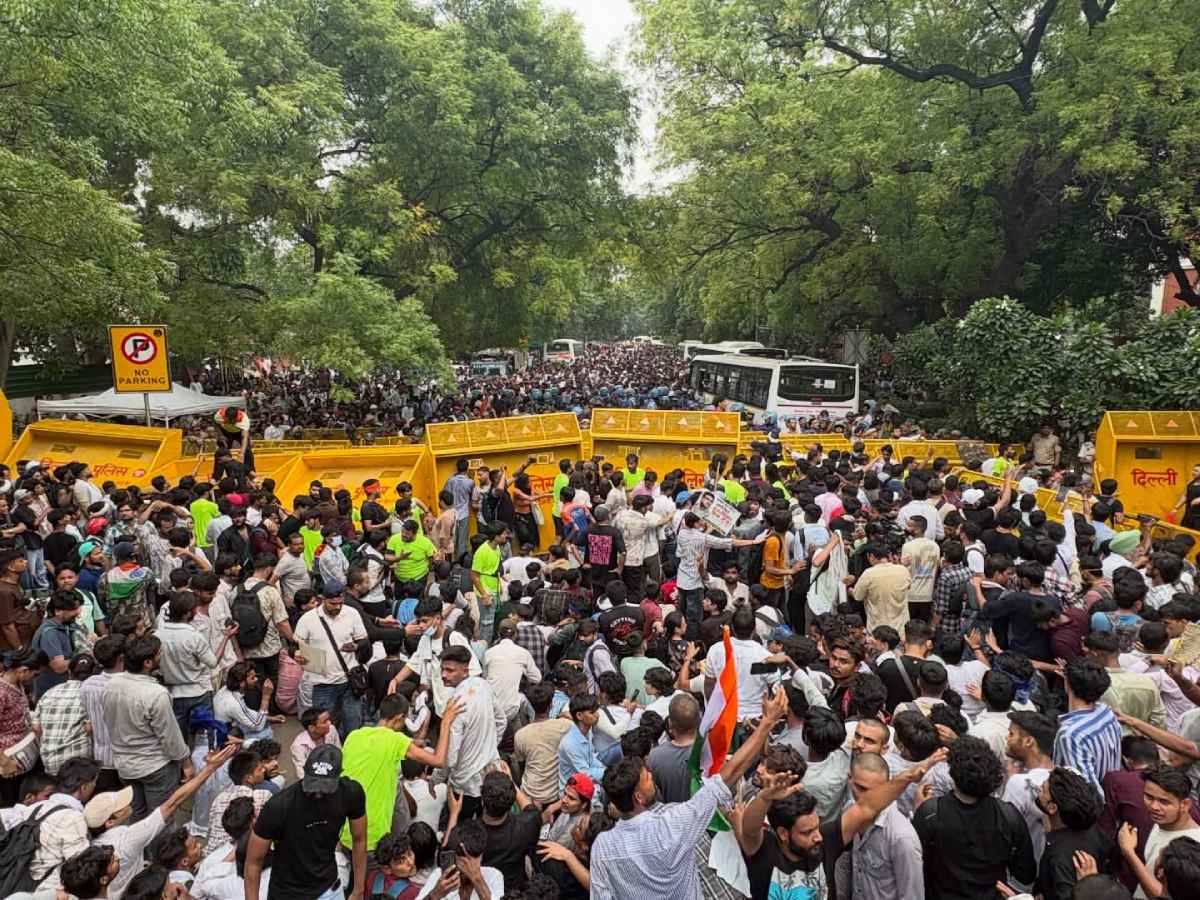




Hundreds of students and protesters have been detained or arrested across several Indian states during demonstrations linked to the NEET examination controversy, with police citing public-order concerns, alleged violations of restrictions and incidents of clashes in different locations.
While a large number of those detained have been released, fresh reports say that in Bihar, West Bengal, Assam, Goa, a number of protesters have been formally charged and sent to jails.
A compilation of publicly reported police actions indicates that at least 350 people have been detained or arrested across Delhi, Bihar, Assam, Maharashtra, West Bengal and Goa. The figure is a minimum estimate because state authorities have not released a consolidated nationwide account of arrests, detentions, FIRs filed, remand orders or subsequent releases.
The scale of police action has become a key issue after the Cockroach Janta Party (CJP) suspended its nationwide agitation following talks with the government, saying it had received assurances that protesters would not face punitive action and that cases would be withdrawn.
CJP spokesperson Saurav Das said the organisation was concerned about reports of continued detentions, particularly in Assam, West Bengal and Bihar, and said its legal team was assisting protesters seeking release.
The government has not publicly released a state-by-state status report on the implementation of assurances made during talks or on the number of FIRs withdrawn.
Bihar accounts for largest number of reported detentions
Bihar recorded the highest reported number of detentions during the protests, with nearly 200 students and activists taken into custody during demonstrations in Patna and other parts of the state.
Police action followed protest marches, shutdown-related activities and gatherings linked to the NEET controversy. Authorities cited concerns over disruption of public order.
Opposition leaders and student groups accused authorities of targeting young protesters and demanded their release. Some detainees were reportedly produced before magistrates and sent on remand, but no official figure has been released on how many protesters entered judicial custody.
Delhi: Parliament-area march leads to detentions and FIRs
On July 20, Delhi witnessed one of the largest police responses after protesters attempted a march towards Parliament.
Police detained around 70 protesters during demonstrations near the Parliament area. Authorities said protesters violated security restrictions and alleged that some participants attempted to breach barricades and clashed with police personnel.
FIRs were registered in connection with the incident. Reported allegations included unlawful assembly, obstruction of public servants, disruption of public order and offences related to violence during the demonstration.
Protesters disputed the police account and alleged excessive use of force.
Publicly available information does not show how many of those detained were later formally arrested, released without charges or sent to judicial custody.
Assam: Arrests and preventive detentions in Guwahati
Assam emerged as another significant centre of police action.
In Guwahati, police arrested six people and detained more than 20 others during protests linked to the wider NEET agitation.
The demonstrations involved student groups and activists demanding action over the examination controversy. Police cited public-order concerns and allegations of violations during protests.
Reports said cases were registered under provisions of the Bharatiya Nyaya Sanhita (BNS), but a complete FIR-wise breakdown of charges and custody status has not been made public.
CJP later specifically highlighted Assam among the states where it said protesters were being targeted after the organisation suspended its nationwide campaign.
West Bengal: 14 arrested after Kolkata clashes
In West Bengal, police arrested 14 people following clashes during NEET-related demonstrations in Kolkata.
Police said action was taken after incidents of violence and disruption during protests. Cases were registered against those accused of involvement.
Details of the specific charges, bail status and whether any protesters remain in custody have not been publicly consolidated.
Maharashtra: 45 detained in Nagpur
In Maharashtra, police detained 45 people during a protest gathering in Nagpur.
Authorities described the action as necessary to maintain public order. Organisers questioned the police response and disputed aspects of the action.
No complete public record is available showing how many detainees were booked under criminal provisions, released, or sent to judicial custody.
Goa: Detention after Umar Khalid placard controversy
Goa saw a smaller but politically significant police action.
During a CJP-linked gathering at Azad Maidan in Panaji, a protester displayed a placard supporting jailed activist Umar Khalid and other accused persons in separate cases.
Police detained the person carrying the placard. A second activist was later detained after supporters gathered outside the police station seeking the first protester’s release.
Police cited issues related to permission for the gathering and public-order concerns. Reports said cases were registered over allegations including unlawful assembly.
The Goa incident differed from other states because the immediate trigger was a political placard displayed during a protest-linked gathering rather than a direct confrontation over NEET-related demands.
Remand figures remain unclear
Although hundreds of people have been detained or arrested, publicly available information does not provide a nationwide count of protesters sent to judicial custody.
Available reports indicate:
Some detainees in Bihar were produced before magistrates and remanded, but the number remains unclear.
Goa reports indicated activists were sent to judicial custody.
Remand figures for Delhi, Assam, Maharashtra and West Bengal have not been publicly disclosed.
The distinction between detention, arrest and remand has made it difficult to determine the final legal impact of the police action.
A detention may involve temporary custody without formal charges, while an arrest generally follows registration of a criminal case. Remand involves a court order extending custody while legal proceedings continue.
CJP seeks withdrawal of cases
Following the reports of continued police action, CJP spokesperson Saurav Das said the organisation was seeking the immediate release of detained protesters and withdrawal of FIRs.
Das said the group had suspended its nationwide protest only after receiving assurances from the government that no punitive action would be taken against demonstrators.
The CJP said its legal team was coordinating with lawyers in affected states and warned that failure to implement the assurances could lead to further action.
The government has not issued a detailed public response to the latest allegations or released a nationwide update on the status of protest-related cases.
The final number of people affected by police action will depend on state-level disclosures on arrests, releases, remands and withdrawal of cases.
Support Independent Media
Click Here and Join the Membership of Millat Times to Support Independent Media.
Support Millat Times