


Follow Millat Times for independent journalism.
Opens the app if installed, or Google Play to download it.By Shams Tabrez Qasmi
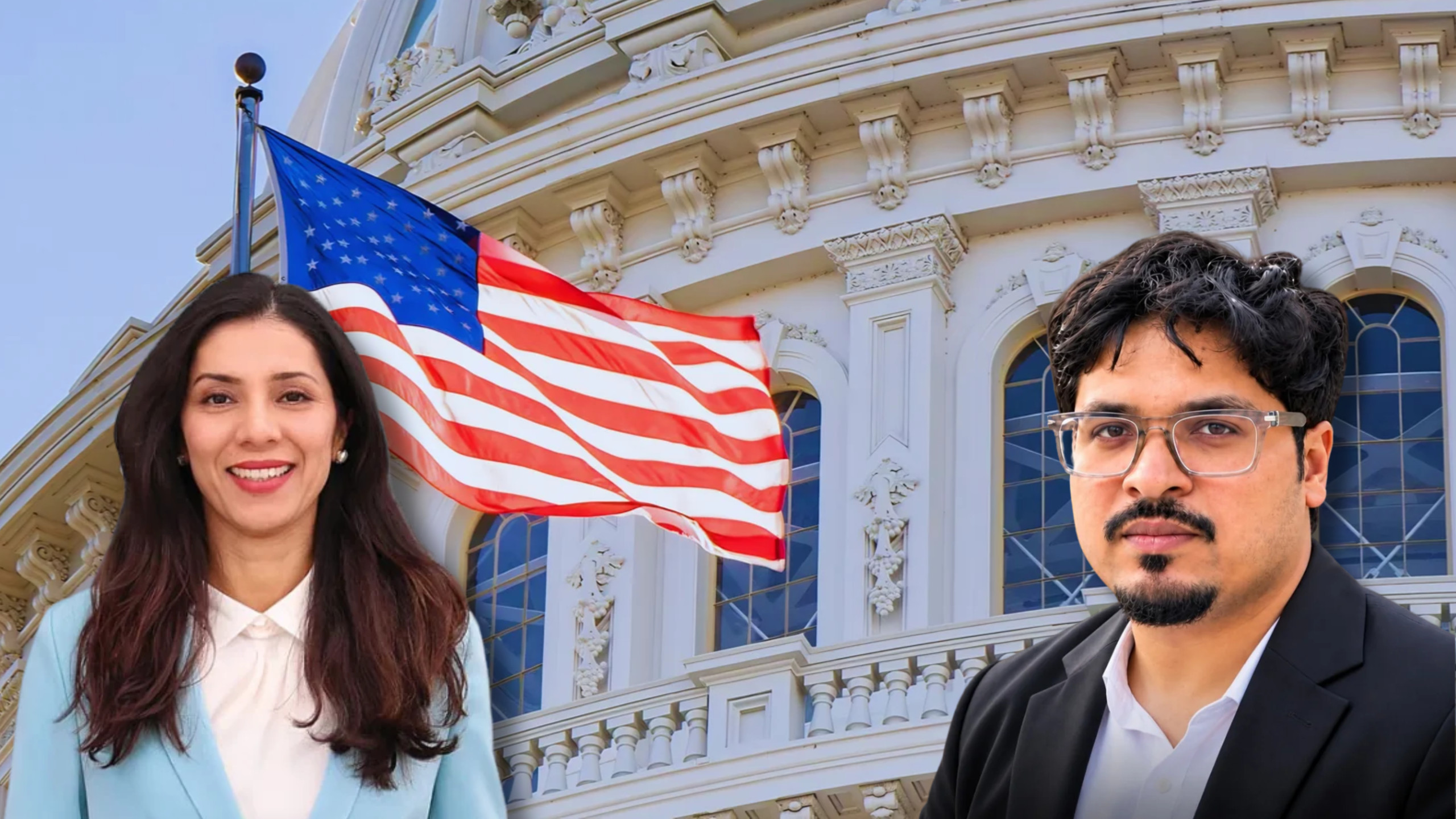
Saba Haider, an Indian-origin politician, has made a mark in American politics with her electoral victory in DuPage County, Illinois. Her journey from community volunteering and working with school organisations to becoming an elected county board member reflects the growing participation of immigrants and minorities in American public life.
In an exclusive interview with Millat Times, Haider speaks to Shams Tabrez Qasmi about her political journey, the challenges of contesting elections in the United States, Islamophobia, Muslim representation, Palestine and the changing political landscape in India and America.
Despite facing racism and discrimination, Haider says her experience also reflects the opportunities available to immigrants who work closely with local communities.
Q: You moved to the United States around 20 years ago. How did you enter politics?
Politics was never part of my original plan. I do not come from a political family, and nobody in my family has been involved in politics. When I moved to America, my main objective was to become part of the local community.
I started volunteering at my children’s school and gradually became involved in community organisations. Around 15 years ago, I joined the Parent Teacher Association (PTA) at my son’s school and eventually became its president.
Later, I joined the executive board of a non-profit organisation that oversees 34 PTAs in our school district. The district has around 26,000 students, and the organisation has raised more than $5 million over the years for children’s welfare. I also became its director and continue to work with it.
My involvement in community activities gradually increased, and eventually, I decided to contest elections for the county board.
I contested for the first time but narrowly lost, receiving around 22,000 votes against my opponent’s 23,000. However, I did not give up. Two years later, I contested again against a Republican candidate and won with 40,430 votes, while my opponent received around 31,000.
Q: Why did you choose the Democratic Party over the Republicans?
I feel more connected to the values and principles of the Democratic Party. Issues such as protecting the rights of middle-class and working families, supporting labour unions and increasing funding for public schools are very important to me.
I believe the Democratic Party is more closely aligned with these priorities, which is why I decided to join it.
Q: What does a county board member do, and what responsibilities does the position carry?
The American system of local government is somewhat different from India’s. A county includes several municipalities, cities, towns and villages.
DuPage County is the second-largest county in Illinois, with approximately one million residents and around 40 municipalities. Its annual budget is approximately $700 million.
The county board has 18 elected members who represent the people of the county. There is also a board chairman. I am one of those 18 members, and we collectively work on issues concerning the county and its residents.
Q: Was obtaining American citizenship difficult? When did you become a citizen?
Obtaining American citizenship has never been easy. My husband and I came to the United States on work visas around 20 years ago. After some time, we applied for green cards. Once we completed the required five years as green card holders, we applied for citizenship.
After becoming an American citizen, I became more actively involved in politics.
Q: Did you face racism, discrimination or Islamophobia during your political journey?
Yes, I experienced racism and discrimination. When you enter public life and contest elections, you put yourself in front of people. They judge you, criticise you and sometimes target you.
However, we should not focus only on negative experiences. I came to this country around 20 years ago. I was neither born here nor raised here, yet I have been able to build a place for myself in public life. That reflects the opportunities America can offer immigrants.
At the same time, Islamophobia is extremely high today. A survey conducted by the Pew Research Center in March and April last year indicated an increase in negative attitudes towards Muslims, from around 25 per cent in 2001 to 43 per cent.
We must recognise these challenges, but also acknowledge the people who supported us and helped us reach this position.
Q: Islamophobia is increasing in America, yet Muslim political representation is also growing. How do you explain this?
When you work at the grassroots level, people recognise your contribution and support you. It does not matter whether someone is Muslim, Christian, Jewish or belongs to another faith. People want good schools for their children, better salaries, affordable services and a better quality of life.
When candidates come forward with experience, qualifications and a commitment to fighting for ordinary people’s rights, voters support them.
We have seen this in the political journeys of leaders such as Zohran Mamdani and other candidates who have connected with people through their work and policies.
Things are changing because voters are increasingly recognising the importance of leadership focused on everyday public issues.
Q: Have you met Zohran Mamdani or other prominent Muslim political leaders in America?
I have not met Zohran Mamdani yet, although I hope to meet him soon. I also could not meet Abdul El-Sayed when he visited Chicago because I was busy with my election campaign.
They did not directly campaign for me, but their political journeys and the kind of leadership they represent have helped candidates like us. Their success has made it easier for other candidates from minority communities to come forward.
Q: How did campaigning in America compare with elections in India, where substantial money and large teams are often required?
A strong team is extremely important. I was fortunate to have a highly qualified and hardworking core team.
We worked very hard throughout the campaign. Chicago experiences extremely cold weather, with temperatures often dropping below zero, but we continued knocking on people’s doors and meeting voters.
We also had a large number of volunteers. Several organisations and labour unions supported us, including nurses’ unions, social workers’ unions, firefighters’ unions and trade unions.
These organisations helped us with campaigning and fundraising. With their support and the hard work of our volunteers, we won the primary election with approximately 63 per cent of the vote and the general election with more than 70 per cent.
Q: Did your campaign team include Indians and people of South Asian origin?
My team included people from different backgrounds. There were Indians, people of Indian origin and people from many other communities.
When you look at my campaign photographs on social media, it almost looks as though the United Nations is standing behind me because people from so many different backgrounds came together to support the campaign.
Q: How does the Democratic Party nomination process work? Is it similar to the distribution of election tickets in India?
The American system works differently. Political parties do not simply select candidates and hand them election tickets. Candidates have to contest primary elections.
Democratic candidates compete against other Democratic candidates, while Republican candidates compete against other Republicans. In Illinois, the primary election takes place in March. The winners from both parties then face each other in the general election in November.
If you demonstrate your ability, work hard, raise the necessary funds and convince voters to support you, you can win the party nomination.
There is no system in which you simply pay money to obtain a recommendation or nomination. You have to prove yourself through your work, public engagement and votes.
Q: Why is fundraising so important in American elections?
Fundraising is important at different levels of politics, particularly in county, city and state elections. Candidates need money to hire staff, maintain offices and manage campaign activities.
However, fundraising is not the ultimate objective. Its purpose is to communicate your message to voters.
Social media has become an important platform for candidates to reach people directly. As a result, candidates can sometimes communicate effectively without depending entirely on large fundraising campaigns.
In our campaign, many people contributed small amounts, sometimes just $5, because they believed in our work and message.
Our campaign focused on affordability, healthcare, public education and sustainability. These issues connected with ordinary people and helped us receive financial and public support.
Q: How long is your term, and what are your main priorities?
In the Illinois General Assembly, members have to contest elections every two years.
My biggest priority is to make people’s everyday lives easier. During door-to-door campaigning, I realised that rising prices were among the biggest concerns for ordinary families.
The cost of groceries, gas, petrol and diesel has increased considerably, affecting the prices of other essential goods and services.
I want to work towards making everyday necessities more affordable, including groceries, healthcare and education.
We also need to invest in public education. Better funding for public schools can help reduce the financial burden on families, including the property taxes they have to pay.
Q: Did you raise the Palestine issue during your election campaign, as Zohran Mamdani and Abdul El-Sayed have done?
We did not avoid the issue. I have spoken about it on several occasions, delivered speeches and publicly shared videos expressing my views.
I believe that injustice anywhere is injustice everywhere. Sometimes people think that oppression against one community or group does not affect them, but that is a very limited way of looking at the world.
The target of oppression can change. If we remain silent when injustice is committed against others, we cannot expect people to stand with us when we face injustice.
My religion teaches me that if I do not raise my voice against oppression, I am indirectly supporting the oppressor.
We must speak against injustice wherever it happens, whether in Palestine, Iran or Sudan. We should never hesitate to raise our voices against oppression.
Our campaign is people-powered, and we want to continue bringing people together around these values.
Q: Do you see yourself contesting elections for the US Congress in the future?
I never planned to enter politics or contest elections for Congress. I simply continued working in my community.
Whenever an opportunity came, I tried not to turn away from it. I believe that intention and commitment are important. You should continue working, and when an opportunity comes to serve people, you should be willing to take responsibility.
Q: Tell us about your family. Who lives with you in America, and where are your parents?
My husband, Ali Kazmi, and I moved to the United States together around 20 years ago, after our marriage.
We have two children. My son is 18 years old, and my daughter is 14. My parents and both my brothers live in India. Only the four of us live here in America.
Q: Where did you study in India, and how did your education shape you?
I completed my early schooling at Holy Child School in Ghaziabad. After that, I completed my BSc in Ghaziabad and went on to pursue a master’s degree in Wildlife Science from Aligarh Muslim University (AMU).
My childhood in India was beautiful. India is a country where people grow up among different religions, cultures and communities. That multicultural and multireligious environment shaped my personality and helped me learn how to connect with people from different backgrounds.
I think my upbringing has played an important role in my ability to work with diverse communities in America.
My experience at Aligarh Muslim University was also very valuable. I learned a great deal and worked hard. My professors were extremely supportive and encouraged me to believe in myself.
Sometimes, I felt that my professors had more confidence in me than I had in myself. Their encouragement helped develop my self-esteem and confidence.
AMU is one of India’s premier educational institutions, and the discipline, academic environment and habit of hard work that I developed there have stayed with me throughout my journey.
Q: Who was the first person in India to congratulate you on your election victory?
I was receiving messages and phone calls from India throughout election day. My mother was messaging me almost every hour, asking whether the results had started coming in.
My family was very nervous because they knew how hard we had worked over the previous several years.
When around 60 to 70 per cent of the results had come in and our lead became clear, I called my parents and shared the good news. They were extremely happy.
Q: How does vote counting work in America?
Voting ends at 7 pm, and counting begins afterwards. The time required to declare results depends on the size of the electoral area.
In my district, there are four different counting areas, and results come from each of them. We had to wait for the results from all four areas to be compiled.
The final results were available at around 10 or 11 pm.
Q: How do you view the current political situation in India, particularly the treatment of minorities and Muslims?
This is a very broad question, but I am particularly concerned about the situation of minorities and Muslims in India.
We see reports of mosques being demolished and houses being bulldozed, sometimes after people are accused of certain offences. There are also serious concerns about whether laws are being applied equally to everyone.
Questions are continuously being raised about secularism and democracy in India, as well as the functioning of institutions such as the Election Commission.
These are human rights issues. We are also witnessing violations of basic human rights in the United States. Immigration enforcement and the activities of ICE have become major concerns in American public life.
However, some politicians want people to remain divided and fight among themselves. They want communities to see each other as enemies.
I believe the political situation is changing. The victories of leaders such as Zohran Mamdani in New York, Abdul El-Sayed in Michigan and other candidates reflect a growing demand for politics that brings people together.
People want jobs, good schools, affordable living and better public services. They are increasingly rejecting divisive politics and supporting leaders who focus on their everyday problems.
We should not lose hope. People are recognising the importance of positive politics.
Q: Muslim representation is growing in American politics, while the number of Muslim MPs and MLAs in India has declined. How do you explain this difference?
It is certainly a concerning situation, but we should not lose hope.
My experience in America over the past 20 years has taught me that political participation must begin at the grassroots level.
We should not focus only on major elections or high-level political positions. People must become involved in local organisations, community institutions and smaller leadership roles.
Many of the problems affecting our everyday lives can be addressed at the local level. We should encourage the younger generation to participate in these organisations and gradually take on leadership responsibilities.
If we start at the grassroots level, we can create opportunities for greater representation in the future.
Q: Which Indian political party is viewed more favourably by your American colleagues and supporters, the BJP or the Congress?
It is difficult to say that people specifically support or oppose one particular political party in India.
Generally, people appreciate governments and political leaders who protect human rights and work to improve people’s lives.
In America, we have faced significant challenges concerning human rights in recent years, particularly during the Trump administration. The recent election results show that voters are responding to these issues.
If political parties and their leaders continue attacking human rights, people will eventually respond through their votes.
Q: Which Indian political leader do you admire most?
It is difficult to name just one politician. Leaders such as Narendra Modi, Rahul Gandhi and Akhilesh Yadav have their own political journeys.
However, I particularly appreciated Rahul Gandhi’s Bharat Jodo Yatra. I believe it is extremely important for politicians to connect with people at the grassroots level.
People should feel that they can contact their elected representatives, explain their problems and receive a response.
Rahul Gandhi’s effort to connect with people through the Bharat Jodo Yatra was significant in this regard.
I appreciate politicians who remain accessible and grounded. In America, we have also knocked on thousands of doors, attended community events and met ordinary people to understand their problems.
I believe this kind of politics, which remains connected to people, is important for the future of India.
Q: What could the recent Democratic victories mean for the White House and US foreign policy, particularly towards Israel and Iran?
I believe these results could have a significant impact on American politics.
However, Democratic leaders must take this victory seriously and use their political strength responsibly.
People have voted for them because they expect changes. The responsibility now lies with Democratic leaders to fulfil those expectations and address the issues that matter to ordinary Americans.
The future looks promising, but political leaders must deliver on the commitments they made to voters.
Q: What message would you give young people in India who want to enter public life and politics?
My message is that people should begin working at the grassroots level. Do not wait for a major political position or a big opportunity.
Become involved in your community, work with local organisations and understand the problems people face.
You do not need to come from a political family to make a difference. My own journey began with volunteering at my children’s school.
If you remain committed to your community and continue working for people’s rights, opportunities will come.
Support Independent Media
Click Here and Join the Membership of Millat Times to Support Independent Media.
Support Millat Times