
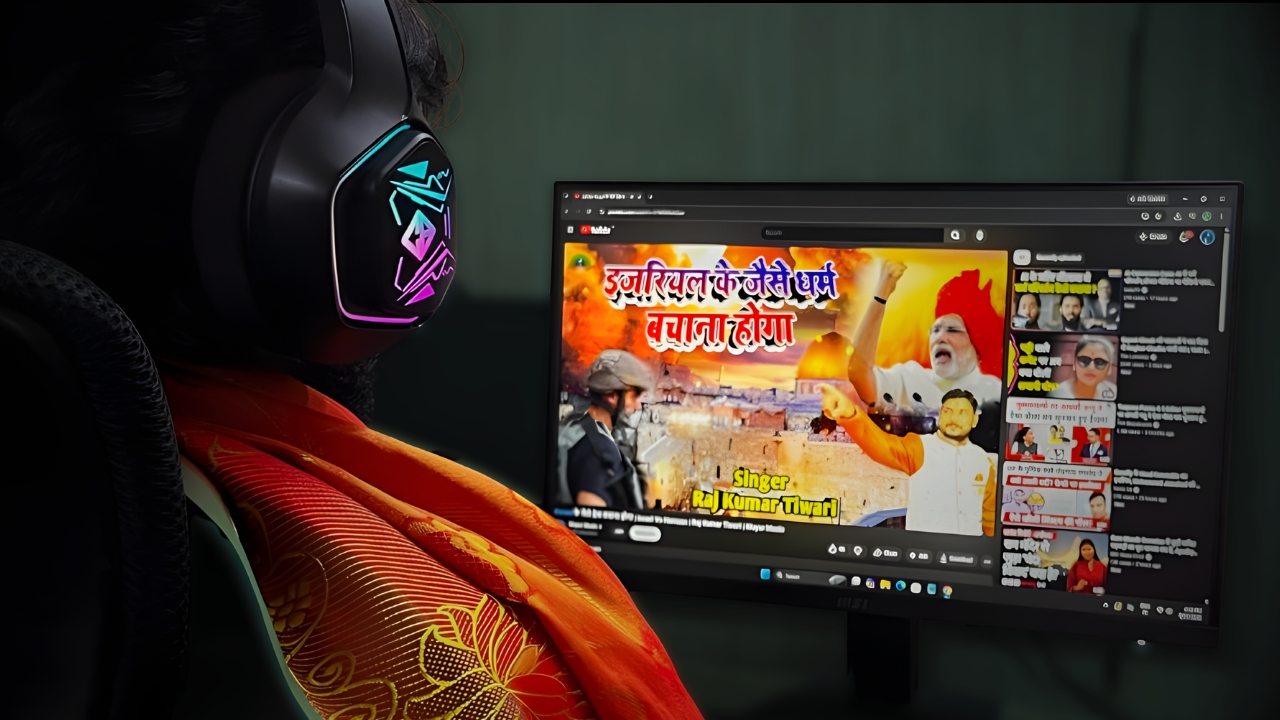




Global tech giants including YouTube, Meta, Spotify, and Apple Music have built a self-reinforcing financial ecosystem that hosts, promotes, and directly monetizes incendiary music targeting religious minorities in India, according to a report released by a Washington-based think tank.
The study by the Center for the Study of Organized Hate (CSOH) reveals that despite strict internal policies against hate speech, these digital platforms serve as the primary infrastructure and funding source for an expanding genre known as Hindu nationalist pop, or “H-Pop”. The genre frequently deploys slurs, conspiracy theories, and explicit calls for violence against India’s Muslim and Christian populations.
“Big Tech platforms are not merely offering impunity to the creators of hate music – they are among the most significant sources of financial patronage for these artists,” the report noted.
Researchers say the study is the first comprehensive effort to document the presence of H-Pop music across four of the world’s largest social media and streaming platforms. According to Kunal Purohit, one of the report’s researchers, the project sought to demonstrate not only how such content circulates online, but also “the role Big Tech has played in disseminating, popularising and promoting such hateful music.” Purohit has previously written a book H-Pop which documents hate music from Hindutva pop artists.
A Multimillion-View Network of Hate
Researchers compiled a first-of-its-kind database tracking 523 violative songs across the four major networks between January 2025 and January 2026. The findings outline a staggering digital footprint: YouTube alone hosted 210 tracked songs that accumulated over 198 million views. On Meta’s platforms, 103 tracked songs served as the background audio for more than 5.9 million Instagram Reels, cutting across an algorithmic web that expanded their visibility to hundreds of millions of users.
The lyrical content is starkly aggressive. According to the report, approximately 50 percent of the identified tracks – 263 out of 523 – explicitly call for physical harm, execution, or the forced displacement of minority groups. The remaining tracks leverage dehumanizing slurs, promote anti-Muslim conspiracy theories like “love jihad,” or depict historical revisionism designed to incite communal fury.
Purohit said the research team had witnessed the growing popularity of H-Pop over several years, alongside its role in stoking anti-Muslim hatred and communal tensions. The report argues that social media and streaming platforms have played a crucial role in amplifying that reach, despite many songs appearing to violate their own content policies.
The real-world impacts of this digital amplification have turned lethal. The report tied the playing of these specific tracks during right-wing religious processions directly to outbreaks of offline violence, property destruction, and lynchings across several Indian states. In one instance from August 2025, a 20-year-old Muslim man was lynched by a mob in Maharashtra after being falsely accused of “love jihad” – a conspiracy theory heavily propagated by the tracking network’s artists on Apple Music and Spotify.
Profiting From Extremism
The report highlights a lucrative monetization chain that flows both ways. Tech giants profit off user engagement with extremist material while simultaneously routing corporate ad dollars back to creators.
Researchers say they found multiple strands of evidence showing that platforms were not only hosting hate music but also financially rewarding its creators. “We found evidence that these Big Tech platforms were not just profiting from having such hateful music, but were, in turn, patronising the actors creating such music,” Purohit said.
On YouTube, manually run transparency tests revealed that 78 percent of all studied hate videos displayed in-stream advertisements. That number spiked to 83 percent for videos containing explicit incitement to violence. In total, ads from 103 major global brands and services – including OpenAI’s ChatGPT, Google’s NotebookLM, Amazon Prime, Canva, and Adobe – appeared adjacent to videos calling for holy war or religious cleansing.
The report also found that three YouTube channels alone accounted for roughly 40 percent of all H-Pop songs identified on the platform, yet all remained monetized through YouTube’s advertising system.
Eligible creators receive up to a 55 percent cut of net revenue generated through the YouTube Partner Program. Furthermore, platforms provide structural avenues for alternative funding. YouTube enabled its “Super Thanks” direct-tipping tool on 55 percent of the analyzed hate tracks, and multiple channels utilized monthly paid premium memberships. One prolific hate-music channel, Mayur Music, was even handed a physical Silver Creator Award by YouTube validating its reach.
Purohit pointed to Mayur Music as a particularly striking example. Researchers identified 25 songs on the channel that they believed violated YouTube’s own hate-speech policies, yet the channel continued to grow and was publicly recognized by the platform.
On Meta, data showed that 20 out of 30 prominent H-Pop singers maintained fully monetized Facebook accounts. Meanwhile, subscription-based streaming giants Spotify and Apple Music continued paying out standard streaming royalties to verified hate-music artists through third-party music aggregators.
Systemic Failure of Reporting Mechanisms
The proliferation of hate music exists alongside what researchers described as a near-total collapse of human content moderation and a reliance on broken user reporting mechanisms.
To measure platform accountability, the authors formally reported a sample size of 225 highly violative songs to the respective networks in October 2025. Six months later, by April 2026, 207 of those songs – a staggering 92 percent – remained active and fully streamable online. The absolute takedown rate sat at just 8 percent.
Researchers argue that the scale and popularity of the content makes claims of oversight increasingly difficult to accept. “What does it say of the platforms if it has no way of knowing content that is so wildly popular?” Purohit said, noting that the songs collectively generated hundreds of millions of views and millions of user-created reels.
The report further argues that even after researchers flagged hundreds of songs for review and gave platforms six months to respond, meaningful enforcement remained rare.
Furthermore, enforcement actions are superficial and easily bypassed. When YouTube terminated the personal account of Sandeep Acharya – a prominent singer who threatened to chop up religious minorities – the move had zero practical effect. Twenty-four of his 26 violative tracks remained live on the platform via secondary distribution channels, and Acharya simply registered a new account to continue posting.
Ordinary users trying to flag hate speech face steep barriers. While Meta and YouTube offer basic in-app options, Spotify and Apple Music completely lack functional, accessible reporting systems for audio files. Reporting a single song via Spotify’s live-support chat required more than 33 minutes of navigation, while Apple Music directed users to a generic, multi-layer website feedback form that would “likely deter most users from completing it”.
Purohit also questioned why platforms appeared capable of aggressively moderating some forms of content while failing to address material that allegedly violated their own hate-speech rules. He noted that platforms have previously removed content critical of the Indian government, including satire, raising questions about their enforcement priorities.
Demands for Structural Reform
The report calls for urgent interventions, arguing that current voluntary disclosures fail to protect vulnerable communities. Recommendations include mandatory external algorithmic audits, context-aware human moderators trained in local Indian languages, and total public disclosure of monetization partnerships.
For technology companies, researchers argue that the first step is straightforward: enforce the rules they already have. “Big Tech must walk the talk,” Purohit said, arguing that companies have clear policies on hate speech but routinely fail to apply them in countries such as India.
The report also highlights the close relationship between some H-Pop artists and political actors. Researchers noted that several singers accused of spreading anti-Muslim hatred have appeared at events organized by politicians and ruling-party affiliates. According to Purohit, expecting strong government intervention may be difficult given that some of the genre’s most prominent performers have received public recognition from political leaders and have regularly appeared at political events.
“Addressing this crisis demands coordinated accountability from platforms, regulators, and civil society alike,” the report concluded, warning that continued corporate inaction will inevitably translate into further real-world bloodshed.
Support Independent Media
Click Here and Join the Membership of Millat Times to Support Independent Media.
Support Millat Times