




By M. Burhanuddin Qasmi
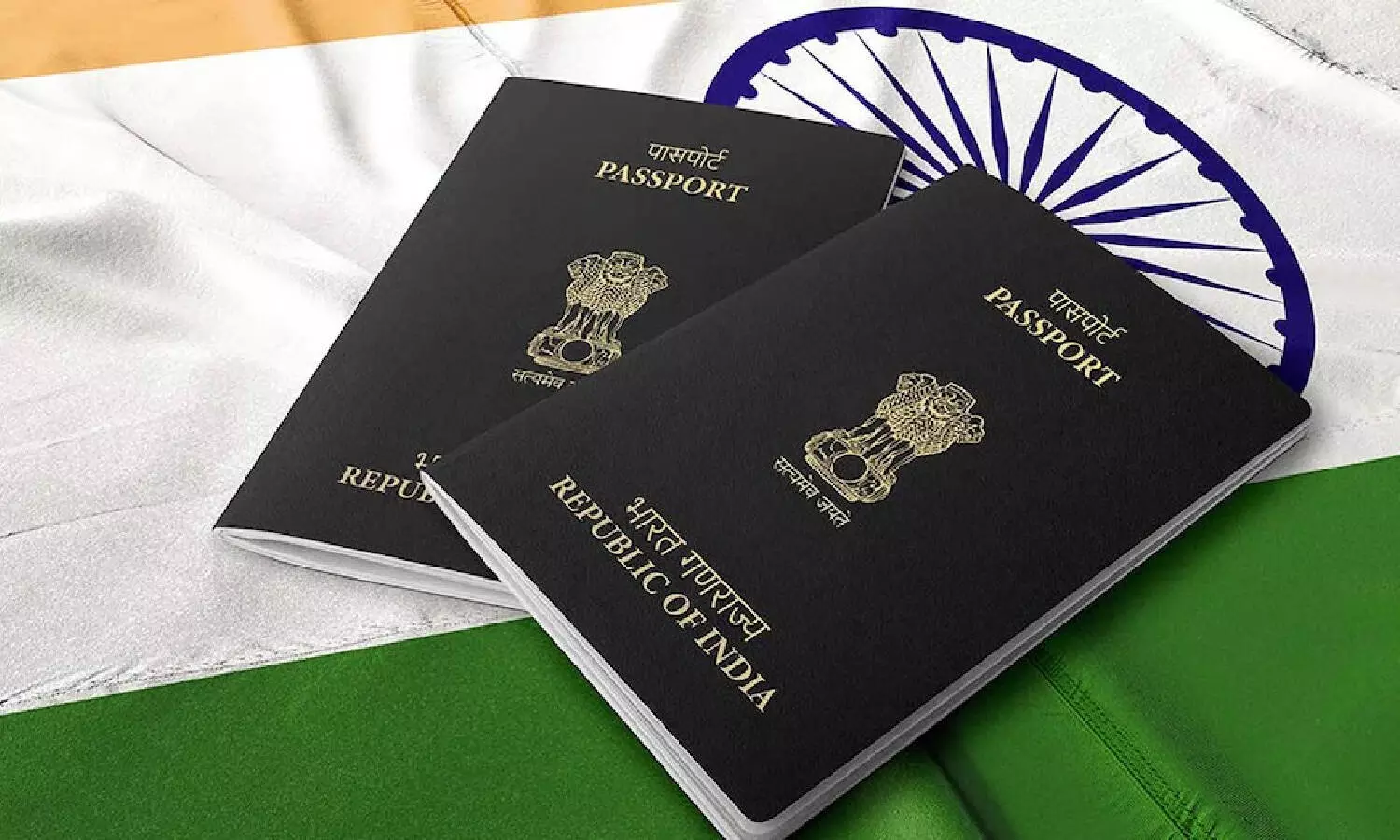
The statement made by the Ministry of External Affairs (MEA) on June 24, 2026, coinciding with the 14th Passport Seva Divas, that an Indian passport is merely a travel document and not proof of citizenship has raised serious questions among citizens. Such a position appears absurd, confusing and potentially damaging to the credibility of one of the most important documents issued by the Government of India.
A passport is not an ordinary piece of paper. It is an official document issued by a sovereign state after rigorous verification. In India, obtaining a passport requires identity and address proof, scrutiny by passport authorities, police verification and, where necessary, additional clearances and No Objection Certificates. The entire process is designed to establish the applicant’s identity, nationality and eligibility to receive an Indian passport.
On the biodata page of every Indian passport, the mandatory field “Nationality” clearly states: INDIAN.
Furthermore, the passport carries a formal note issued in the name of the President of the Republic of India, requesting all concerned authorities to allow the bearer to pass freely and extend necessary protection and assistance. If the holder is not recognized as an Indian national, what then is the meaning of this declaration?
The statement becomes even more perplexing when viewed in the broader context of India’s documentation regime. Aadhaar cards are not considered proof of citizenship. The same is said about PAN cards. Even the voter ID card, despite being issued to registered electors in India, is often argued not to be conclusive proof of citizenship. If all these documents are insufficient, and now even a passport is claimed not to establish citizenship, citizens are justified in asking: What exactly constitutes proof of citizenship in India?
The issue is not merely legal; it is also practical. Across the world, passports are universally regarded as primary evidence of nationality. Governments, immigration authorities, airlines, embassies and international institutions rely on them for that very purpose. To suggest otherwise risks creating unnecessary confusion both within the country and abroad.
India’s passport currently ranks around 75th globally in terms of travel freedom, trailing several countries in the region, including China, Bhutan and Sri Lanka. Instead of strengthening confidence in the Indian passport and enhancing its global standing, statements that undermine its significance may inadvertently weaken its perceived value.
Of course, lawyers may argue that citizenship is governed by the Constitution, the Citizenship Act, 1955, and related laws, and that a passport is not the source of citizenship. That proposition is legally correct. However, there is a crucial distinction between saying that citizenship originates from law and saying that a passport is not proof of citizenship. The former is a matter of legal theory; the latter creates uncertainty about a document issued only after the government has satisfied itself that the applicant is an Indian national. If being an Indian citizen is a precondition for obtaining a passport, how can the passport not serve as proof of citizenship?
Similarly, when only adult Indian citizens are allowed to vote and elect their representatives, how can a voter ID card fail to be recognized as proof of citizenship?
The government must therefore clarify its position in unambiguous terms. If an Indian passport does not serve as evidence of Indian citizenship, does the Government of India issue ordinary passports to non-Indians as well? If not, then why should citizens be expected to believe that a document issued exclusively to Indian nationals, bearing the declaration “Nationality: Indian,” is not proof of citizenship?
In a democracy, clarity strengthens trust, while ambiguity breeds suspicion. Citizens deserve a clear and consistent answer regarding the status and significance of documents issued in their name by their own government. There is no reason why an Election Commission of India-issued voter ID card and a thoroughly verified passport should not serve as proof that he or she is an Indian citizen.
The author is editor, Eastern Crescent, Mumbai
Support Independent Media
Click Here and Join the Membership of Millat Times to Support Independent Media.
Support Millat Times