




Follow Millat Times for independent journalism.
Opens the app if installed, or Google Play to download it.By Shams Tabrez Qasmi
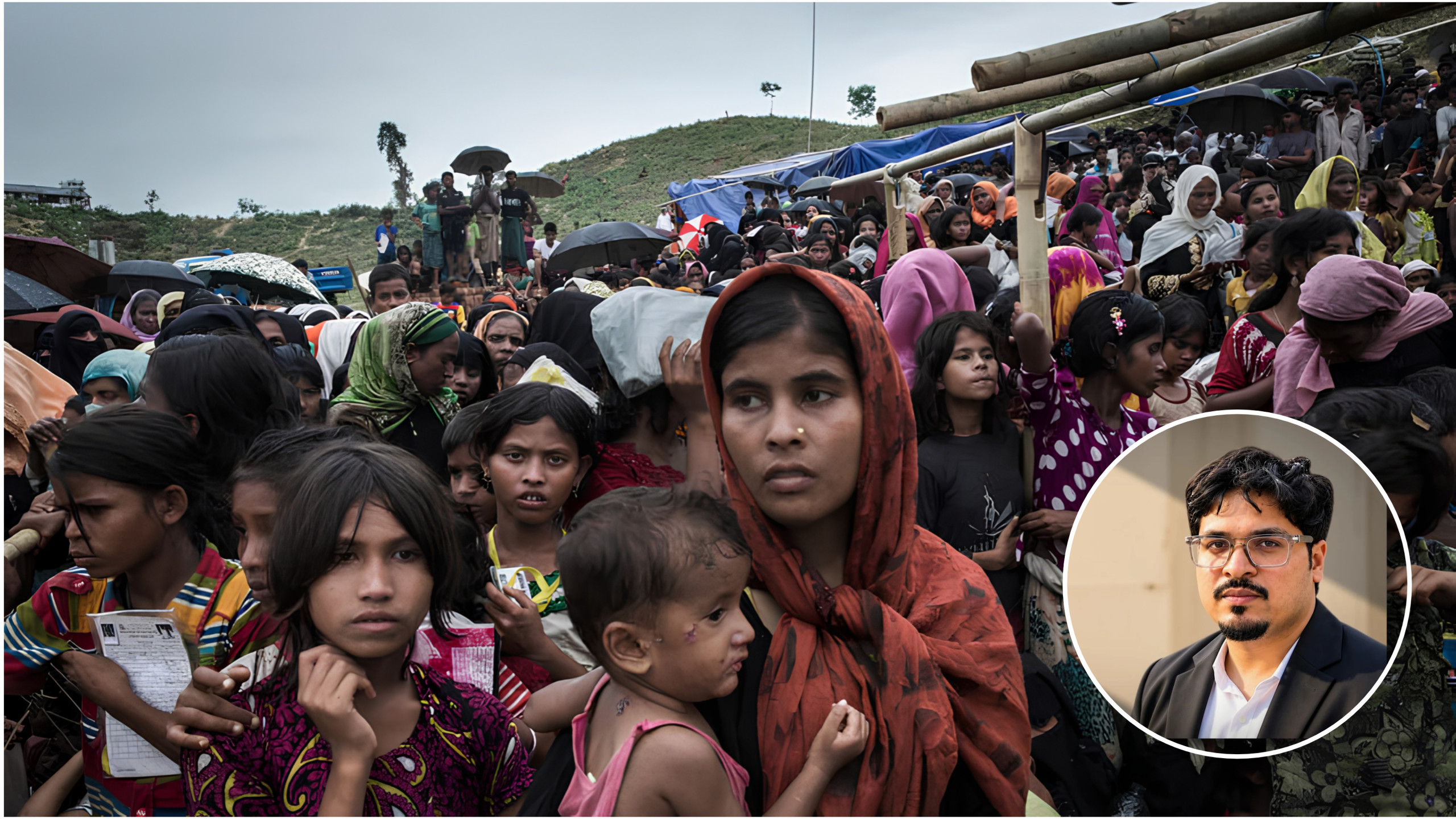
The persecution of Myanmar’s Rohingya Muslim minority spans more than five decades, marked by the loss of citizenship, restrictions on basic rights, military operations and repeated waves of displacement.
The crisis drew renewed international attention in 2019 when The Gambia filed a case against Myanmar at the International Court of Justice (ICJ), alleging violations of the Genocide Convention over the treatment of the Rohingya.
For hundreds of thousands of Rohingya who fled to Bangladesh, the legal proceedings have raised hopes of accountability, although a lasting solution remains uncertain.
The community, concentrated in Myanmar’s western Rakhine State, has faced decades of discrimination. Many Rohingya have been denied citizenship, restricted from travelling freely and excluded from education, employment and other public services.
Their experience reflects not only episodes of military violence but also a prolonged process of legal and administrative exclusion.
Decades of discrimination
Rohingya Muslims have historically lived in Rakhine State, formerly known as Arakan, which borders Bangladesh. Their identity and historical presence in Myanmar have been contested by successive authorities and sections of the country’s political establishment.
From the 1950s onwards, narratives portraying the Rohingya as migrants from Bangladesh became increasingly prominent. They were frequently referred to as Bengalis, a term used to question their claim to citizenship and their historical ties to the region.
These claims contributed to policies that progressively restricted the community’s rights.
A major wave of displacement followed a military operation in 1978, when more than 200,000 Rohingya fled to Bangladesh, according to historical accounts. Many returned following arrangements between the two countries, but the underlying discrimination remained.
Citizenship law deepens exclusion
The introduction of Myanmar’s 1982 Citizenship Law marked a turning point.
The legislation established restrictive criteria for citizenship and effectively excluded most Rohingya from full citizenship recognition. Many were subsequently left without secure legal status.
The consequences extended beyond the absence of identity documents. Rohingya faced restrictions on movement, education, employment, marriage and political participation.
The lack of citizenship also left the community with limited access to legal protections and made it more vulnerable to further discrimination.
Another major military operation in 1991-92 prompted hundreds of thousands of Rohingya to flee to Bangladesh. Refugees reported abuses, destruction of homes and forced displacement.
Although many eventually returned, the pattern of insecurity and persecution continued.
Renewed violence and restrictions
Violence in Rakhine State escalated in 2012, when clashes between Buddhist and Muslim communities resulted in deaths, displacement and the confinement of many Rohingya to camps.
Movement restrictions and limited access to essential services continued in subsequent years. The withdrawal of temporary identity documents further weakened the community’s already precarious legal position.
The situation deteriorated dramatically in August 2017, when Myanmar’s military launched a major security operation following attacks on security posts by the Arakan Rohingya Salvation Army.
The ensuing crackdown involved widespread killings, sexual violence and the destruction of villages, according to accounts by survivors and international human rights organisations.
About 700,000 Rohingya fled to Bangladesh in the months that followed, joining earlier refugee populations. Many settled in camps around Cox’s Bazar, creating one of the world’s largest concentrations of refugees.
The United Nations and other international organisations condemned the military campaign. Myanmar’s authorities rejected allegations of systematic atrocities and maintained that the operations were conducted as part of counter-insurgency efforts.
The refugees’ prospects of returning home remained uncertain, with concerns over citizenship, security and freedom of movement unresolved.
The Gambia takes Myanmar to the ICJ
In November 2019, The Gambia filed a case against Myanmar at the International Court of Justice, accusing it of violating the 1948 Genocide Convention in its treatment of the Rohingya.
The West African country argued that Myanmar had failed to meet its obligations under the convention. The Organisation of Islamic Cooperation supported the legal initiative.
The case was significant because The Gambia was not directly involved in the conflict but argued that all states party to the Genocide Convention had an interest in ensuring its provisions were upheld.
In January 2020, the ICJ ordered provisional measures requiring Myanmar to take steps to prevent acts covered by the Genocide Convention against the Rohingya, preserve evidence and report periodically to the court.
The order was not a final determination that genocide had occurred. It was a provisional measure intended to protect rights while the case proceeded.
The legal proceedings have since become an important test of international accountability for alleged mass atrocities.
The question of genocide and accountability
The case centres on whether Myanmar violated its obligations under the Genocide Convention.
The convention defines genocide as certain acts committed with the intention of destroying, in whole or in part, a national, ethnic, racial or religious group.
These acts include killing members of a group, causing serious bodily or mental harm and deliberately imposing conditions of life calculated to bring about its physical destruction.
The allegations against Myanmar concern killings, sexual violence, village destruction, forced displacement and other actions directed against the Rohingya.
The legal question is not simply whether serious human rights violations occurred, but whether the evidence establishes the specific intent required to prove genocide.
A final judicial determination is therefore important both for accountability and for clarifying the obligations of states under international law.
Any claims about a final ruling, deadlines, compensation or orders concerning refugee returns should be attributed precisely to the court’s judgment or order.
Justice beyond the courtroom
For Rohingya refugees, a legal decision alone will not resolve the crisis.
A sustainable solution would require guarantees of citizenship or secure legal status, freedom of movement, access to education and healthcare, and protection against discrimination.
Any return to Myanmar would need to be voluntary, safe and dignified. Refugees have repeatedly expressed concerns about returning without guarantees of security and recognition of their rights.
Accountability for those responsible for abuses is also central to preventing further violence.
The international community faces the challenge of ensuring that the Rohingya issue remains a priority beyond court proceedings and diplomatic statements.
Lessons for other societies
The Rohingya experience also highlights the risks associated with prolonged identity-based discrimination and the denial of citizenship.
The crisis developed over decades, with questions about the community’s origins and identity followed by restrictions on legal status and access to public institutions.
The circumstances in Myanmar are not identical to those in other countries. However, the experience underscores the importance of due process, equality before the law and safeguards against arbitrary deprivation of citizenship.
In India, debates over citizenship documentation and the Special Intensive Revision of electoral rolls have prompted concerns among sections of the Muslim community. Such questions should be addressed through constitutional safeguards, transparent procedures and effective opportunities to challenge administrative decisions.
The Rohingya case should not be used to equate different national circumstances, but it does demonstrate the consequences that can follow when identity and citizenship become grounds for systematic exclusion.
A struggle that continues
More than five decades after the first major waves of displacement, the Rohingya remain without a durable solution to their plight.
Many refugees have spent years in camps in Bangladesh, while others have sought refuge in countries across the region. Children have grown up outside their homeland, often without the certainty of citizenship or the prospect of a secure future.
The Gambia’s case at the ICJ has brought international legal scrutiny to Myanmar’s treatment of the community. Its eventual outcome may have implications for the interpretation and enforcement of the Genocide Convention.
But the broader test will be whether legal accountability can translate into tangible improvements in the lives of Rohingya Muslims.
For a community that has endured decades of persecution, justice means more than international recognition. It means the ability to return home safely, regain fundamental rights and live without discrimination.
Watch the full video.
Support Independent Media
Click Here and Join the Membership of Millat Times to Support Independent Media.
Support Millat Times