
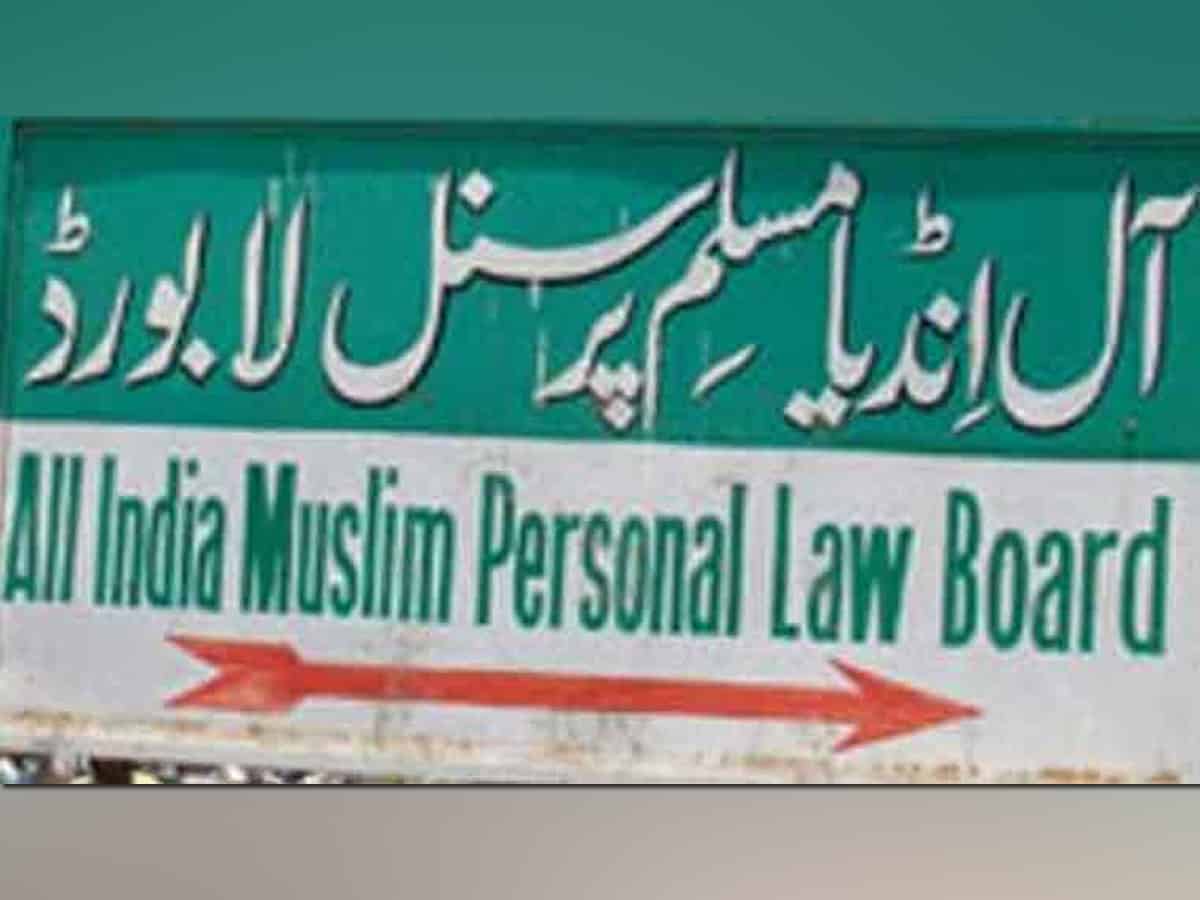




The All India Muslim Personal Law Board told the Supreme Court on Thursday that there is no restriction on women entering mosques to offer Namaz, Live Law reported.
Senior advocate MR Shamshad, appearing for the All India Muslim Personal Law Board, made the submission before a nine-judge bench hearing the Sabarimala reference, with related petitions on women’s entry into mosques tagged to the case as they involve similar constitutional questions on the scope of Articles 25 and 26.
Shamshad said Islamic practice does not bar women from entering mosques, though their participation in congregational prayers is not considered mandatory.
“For factual clarity, are women allowed to enter the mosque?” the chief justice asked during the hearing.
Shamshad responded that there was broad agreement across Islamic denominations on this point. “Yes, my lords. The Prophet himself said, don’t stop women coming to the mosque. There is clarity on this,” he said, adding that historical narrations also recorded the same instruction.
He told the court that while men are obligated to attend congregational prayers, women are not. “For woman, it is preferable that she stays at home and prays, and she gets the same religious reward. But if a woman wants to come, she can come,” he said.
When asked if women could participate in congregational prayers, Shamshad clarified: “No, they will be a part of the congregation. If they are going to mosque, the purpose is to participate in congregation, and that is permitted.”
The bench, which is examining constitutional questions linked to religious practices, including those arising from the Sabarimala case, also heard arguments on the internal arrangements of mosques. Shamshad said there was no concept of a “sanctum sanctorium” in a mosque, unlike in some other religious structures.
“If there is no sanctum santorum inside the mosque, then nobody can insist to stand at a particular place or, for that matter, to be the first to lead the namaz,” he said.
He opposed demands in petitions seeking equal access to all areas within mosques, including entry through the main door and praying in mixed congregational lines, saying such pleas attempt to introduce concepts not applicable to Islamic practice. “They are trying to bring the sanctum sanctorium concept inside the mosque,” he said, adding that worshippers must follow the internal discipline of the place.
Shamshad also argued that courts have misapplied the “essential religious practice” (ERP) test in cases involving Islam. He said Islamic practices are extensively documented, with clear distinctions between what is mandatory, recommended or forbidden, but courts have often treated non-mandatory practices as non-essential.
“We were going through cases, except for one test, all other tests of essential religious practice, so far as Islam is concerned, have failed in Indian courts,” he said, adding that courts have sometimes relied on inaccurate translations of religious texts.
Referring to past rulings, he said the courts had held that a mosque was not essential to Islam because prayers could be offered elsewhere. “Masjid is the core of the belief of Muslims. All practices are ultimately relatable to mosque. But then we face a judgment saying Masjid is not essential. Then what will we do with Article 25?” he asked.
The hearing is part of a broader reference before the Supreme Court examining the scope of religious freedoms under the Constitution.
Support Independent Media
Click Here and Join the Membership of Millat Times to Support Independent Media.
Support Millat Times