
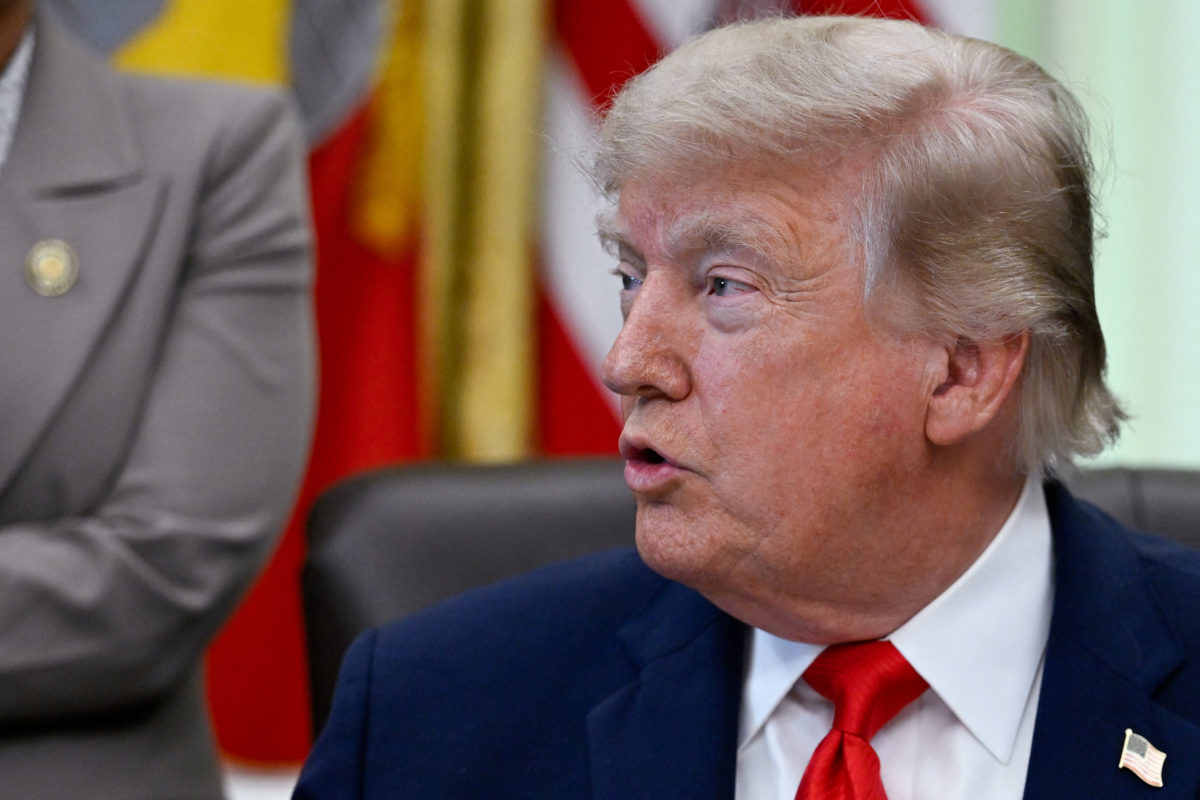




US President Donald Trump has said that a deal aimed at ending the war in West Asia is expected to be signed on Sunday, although Iran has cast doubt on that timeline.
In a social media post on Saturday, Trump claimed that the agreement would lead to the reopening of the Strait of Hormuz to international shipping. He also reiterated that the deal would ensure Iran does not possess nuclear weapons, stating that Tehran would neither develop nor acquire them in any form.
Trump further suggested that the United States would eventually remove and destroy Iran’s remaining enriched uranium stockpiles once conditions had stabilised.
However, Iranian Foreign Ministry spokesperson Esmaeil Baghaei said the agreement would not be signed on Sunday. Speaking to state media, he said a signing could still take place in the coming days but cautioned against making firm predictions because of uncertainty surrounding the negotiations.
Pakistan Prime Minister Shehbaz Sharif also expressed optimism, saying a deal could be finalised within 24 hours. He noted that preparations were underway for an electronic signing ceremony, followed by technical discussions next week.
Pakistan has played a mediating role between Washington and Tehran and hosted talks between the two sides in April, though those discussions ended without an agreement.
Since mid-March, Trump has repeatedly asserted that a peace deal with Iran was close. Yet tensions have remained high despite a ceasefire announced on April 8. In recent days, both sides have exchanged strikes, raising concerns about the durability of the truce.
On Thursday, Trump said he had cancelled planned US strikes on Iran because negotiations were nearing completion. He later described the proposed agreement as a “great settlement” and said he expected it to be signed in Europe by the weekend.
Backdrop
The current conflict began on February 28, when the United States and Israel launched attacks on Iran, arguing that Tehran posed a serious threat to Israel’s security. Iran responded with strikes targeting Israel, US military bases in the region, and other strategic assets.
The fighting disrupted traffic through the Strait of Hormuz, a key maritime route through which roughly one-fifth of the world’s petroleum supply passes, contributing to a global energy crisis.
Although the US and Iran agreed to a ceasefire on April 8 to facilitate further negotiations, efforts to convert that truce into a permanent peace agreement have so far remained incomplete.
Support Independent Media
Click Here and Join the Membership of Millat Times to Support Independent Media.
Support Millat Times