
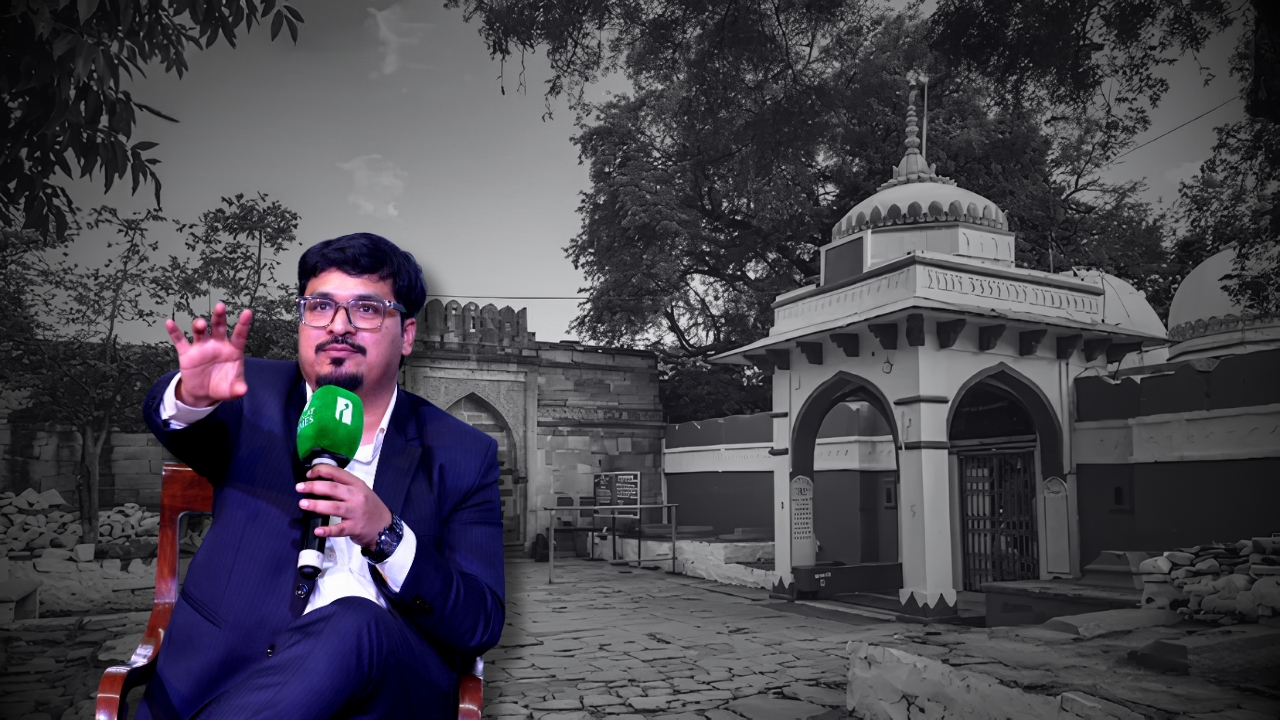




The dispute over religious places in India is not new, but after the Babri Masjid verdict, the growing number of legal and political challenges surrounding historic mosques has created deep anxiety among Muslims across the country. The recent Madhya Pradesh High Court verdict regarding the centuries-old Kamal Maula Mosque in Dhar has now become another major flashpoint in this ongoing debate.
For many Muslims, this is not merely a property dispute. It is about identity, history, constitutional protections, and the future of religious coexistence in India.
The Kamal Maula Mosque, located in Dhar district of Madhya Pradesh, is believed to have been established during the Malwa Sultanate in the thirteenth century. According to historical accounts, a Sufi saint named Kamal Shah established a spiritual center there, and a mosque was constructed within the complex. Since then, the site has continuously functioned as a mosque. The structure contains domes, arches, mihrabs, and several characteristics associated with Islamic architecture. For centuries, Muslims offered prayers there without any major controversy.
What is important to note is that the dispute over this site emerged relatively late in history. During British rule, particularly around 1904, some Hindu groups began claiming that the site was originally a Saraswati temple built by Raja Bhoj during the tenth century when the Parmar dynasty ruled the region. According to them, the structure was originally Bhojshala, a center of learning dedicated to Goddess Saraswati, and was later converted into a mosque.
However, the British administration reportedly rejected these claims at the time and continued to recognize the site as a mosque. Despite this, the demand from Hindu groups gradually intensified over the decades, eventually turning into a major legal and political issue.
In 2003, the government and the Archaeological Survey of India (ASI) introduced a shared arrangement under which Hindus were allowed to worship at the site on Tuesdays while Muslims continued offering Friday prayers. Since then, both communities have used the complex under an administrative compromise. However, Hindu organizations continued demanding complete control of the site and sought its declaration as a temple.
The dispute entered a new phase when, in 2024, ASI was directed to conduct a detailed survey of the premises. During the survey, ASI claimed to have discovered Sanskrit inscriptions, architectural pillars, and structural elements suggesting that parts of the complex may date back to the tenth century. The ASI report further stated that it “appears” there may once have been a Saraswati temple at the location associated with Raja Bhoj.
This is where the central controversy begins.
Can the religious identity of a place that has functioned as a mosque for centuries be altered merely on the basis of historical interpretation, assumptions, or archaeological possibilities? Can phrases such as “it appears” or “there may have been” become sufficient grounds for changing the status of a living religious site?
The Muslim side argues that there is overwhelming evidence proving the mosque’s historical identity. The site has continuously functioned as a mosque for centuries. Islamic architectural features remain visible. Historical records acknowledge it as a mosque. Yet, according to critics of the verdict, no conclusive proof establishing the existence of a temple was presented. Instead, the ASI report largely relied on interpretations and possibilities.
Despite this, the Madhya Pradesh High Court reportedly relied upon the nearly 2000-page ASI report and declared the site to be associated with the Saraswati temple of Raja Bhoj. The court further suggested that Muslims could seek another location for a mosque.
This aspect of the verdict has generated widespread concern among Muslims and constitutional observers alike. Many believe that after the Babri Masjid judgment, a pattern is emerging in which historical mosques are increasingly being challenged through surveys, archaeological claims, and litigation.
The most serious constitutional question raised by this verdict concerns the Places of Worship (Special Provisions) Act, 1991. This law was enacted during a highly sensitive period in India’s history when the Babri Masjid dispute had already polarized the country. The purpose of the Act was clear: the religious character of all places of worship as they existed on August 15, 1947, would remain unchanged.
The law was intended to prevent precisely the kind of historical disputes that are now resurfacing. It was designed to protect communal harmony and ensure that independent India would not become trapped in endless battles over medieval history.
Critics of the Kamal Maula Mosque verdict argue that the decision weakens the spirit of the 1991 Act. If centuries-old mosques can now be subjected to archaeological reinterpretation and legal transformation, many fear that similar claims may emerge against numerous other historical religious sites across the country.
Constitutional experts and Muslim organizations warn that such developments could create long-term instability and deepen communal divisions. They argue that if every religious site is reopened for historical scrutiny, India may witness a dangerous cycle of religious litigation and social polarization.
On the other hand, Hindu organizations supporting the verdict describe it as a matter of “historical justice.” They argue that places believed to have originally been temples should be restored to Hindu society. This argument has gained increasing political support in recent years.
But a larger question remains: should present-day social peace be sacrificed for unresolved historical claims dating back centuries? Can a modern constitutional democracy function if medieval disputes continue to shape contemporary politics and law?
The Kamal Maula Mosque case is no longer only about one structure in Dhar. It has now become part of a much wider national conversation about history, faith, constitutional guarantees, minority rights, and the future direction of India’s secular framework.
It is also likely that the matter will eventually reach the Supreme Court, where larger constitutional questions surrounding the Places of Worship Act and the limits of historical claims may once again come under scrutiny.
For now, one thing is clear: after Babri Masjid, the verdict concerning Kamal Maula Mosque has reopened a debate that India thought the 1991 law had settled. This debate is no longer just about history. It is about the future of India’s democracy, constitutional order, and communal harmony.
Shams Tabrez Qasmi is Editor, Millat Times
Support Independent Media
Click Here and Join the Membership of Millat Times to Support Independent Media.
Support Millat Times