




Shams Tabrez Qasmi
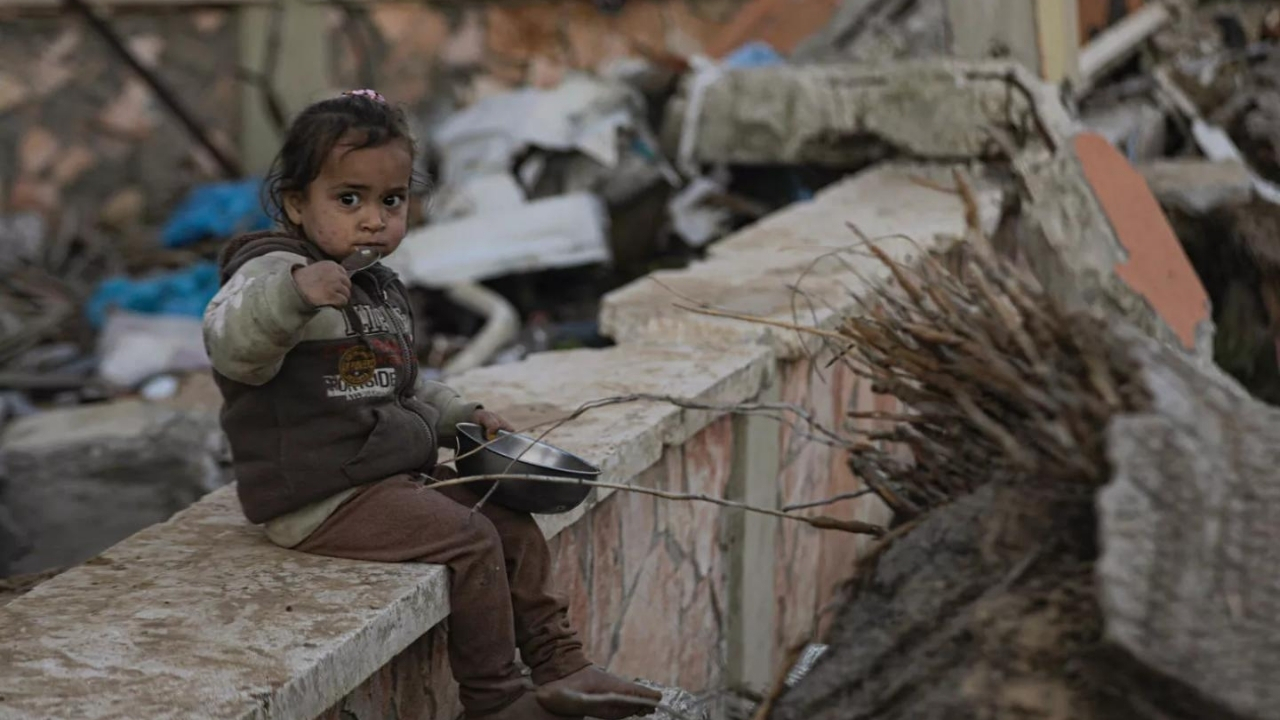
Justice S. Muralidhar, chair of the United Nations Independent International Commission of Inquiry on the Occupied Palestinian Territory, including East Jerusalem, and Israel, has described what he said were patterns of violence against children in Gaza, including injuries, attacks on healthcare facilities, destruction of schools and long-term psychological harm. He said the commission’s findings on children formed a central part of its conclusion that Israel’s actions in Gaza meet the legal definition of genocide.
In an exclusive interview with Millat Times, Muralidhar said the commission’s latest report on children builds on an earlier report published in September 2025, in which it concluded that the legal threshold for genocide had been met.
“This children’s report that we have presented… is in support of that,” he said.
Asked about the evidence behind the commission’s findings, Muralidhar said the inquiry examined multiple forms of material, including medical testimony, forensic analysis, ballistic evidence and records of attacks affecting infrastructure essential for children’s survival.
“When you see the expression of genocide in international criminal law, there are many elements,” he said. “One element is to prevent childbirth. In this children’s report, we have said that not only are they preventing childbirth, but they are attacking pregnant mothers, destroying neonatal facilities, and they are destroying paediatric hospitals.”
According to Muralidhar, the commission also studied patterns of injuries recorded by doctors treating children in Gaza. He said medical workers had reported cases involving what appeared to be targeted gunshot wounds to the head and neck, along with injuries allegedly caused by specialised ammunition.
“When you see the upper torso of the body, there are square-shaped pellets, in which there is tungsten. So when it enters the body of the child, it spreads and destroys all the organs,” he said.
He said doctors had provided investigators with photographs and medical records that, according to the commission, showed a pattern of serious injuries among children.
Beyond individual cases, Muralidhar said the commission examined the wider pattern of child casualties across Gaza. He argued that the high percentage of children among those killed was important evidence of the impact of the conflict on Gaza’s younger population.
“Out of the 70,000 people who have died, 30% of them are children,” Muralidhar said. “More than 30%.”
He described the number as disproportionate, arguing that the deaths of children were central to the commission’s assessment of whether the conduct of the war had affected Palestinians as a group.
“So when we see all this evidence, the planning of the air strikes, the use of weapons, the targets on specific body parts of children, and the medical facilities to recover them, destroying them, we find that it is towards not allowing the Palestinians to continue as a group,” he said.
“They are the future identity bearers of the Palestinian people. So that is why they are targeting the children.”
The commission also considered the effects of nearly two years of military operations, Muralidhar said, including repeated airstrikes in densely populated areas where children were present.
The commission’s argument goes beyond deaths and injuries. It also focuses on what it describes as the long-term destruction of conditions needed for children’s growth and development.
Muralidhar said the commission recorded widespread destruction of schools and universities, arguing that the collapse of the education system would have effects that continue beyond the current conflict.
“They have destroyed 97% of all schools,” he said. “This means that for the children who are alive, there is no formal schooling for them.”
He also mentioned damage to higher education institutions, saying that universities had been destroyed and that the loss of electricity and internet access had stopped children from continuing education online.
“There is no electricity, no internet,” he said. “In the other regions of the world, we call it online learning courses. There is no such facility for the children there.”
The report also discusses difficulties in receiving medical treatment. Muralidhar said children needing urgent medical care outside Gaza often face delays or are unable to leave.
“Those who need medical relief, like if you take them in an ambulance, if Israel gives permission, many children can survive,” Muralidhar said. “It can save them. But Israel does not allow it.”
He referred to the movement of children through the Rafah crossing as one example, saying that neighbouring countries had medical facilities available but access remained restricted.
“If there are 100 children who need immediate medical relief, Israel says, we will permit only three or four,” he said.
Muralidhar said the commission’s findings also looked at the psychological effects of the conflict on children who survived, describing a generation growing up with constant fear and uncertainty.
He said children had experienced not only bombardment but also what he described as the continuous presence of drones overhead.
“The drones are constantly in their surroundings,” he said. “All the time.”
Muralidhar gave examples of children who, according to the commission’s records, were involved in normal daily activities when they were allegedly attacked.
“The child who is playing outside his house, outside his tent, you are hitting him,” he said.
He also referred to cases involving children doing everyday tasks.
“The child is collecting some firewood,” he said.
Muralidhar described another incident involving a child carrying a white flag, saying:
“The child shows a white flag. That there is no hostility in this. But despite that, they target him.”
He said such experiences had created a situation of fear among children in Gaza, affecting not only their physical safety but also their ability to experience what he described as a normal childhood.
“So such a child who is under so much physical and mental pressure, that child cannot feel a healthy childhood,” he said. “And cannot become a healthy adult.”
The commission also examined the effects of the conflict on pregnancies and newborns. Muralidhar said investigators had recorded increased cases of stillbirths, underweight babies and maternal deaths, which they linked to malnutrition, lack of healthcare and repeated attacks on medical facilities.
“There are a lot of stillbirths,” he said. “We are getting a lot of underweight children. A 900-gram child has been born. You can understand the condition of the mother.”
Israel has repeatedly rejected allegations that it is committing genocide in Gaza. It has said that its military campaign is aimed at Hamas after the group’s 7 October 2023 attack. Israel also maintains that it takes measures to reduce civilian casualties while accusing Hamas of operating in civilian areas and using civilians, including children, as human shields.
Muralidhar challenged this argument, saying the commission’s findings separate allegations about Hamas’s actions from the situation of the children whose cases it investigated.
“They are saying that these children are human shields,” he said. “These children are 10 days old. A three-year-old child cannot be a human shield.”
He accepted that Hamas may use human shields in some situations but argued that such claims cannot justify treating all children as military targets.
“It’s true that Hamas can do it. And maybe it is doing it. But it’s not that all children are human shields. That’s why we can kill all children.”
The commission’s reports are part of increasing international attention on the conduct of the war in Gaza. While commissions of inquiry do not decide criminal responsibility, their findings may influence future cases before international courts and contribute to discussions about whether the legal definition of genocide has been fulfilled.
For Muralidhar, however, the importance of the children’s report is not only about legal issues but also about what it says about the future of an entire population.
“The children are there for social and biological continuity,” he said. “They are the future identity bearers of the Palestinian people.”
I kept the meaning and all quotations unchanged while making the narration simpler, more natural, and closer to a Class 12 Indian student’s English style.
Support Independent Media
Click Here and Join the Membership of Millat Times to Support Independent Media.
Support Millat Times